A 999-HORSEPOWER ANOMALY: HOW THE CAR PASS AUDI R8 GT IS SHAKING UP THE FORZA HORIZON 6 DRIFT META
Mid-engine layout meets pure rear-wheel-drive violence. Playground Games just dropped an absolute monster into the Forza Horizon 6 Car Pass, but it is completely rewriting how veteran players handle the mountain passes of Japan!
Purists are losing their minds over a legendary discontinued V10 that breaks the rules of traditional German engineering, but can a controversial 999-horsepower drift tune actually survive the extreme switchback corners of Mount Haruna?
The racing community hasn’t seen a high-stakes mechanical shift like this in years—get the exact setup and watch the ultimate trial of this RWD beast below! 👇🔥
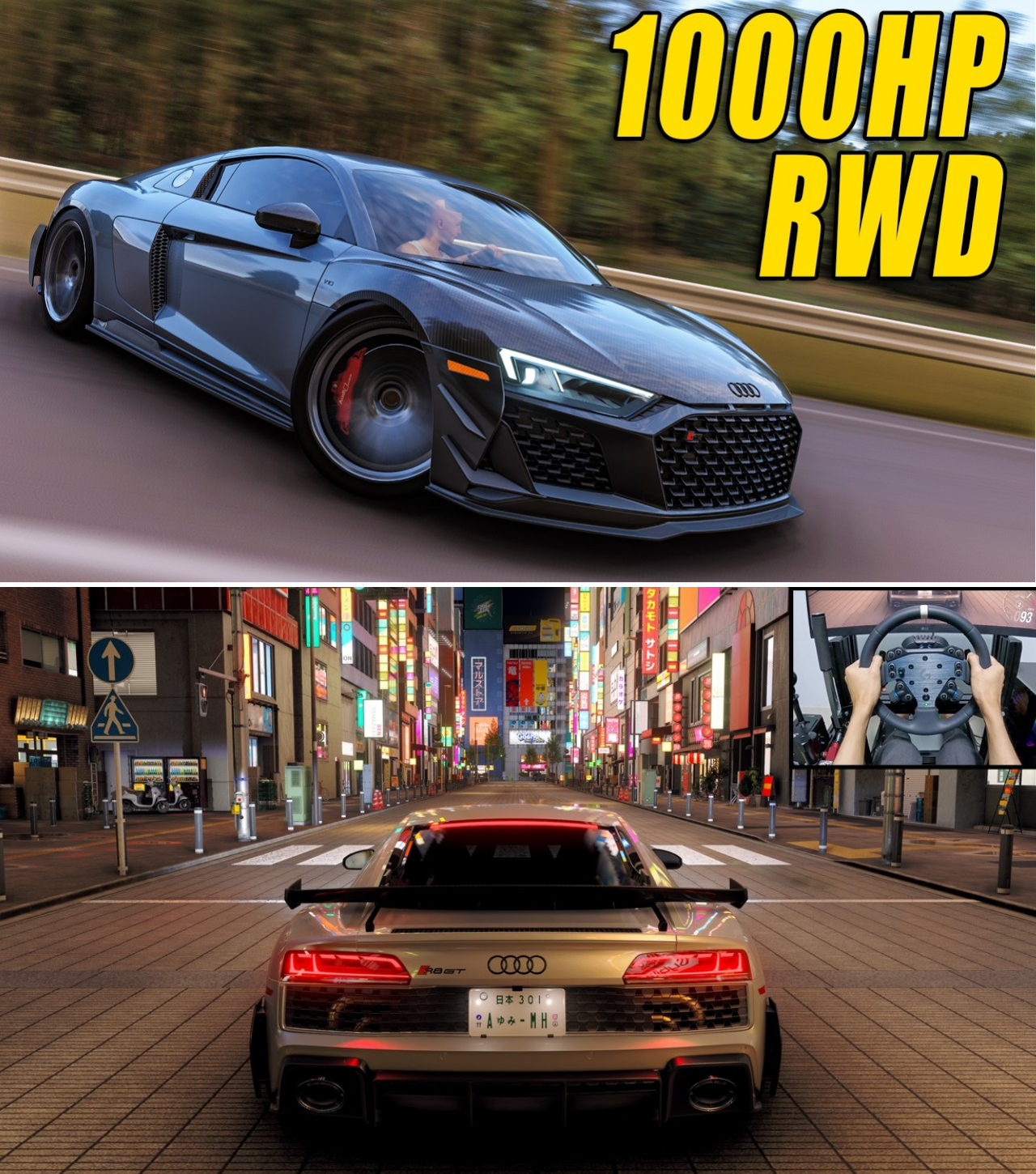
The virtual streets of Japan have a new, loud, and incredibly tail-happy king. As Playground Games continues to expand the seasonal content of Forza Horizon 6, the latest addition via the premium Car Pass has ignited a fascinating technical debate among the franchise’s most dedicated tuners. The vehicle in question is the Audi R8 GT, a final-generation tribute to Audi’s legendary discontinued supercar lineage. However, unlike its iconic road-going predecessors, this specific model comes with a dramatic mechanical twist that changes everything for digital drivers: it is strictly rear-wheel drive (RWD).
Historically celebrated for its foundational Quattro all-wheel-drive (AWD) grip, the Audi brand has rarely been associated with the smoke-filled, sideways world of competitive drifting. That paradigm was shattered this week when prominent automotive gaming creator DUBS released an extensive performance breakdown showcasing a radical, high-consequence drift build. Stripping the vehicle of its stock aerodynamic components and boosting its naturally aspirated foundation into a twin-turbocharged nightmare, the community is now grappling with the unique physics of a mid-engine, 999-horsepower slide machine on the tightest roads the game has to offer.
Breaking the German Mold: Stock Impressions and Physics Anomalies
Before the digital grease monkeys began tearing into the engine bay, the immediate reaction to the Audi R8 GT’s arrival was rooted in visual and mechanical novelty. Out of the box, the car mirrors high-performance aesthetics typically reserved for track-focused variants, with some community members drawing sharp parallels to a heavily modified Audi TTRS Ultimate Edition due to its aggressive front canards and integrated rear wing framework.
However, the real shock occurs when the rubber meets the asphalt—especially under adverse weather conditions. Testing the vehicle on a slick, rainy afternoon in the game’s highly detailed Japanese sandbox, the raw handling characteristics of a stock mid-engine RWD supercar became instantly apparent.
“It’s very slidy… the wheels just lose it,” DUBS observed during an initial test drive, noting that the absence of a traditional front-axle drive shaft completely alters the car’s sensory feedback.
For a franchise where front-engine, rear-wheel-drive platforms (like the classic Nissan Silvias or Toyota Supras) dominate the drifting landscape, navigating a high-performance mid-engine vehicle requires an entirely different approach to weight transfer and throttle management. The balance is mathematically exceptional, but the line between a perfect drift and an unrecoverable spin remains dangerously thin.
The 999-Horsepower Garage Build: Upgrades and Tuning Specifics
To transition the Audi R8 GT from a slippery factory exotic into a legitimate contender for the leaderboard, the vehicle underwent an aggressive overhaul inside the Horizon Festival garage. True to the strict specifications requested by high-tier drift clubs, the upgrade path preserved the car’s authentic engine block while maximizing output via forced induction.
The core modifications implemented for the build include:
Aspiration: Twin-Turbocharger conversion.
Power Output: Maximized at 999 horsepower (narrowly missing the literal 1,000 HP threshold, though mechanically treated as a 1K build due to internal engine scaling physics).
Suspension: Dedicated Drift Suspension geometry, maximizing negative front camber and adjustment settings to handle severe lateral loads.
Tires & Stance: Standard specialized drift compound with front track width widened to 265mm to facilitate massive steering angles, while keeping the rear fitment flush to prevent unnatural physics calculations.
Drivetrain: A customized 6-speed transmission swap, abandoning the standard dual-clutch system to allow broader gear stretching across long drifting arcs.
Aerodynamics: A complete cosmetic delete of the prominent rear wing, leaning into a clean, “wingless” aesthetic that utilizes the vehicle’s automatic pop-up decklid flap for a sleek profile.
The engine selection process also exposed some bizarre structural quirks within Forza Horizon 6‘s current asset database. Eager builders noted that the engine swap menu lists multiple distinct versions of what appear to be the exact same V10 architecture—including a 643-horsepower variant suspected to be sourced from the Lamborghini Huracán Tecnica. While the presence of overlapping engine files caused minor confusion across specialized subreddits, the native twin-turbocharged R8 setup proved more than sufficient to transform the vehicle into an absolute tire-shredding monster.
Taming the Mountain: The Mount Haruna Descent
The ultimate trial for any high-horsepower build in Forza Horizon 6 lies along the steep, terrifying switchbacks of Mount Haruna (frequently referenced by the community as a hotspot for technical drift zones). Sending a 999-horsepower mid-engine vehicle down a mountain corridor requires precise fine-tuning of the Caster and Toe angles to prevent the rear end from overtaking the front wheels.
Initial field tests yielded spectacular results, with the car exhibiting immediate, effortless entry angles. “That was instantly sideways… that was honestly so clean,” DUBS reported as the R8 GT held continuous Skill Chains along the sweeping high-speed tunnels.
Yet, the build is not without its mechanical flaws. Due to the engine placement, the vehicle suffers from extreme tire slip if the driver over-corrects the throttle mid-corner. During a high-speed transit through Haruna’s tighter sections, an aggressive power delivery caused the car to spin out completely near the iconic carousel area, highlighting the volatile nature of the setup. Despite the minor mishap, the vehicle consistently scored within a mere 1,000 points of personal best records (PB) on localized drift zones, confirming its competitive viability.
The Future of the Car Pass and The Festival Playlist
As the community continues to replicate and refine this specific 999-horsepower RWD tune, wider discussions are emerging regarding the lifecycle of Forza Horizon 6‘s premium post-launch support. The Audi R8 GT represents one of the final major installments of the official Car Pass ecosystem. According to internal scheduling, only two to three vehicles remain before the pass concludes its weekly distribution model.
Moving forward, the primary vehicle economy will shift entirely toward the free Festival Playlist updates and high-stakes community multiplayer events, such as The Trial—a notorious mode where human players must cooperate against highly aggressive AI Drivatars. For the active racing enthusiast base monitoring community boards this June, the directive is clear: purchase the remaining Car Pass keys, download the un-winged RWD blueprints, and master the complex weight distribution of Audi’s final V10 masterpiece before the next major balancing patch recalibrates the asphalt physics of Japan.