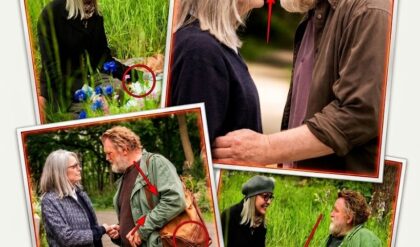
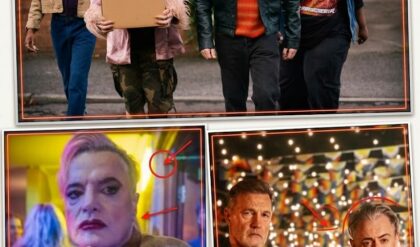
Russell T. Davies just unleashed absolute devastation on Channel 4, and it is a terrifyingly real mirror to the world we are living in right now. 🤯🇬🇧
Forget traditional thrillers, because Tip Toe takes a routine 15-year neighborhood relationship and turns it into a blood-chilling war zone of radicalization and online hate. When an flamboyant, outspoken Canal Street bar owner gives his front door key to his seemingly ordinary electrician neighbor, it doesn’t solve a problem—it unlocks an irreversible nightmare that tears a Manchester community down to its very foundations.
What is the sickening, toxic conspiracy theory that crosses the property line, and why is the shocking, unhinged climax leaving viewers physically paralyzed with fear?
The cultural war just became a suburban bloodbath, and the internet is completely reeling. Witness the full, jaw-dropping breakdown of the year’s most urgent masterpiece right here 👇
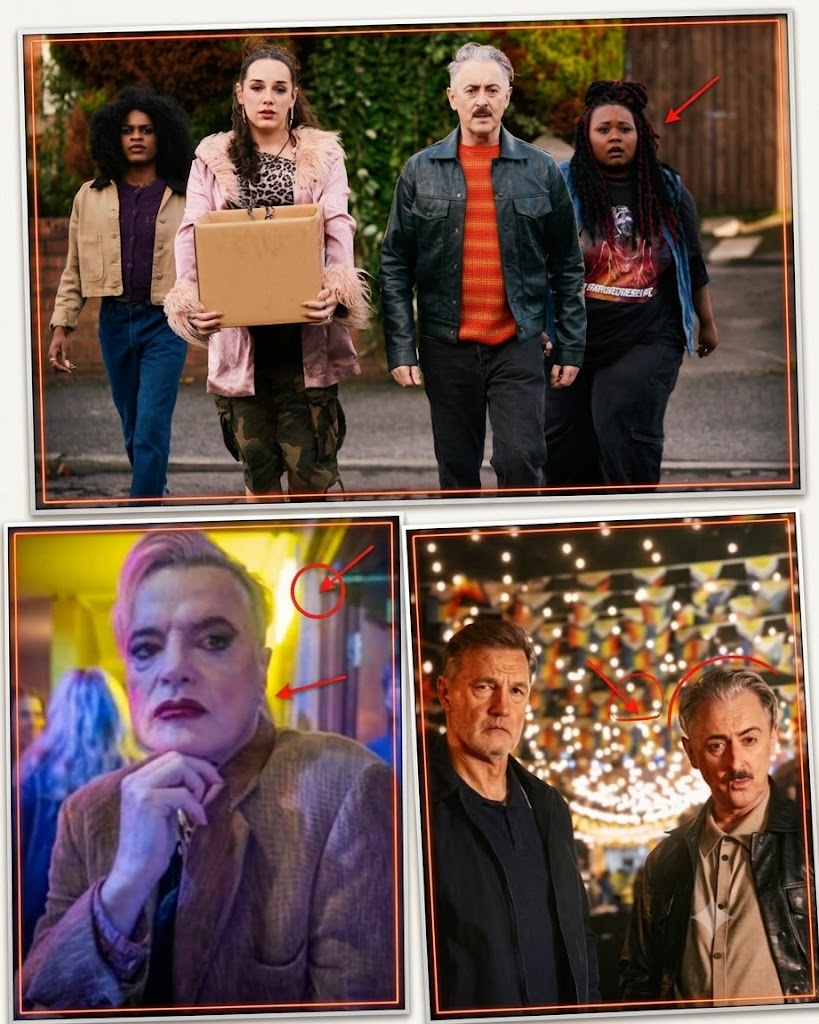
Television icon Russell T. Davies has officially returned to Channel 4 with Tip Toe, a scathing, five-part contemporary tragedy that critics and viewers are already calling the most vital—and deeply upsetting—state-of-the-nation drama of 2026. Stripping away the historical insulation of his previous masterpiece It’s a Sin, Davies has delivered a raw, contemporary narrative that transforms a routine suburban neighborhood feud into an apocalyptic reflection of rising prejudice, systemic loneliness, and toxic online echo chambers.
The five-part miniseries launched its broadcast rollout on May 31, 2026, with consecutive episodes dropping throughout the first week of June. While the production serves as a reunion for the creative powerhouse team behind It’s a Sin—including executive producer Nicola Shindler and director Peter Hoar—the cultural reception across X, Reddit, and Discord has shifted from standard entertainment appreciation to full-blown societal anxiety.
A Key, a Crisis, and a Fractured Front Yard
Set against the backdrop of a regular residential street in Manchester, Tip Toe opens with a jarring, non-linear flash-forward revealing a catastrophic, blood-stained crime scene that immediately establishes the high stakes. The narrative then backtracks ten days to chronicling the fragile relationship between two completely different men who have lived as neighbors for fifteen years.
Leo Struthers (played with vibrant, magnetic energy by Alan Cumming) is the proud, outspoken owner of Spit & Polish, a fictional legacy gay bar located in the heart of Manchester’s historic Canal Street. Directly next door lives Clive Goss (portrayed with magnificent, brooding intensity by David Morrissey), a struggling, increasingly bitter electrician enduring a passionless marriage and a stagnant business.
The catalyst for their mutual destruction begins with a dark, humorous twist: Leo is locked out of his home trouserless after chasing a one-night stand who stole his laptop. He reluctantly turns to Clive for assistance. When a front door key is exchanged and their private domestic worlds collide, it accidentally unearths a toxic wellspring of resentment. Clive, increasingly radicalized by online algorithmic conspiracy theories, anti-LGBTQ+ rhetoric, and personal financial failures, begins to view Leo not just as an eccentric neighbor, but as a direct threat to his family and his way of life.
Behind the Scenes: A Furious Script Born from Modern Hatred
For Russell T. Davies, the road to Tip Toe was born out of a profound, creative anger regarding the erosion of progressive tolerance in the mid-2020s. In media rounds with outlets like the Big Issue and The Guardian, Davies openly reflected on how the optimism of his groundbreaking 1999 series Queer as Folk has officially curdled into something far more dangerous.
“If I was asked in 1999 what 2026 would look like, I’d say we’ll have equality, we’ll be fine,” Davies stated in a heavily shared press interview. “But now, we’ve got this slide back into something as bad as I can remember… because now people know exactly what they’re doing with online algorithms. The world is getting tougher, darker, and frankly, the fight is on.”
The intense production required meticulous, highly sensitive filming across Manchester’s actual Gay Village, forcing the actors to navigate highly charged emotional territory. David Morrissey noted that playing Clive required diving into the terrifying psychology of how ordinary, lonely men are slowly turned into algorithmic monsters, while Cumming described the production as exhausting but utterly necessary.
A Fandom Paralyzed by the Reality of the Script
The digital reaction to Tip Toe has been profoundly polarized, mirroring the exact cultural divides depicted on screen. On the r/Television and r/UKTV subreddits, viewers have voiced immense praise for the show’s uncompromising refusal to sugarcoat the realities of modern homophobia and right-wing internet radicalization.
“I had to sit in silence for twenty minutes after the third episode finished,” one prominent Reddit user shared in a thread that generated thousands of engagements. “Morrissey’s performance is terrifying because you realize there is a Clive living on literally every single street in Britain right now. It’s not just a thriller; it’s a horror movie about the reality of 2026.”
Concurrently, over on Discord analysis servers, television enthusiasts are heavily dissecting the show’s thesis on the changing landscape of public safety for marginalized groups. A particular line delivered by one of Leo’s friends in the second episode—“I used to walk into a room and go ‘Ta-da!’ Now I tiptoe, just in case…”—has become a viral macro across X, functioning as a sobering rallying cry for viewers discussing the real-world rise of online abuse.
Predictably, the show has also drawn fierce criticism from right-wing commentators and online forums, who have accused Davies of leaning into biased “agitprop” and exaggerating the threat of internet subcultures to attack traditional working-class archetypes.
The Brutal Execution of a Masterpiece
Despite the inevitable political friction, industry analysts agree that Tip Toe represents a triumphant high-water mark for Channel 4’s commitment to provocative, prestige public service broadcasting. Director Peter Hoar’s visual style—utilizing claustrophobic framing and cold, clinical lighting for Clive’s household, contrasted against the hyper-saturated, vulnerable warmth of Leo’s Canal Street domain—perfectly externalizes the psychological fracture of the community.
With the final episodes concluding their linear broadcast run, the debate surrounding the show’s devastating ending is only expected to intensify. By turning the lens away from abstract political debates and focusing strictly on the tragic degradation of two neighbors, Russell T. Davies has crafted an unforgettable, definitive cultural artifact of 2026—one that warns us that the walls separating civilization from absolute chaos are far thinner than we ever care to admit.
News

THE FINAL TEARDROP: FANS RUSH TO REWATCH BLOCKBUSTER ROMANCE MASTERPIECE AHEAD OF DEVASTATING NETFLIX REMOVAL
One of the most devastatingly beautiful romance films in modern cinema is officially leaving Netflix, and the internet is experiencing a collective emotional breakdown. 😭💔 For years, this masterpiece has been the ultimate litmus test for movie nights—leaving audiences completely…
‘THE CRUCIFIXION SEASON HAS BEGUN’: BEHIND-THE-SCENES INTENSITY ON ‘THE CHOSEN’ SET LEAVES FANDOM AND CAST DEVASTATED
The moment eight years in the making has finally arrived, and the global fandom is completely bracing for impact. 💔🎬 “The crucifixion season has begun…” An intimate, devastating behind-the-scenes glimpse from the set of The Chosen just went live, and…
THE BINGE OF THE YEAR: NEW NETFLIX CRIME THRILLER SENDS SOCIAL MEDIA INTO AN ABSOLUTE FRENZY MIDWAY THROUGH 2026
Netflix just dropped the most unapologetically addictive crime thriller of 2026, and the internet is completely losing its mind. 🚨🤫 What started as a standard “just one episode before bed” plan has officially turned into an all-night binge session for…

A RING, A ROUTE, AND A REBELLION: ‘EMILY IN PARIS’ SEASON 6 TRAILER SHOCKS FANDOM WITH UNEXPECTED MARRIAGE PROPOSAL
The berets are off and the gloves are officially on because the Emily in Paris Season 6 trailer just dropped—and it features a twist absolutely NO ONE saw coming. 💍✈️ Forget the endless back-and-forth between Gabriel and Marcello, because Emily’s…

COZY NO MORE? ‘SULLIVAN’S CROSSING’ SEASON 4 FAST-TRACKED TO NETFLIX AMID MAJOR CAST SHAKEUPS AND FAN OUTRAGE
The cozy small-town drama just took a razor-sharp turn, and fans are absolutely losing it. 🤫 If you thought Maggie and Cal were finally getting their happily ever after, a massive shadow just fell over Sullivan’s Crossing—and it changes everything…

THE PINNACLE KILLER: HOW THE ‘SHOTGUN’ GEMLING LEGIONNAIRE IS OUT-PACING META MONK BUILDS ON A REALISTIC BUDGET
🚨 MONK CUT SHORT: This 72-Hit Instant Burst Mercenary Leaves Martial Artists Sweating In Red Maps! 💥 The ultimate endgame debate for Patch 0.5 has officially been settled, and the results are humiliating for high-budget melee spinners. While unarmed Monks…
End of content
No more pages to load