A Knight of the Seven Kingdoms: What Does a Trial of Seven Mean? Breaking Down the Ancient Ritual Shaking Westeros
🚨 WESTEROS JUSTICE NIGHTMARE: What the HELL is a Trial of Seven in A Knight of the Seven Kingdoms—and Why Is It WAY Deadlier Than Any Trial by Combat You’ve Seen? 😱⚔️🙏
One punch at a cruel prince… and suddenly Ser Dunk faces not a simple duel, but an ancient bloodbath: 7 knights vs. 7 knights, to the death or surrender, all to prove innocence under the eyes of the Seven Gods!
The full rules breakdown, why Aerion chose it, historical Westeros precedents, and what it REALLY means for Dunk’s fate… 👇
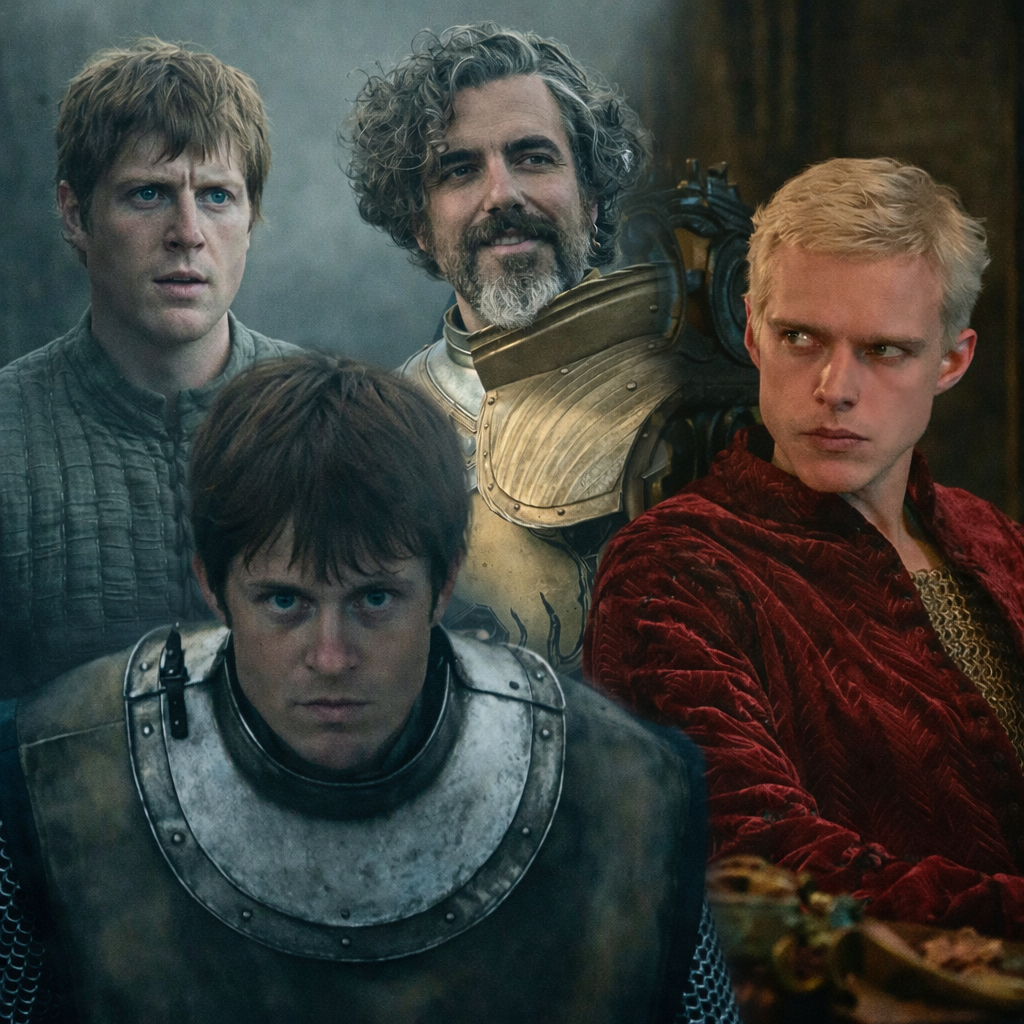
In HBO’s A Knight of the Seven Kingdoms, Episode 4, “Seven,” introduces viewers to one of the most dramatic and rarely seen elements of Westerosi justice: the Trial of Seven. When hedge knight Ser Duncan the Tall (Peter Claffey) demands a trial by combat to clear his name after striking Prince Aerion “Brightflame” Targaryen (Finn Bennett), the prince counters with this obscure, high-stakes variation. The demand shocks even seasoned royals like Prince Maekar (Sam Spruell), highlighting just how archaic and perilous the ritual truly is.
At its core, a Trial of Seven is an amplified form of trial by combat, rooted in Andal tradition and the Faith of the Seven. Unlike the standard one-on-one duel—where champions fight to determine guilt or innocence—the Trial of Seven pits two teams of seven knights each against one another in a brutal melee. The battle continues until one side is defeated: either through death, yielding, or the complete surrender of the accuser or accused. Victory for the accused’s side declares him innocent under the gods’ judgment; defeat means guilt, often with fatal consequences.
The ritual’s origins trace back over 6,000 years to the Andals, the invaders who crossed the Narrow Sea and brought their seven-faced god to Westeros. The Andals believed that honoring the Faith by fielding seven champions—corresponding to the Father, Mother, Warrior, Crone, Smith, Maiden, and Stranger—would compel divine intervention. More gods meant clearer justice, or so the thinking went. This made the Trial of Seven a ceremonial spectacle, invoked only in exceptional cases when ordinary trials felt insufficient or when parties sought to escalate stakes dramatically.
In the A Song of Ice and Fire books by George R.R. Martin, the Trial of Seven appears prominently in the novella The Hedge Knight, the basis for the series. It’s described as ancient and seldom used, with the last known instance occurring over a century before Dunk and Egg’s time. The accused must rally six fellow knights to stand with him; failure to do so results in automatic guilt, as the gods are seen as withholding favor. Similarly, the accuser (or accusers) must assemble their own seven. Everyone involved must be a knight—no squires, lords without knighthood, or commoners allowed—emphasizing the chivalric code.
In the show, Aerion’s demand serves as a clever trap. He knows Dunk, a lowborn hedge knight with few connections, will struggle to find champions willing to risk their lives against Targaryen royalty. Aerion’s side boasts inherent advantages: family members like Princes Maekar and Daeron (Henry Ashton), plus loyal retainers and Kingsguard if needed. Dunk’s plea—”Are there no true knights among you?”—echoes through the court, testing the ideals of knighthood against political reality.
The episode builds tension as Dunk secures allies: Prince Baelor “Breakspear” Targaryen (Bertie Carvel) volunteers last, moved by Dunk’s defense of the innocent puppeteer Tanselle and his honorable intent. Other supporters include Ser Lyonel Baratheon (the Laughing Storm), Ser Raymun Fossoway (newly knighted in a poignant moment), and lesser-known knights like the two Ser Humfreys and Ser Robyn Rhysling. Aerion’s team includes his brothers, opportunistic turncoats like Ser Steffon Fossoway, and hardened fighters such as Ser Donnel of Duskendale.
The rules are straightforward yet merciless: The melee rages until one leader yields (withdrawing accusations) or the side is wiped out. If the accused dies, the gods are deemed to have judged him guilty. No quarter is required—it’s a fight to incapacitation or death. This elevates the Trial of Seven beyond personal duels, turning it into a chaotic tournament where alliances, betrayals, and sheer numbers decide fate.
Comparisons to standard trial by combat are stark. In Game of Thrones, trials like Tyrion Lannister’s at the Eyrie or Oberyn Martell’s against Gregor Clegane were single combats, allowing individual skill to shine. The Trial of Seven multiplies the risk exponentially, making it a spectacle of mass violence. It’s why even Prince Maekar seems unfamiliar with the specifics—it’s so rare that knowledge of it has faded among the nobility.
The ritual’s invocation in A Knight of the Seven Kingdoms underscores key themes. It questions what constitutes true knighthood: Is it noble birth and royal favor, or protecting the weak regardless of status? Dunk’s side represents the former ideal—honor-bound men stepping forward for justice—while Aerion’s embodies entitlement and vengeance. Baelor’s participation, as heir to the Iron Throne, risks everything for principle, highlighting the tragedy of honorable men in a corrupt system.
Fans have noted the Trial of Seven’s symbolic weight. The number seven ties into the Faith’s cosmology, but also foreshadows broader consequences. Baelor’s eventual fate in the melee—sacrificing himself for Dunk—fulfills Daeron’s prophetic dragon dream, symbolizing Targaryen decline. It sets the stage for succession shifts, Blackfyre rebellions, and the eventual tragedy at Summerhall.
Critics praise the show’s handling: no over-the-top CGI battles yet, just raw buildup emphasizing emotion and stakes. Outlets like Mashable, Town & Country, and GamesRadar explain it as a “sevenfold” escalation of trial by combat, rooted in Andal faith. The A Wiki of Ice and Fire entry confirms: The accused is innocent if accusers are defeated or yield; slain means guilty; no champions means automatic condemnation.
As the series progresses toward the trial’s resolution, the Trial of Seven stands as a pivotal moment. It tests Dunk’s resolve, exposes royal fractures, and reaffirms Martin’s world where justice often demands blood. In a franchise filled with betrayals and wars, this ancient rite reminds viewers that even divine judgment comes at a steep price—one that could reshape the Targaryen legacy forever. For Dunk, survival means more than innocence; it means proving that true knighthood endures, even against overwhelming odds.