Is Dunk a Real Knight? Episode 4 of ‘A Knight of the Seven Kingdoms’ Drops Major Clues – And Fans Are Divided
🚨 SHOCKING TWIST in A Knight of the Seven Kingdoms Episode 4: Is Ser Duncan the Tall… a FRAUD? 😱
You thought Dunk was the ultimate honorable hedge knight, standing tall against Targaryen princes and defending the innocent like a true hero. But what if everything he’s claimed about his knighthood is a LIE?
Full details: 👉
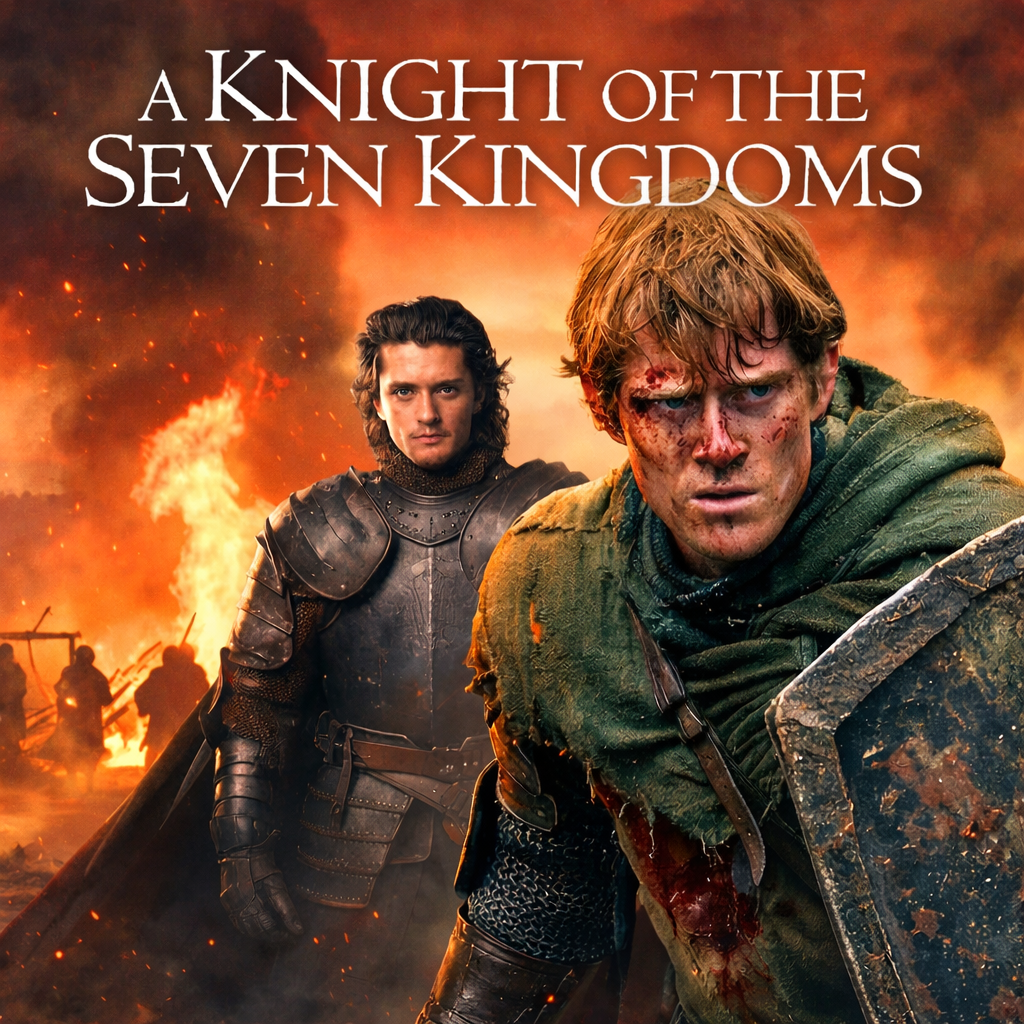
HBO’s “A Knight of the Seven Kingdoms” has kept viewers hooked with its blend of medieval chivalry, Targaryen family drama, and the humble adventures of Ser Duncan the Tall and his squire Egg. But Episode 4, titled “Seven,” delivered one of the series’ most talked-about moments yet – and it’s got fans questioning everything they thought they knew about the show’s towering hero.
The episode centers on Dunk’s desperate fight for survival after assaulting Prince Aerion Targaryen in defense of a puppeteer. Facing execution or worse, Dunk demands a trial by combat, only for Aerion to escalate it into a rare Trial of Seven – a brutal seven-on-seven melee where the gods supposedly decide guilt or innocence. To prove his case, Dunk must rally six knights to his side. If he fails, he’s automatically guilty.
As the pressure mounts, a key scene unfolds that has sparked endless debate: Raymun Fossoway, a young man eager to join Dunk’s cause, asks the hedge knight to dub him a knight on the spot. In Westeros, any sworn knight can knight another – a rule Lyonel Baratheon reminds everyone of when he steps in to perform the ceremony himself. Dunk, sword in hand, hesitates. He doesn’t recite the words. He doesn’t touch Raymun’s shoulders. Instead, he steps back, visibly conflicted, allowing Lyonel to take over.
That pause speaks volumes. Why couldn’t Dunk – the man who calls himself Ser Duncan the Tall – complete the simple ritual? The moment echoes longstanding theories from George R.R. Martin’s “Dunk and Egg” novellas, where subtle hints suggest Ser Arlan of Pennytree, Dunk’s mentor, may never have formally knighted him before dying.
In the books and now the show, Dunk often avoids direct proof of his knighthood. When challenged early on, he claims Arlan dubbed him on his deathbed, with only “a robin in a thorn tree” as witness – a detail the adaptation has played with visually, showing no such ceremony in flashbacks. Instead, viewers see Dunk burying Arlan and taking his gear, but never the knighting itself.
Episode 4 amplifies those doubts. Dunk’s hesitation isn’t portrayed as fear for Raymun’s safety; it’s deeper, almost personal. A brief vision or memory flash shows Arlan shrugging, as if acknowledging an unspoken truth. Combined with Dunk’s earlier reluctance and his emotional plea to the crowd – “Are there no true knights among you?” – the scene suggests he may not consider himself qualified to perform the act.
Yet the show stops short of a definitive reveal. Dunk continues to be called “Ser” by allies and enemies alike. Prince Baelor Targaryen, the heir to the Iron Throne known as “Breakspear,” dramatically rides in to volunteer as Dunk’s seventh champion, using the iconic Game of Thrones theme to underscore the heroism. Baelor’s support lends Dunk legitimacy in the eyes of many, regardless of technicalities.
Fans are split on what it all means. Some argue Dunk is a “true knight” in spirit – he upholds the ideals of protecting the weak, honoring oaths, and showing courage, even if the paperwork is missing. Others point to the narrative irony: a man pretending to be a knight to live up to knighthood’s ideals, exposing the corruption among actual nobles.
The episode doesn’t resolve the question, but it uses the doubt to heighten tension ahead of the Trial of Seven. With champions like Baelor, Lyonel Baratheon, and the Humfreys on Dunk’s side, and traitors like Ser Steffon Fossoway switching to Aerion for promises of reward, the battle promises chaos.
Adding layers is Daeron Targaryen’s cryptic prophecy. The drunken prince shares a dream with Dunk: a great dragon falls on him, pinning him beneath its corpse, yet Dunk survives while the dragon dies. With no literal dragons in this era, many interpret it as a metaphor for a Targaryen – perhaps Aerion himself – meeting defeat. But it also ties into themes of legitimacy and destiny.
The show, adapted faithfully from Martin’s “The Hedge Knight,” uses these ambiguities to explore deeper questions: What makes a knight? Birthright and ceremony, or actions and honor? Dunk’s journey challenges the rigid class system of Westeros, where lowborn fighters like him are dismissed as “hedge knights” while corrupt lords hold sway.
Episode 4’s prison scenes show Dunk grappling with betrayal after learning Egg is Prince Aegon Targaryen. His anger gives way to forgiveness, highlighting his loyalty. When Baelor questions him, Dunk defends his actions simply: knights protect the innocent. It’s a line that resonates, especially as highborn figures like Aerion abuse power.
Critics and viewers have praised the episode for its emotional depth and buildup. The rain-soaked atmosphere, Dunk’s desperate rally, and Baelor’s entrance provide cinematic highs. Yet the knighthood question lingers, setting up potential payoffs in future episodes or seasons.
Martin has left the matter open-ended in the books, allowing readers to decide. The adaptation seems to follow suit, using visual storytelling to fuel speculation without spelling it out.
As the Trial of Seven looms, one thing is clear: whether formally knighted or not, Dunk embodies the chivalric code more than many who bear the title. Episode 4 doesn’t confirm he’s a fraud – but it sure makes a compelling case that his “Ser” might be more aspiration than certification.
With the melee set to explode in the next installment, fans will be watching not just for who wins, but for whether Dunk’s true nature – knight or not – prevails in the end.