Baelor’s involvement sets the stage for tragedy in the Trial itself, where his death—detailed in later episodes and the books—reshapes the succession
🚨 MIND-BLOWN: Why Did the Heir to the Iron Throne RISK HIS LIFE for a Random Hedge Knight?! 😱⚔️
In Episode 4 of A Knight of the Seven Kingdoms, Prince Baelor “Breakspear” Targaryen – the honorable, future king everyone adored – shocks the entire realm by stepping up as Ser Duncan’s seventh champion in the Trial of Seven.
He’s literally fighting AGAINST his own brother Maekar and sadistic nephew Aerion… for a lowborn knight he barely knows. The crowd goes wild, the Game of Thrones theme blasts, and Dunk gets a fighting chance at survival.
But what’s the REAL reason Baelor threw everything away – family loyalty, his throne, his life – to back Dunk?
Read more:
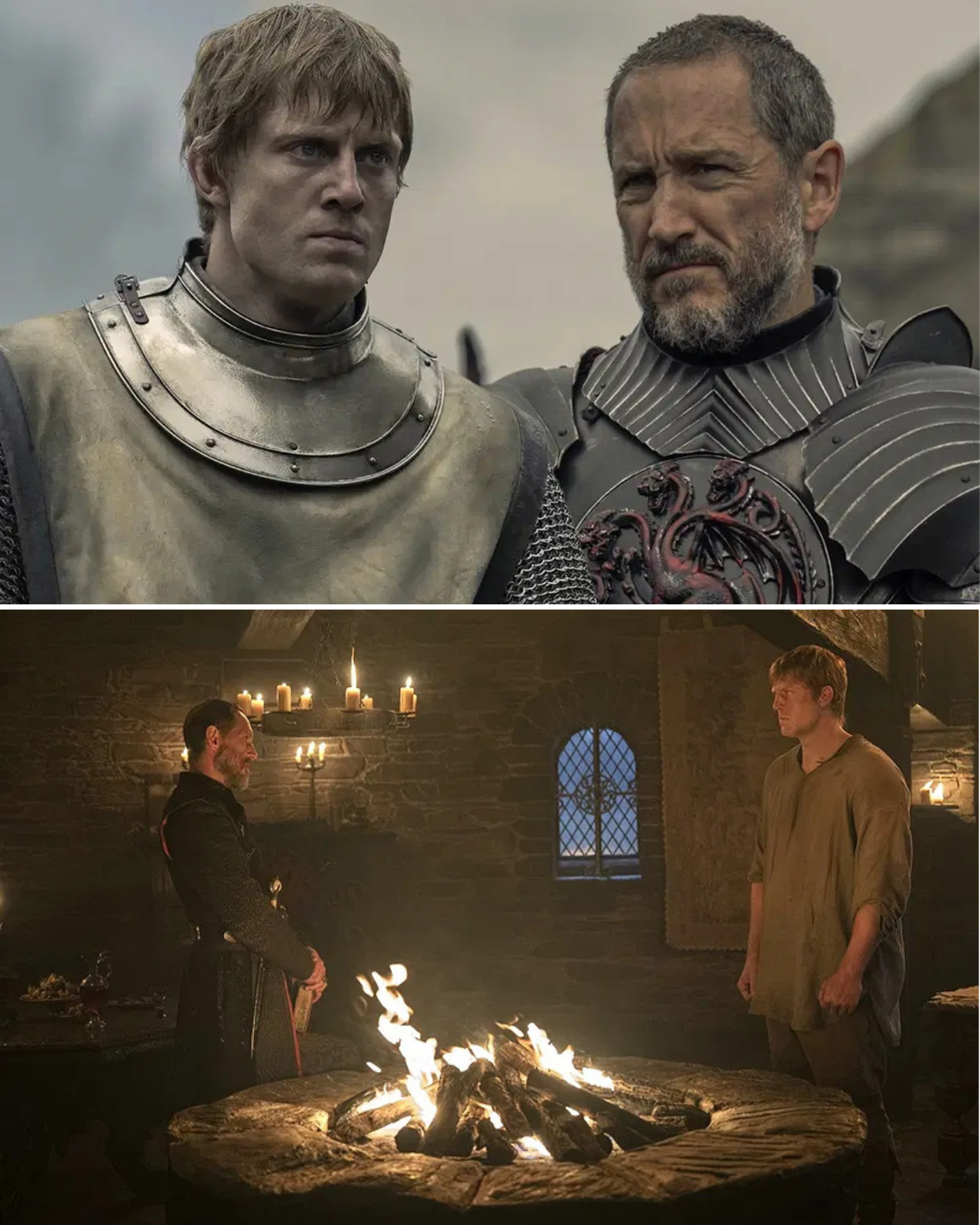
HBO’s A Knight of the Seven Kingdoms continues to build tension in its first season with Episode 4, titled “Seven,” delivering one of the most pivotal and emotionally charged moments yet. The episode centers on Ser Duncan the Tall’s desperate struggle for justice after his clash with Prince Aerion Targaryen, culminating in the dramatic decision by Prince Baelor “Breakspear” Targaryen to join Dunk’s side in the rare and dangerous Trial of Seven. Showrunner Ira Parker and actor Bertie Carvel have since explained the reasoning behind Baelor’s bold choice, revealing layers of personal honor, moral conviction, and political calculation.
The episode picks up immediately after the previous installment’s cliffhanger. Dunk, imprisoned for assaulting Aerion after the prince cruelly injured puppeteer Tanselle Too-Tall, grapples with betrayal upon learning his squire Egg is actually Prince Aegon Targaryen. Egg visits the cell to apologize, but Dunk’s initial anger gives way to reluctant affection. Summoned before Prince Baelor, the heir to the Iron Throne and Hand of the King, Dunk defends Egg as “a good boy” despite the deception.
Baelor outlines the grim options: Aerion demands severe punishment, possibly death or mutilation, while Dunk’s low birth leaves him vulnerable in the royal court. Dunk requests a trial by combat, a knightly right, but Aerion escalates it to a Trial of Seven—a ancient Andal tradition invoking the Seven Gods, where seven champions fight for each side, with the victors deemed favored by divine will. The format, brought to Westeros thousands of years ago, is meant to ensure the gods’ intervention in matters of justice.
Assembling champions proves nearly impossible for Dunk, a hedge knight with few allies. He pleads publicly: “Are there no true knights among you?” One by one, unlikely supporters step forward—Ser Robyn Rhysling, Ser Lyonel the Laughing Storm, and others—but the final spot remains empty after a betrayal by Steffon Fossoway, who switches to Aerion’s side. Just as hope fades, Baelor rides onto the field, declaring, “I will take Ser Duncan’s side.” The announcement, underscored by Ramin Djawadi’s iconic Game of Thrones theme, erupts the crowd in cheers while Maekar and Aerion react with visible fury.
Why would the realm’s most respected prince—Egg’s uncle, Maekar’s older brother, and the man widely seen as the finest knight of his generation—risk his life, reputation, and family ties for a common-born fighter? Interviews with key creatives provide clear insight.
Showrunner Ira Parker, speaking to GQ, described Baelor’s internal conflict as a test of character. “There’s this: I don’t know where the quote comes from, but virtue untested is no virtue at all,” Parker said. “I think Baelor is feeling that bear down on him in this moment. Nobody is demanding this of him, but he’s demanding it of himself. That this poor schmuck is going to get absolutely murdered unless he does something about it. He goes and decides that he is the person that people have said that he is.”
Parker emphasized the dilemma: Baelor knows Aerion’s cruelty deserved Dunk’s intervention, yet siding against his brother and nephew means open conflict within House Targaryen. The royal family’s public image, already strained, hangs in the balance during the Ashford tournament, intended to bolster their standing among the smallfolk.
Actor Bertie Carvel, who portrays Baelor, framed the decision as one of basic decency. In discussions with outlets like TV Insider, Carvel called it “a question of decency.” Baelor sees Dunk’s actions—defending a vulnerable woman from royal abuse—as righteous. By championing him, Baelor upholds the chivalric ideals he embodies, even if it pits him against kin.
In George R.R. Martin’s source novella The Hedge Knight, Baelor’s motivation aligns closely: he recognizes Dunk’s honor and refuses to let injustice prevail under Targaryen banners. The show stays faithful here, amplifying the emotional stakes through Dunk’s vulnerability and the public spectacle.
The choice carries heavy foreshadowing. Baelor’s involvement sets the stage for tragedy in the Trial itself, where his death—detailed in later episodes and the books—reshapes the succession. As heir apparent, his loss clears a path for less stable rulers, contributing to House Targaryen’s long decline. Fans note parallels to later Targaryen infighting, where family loyalty clashes with personal honor.
Episode 4 also deepens Dunk’s arc. From a bumbling hedge knight to a figure inspiring royal intervention, his journey highlights Martin’s theme: true knighthood lies in deeds, not birthright. Dunk’s plea and Baelor’s response reinforce that even in a brutal world, decency can prevail—temporarily.
The Trial of Seven’s setup promises high-stakes action in Episode 5, with practical effects and grounded combat emphasizing the cost of violence. Baelor’s stand injects hope into Dunk’s underdog story while underscoring the fragility of honor in Westeros.
As A Knight of the Seven Kingdoms progresses, this moment stands out as a turning point. Baelor doesn’t just save Dunk; he affirms the series’ core message that virtue, when tested, defines a man more than titles or blood. Whether viewed as noble sacrifice or risky idealism, his decision reverberates through the saga.
With potential seasons drawing from Martin’s additional outlines, the ripple effects could extend far. For now, Episode 4 cements Baelor as one of Westeros’ most compelling figures—a prince who chose justice over convenience, knowing the price.