This phased approach would allow lead actors – including Dexter Sol Ansell as young Egg and the adult Dunk portrayer
🚨 HBO JUST DROPPED A BOMBSHELL: ‘A Knight of the Seven Kingdoms’ Could Run for 12-15 SEASONS… Spanning OVER 30 YEARS?! 😱🛡️🐉 Mind blown yet?
Full details:
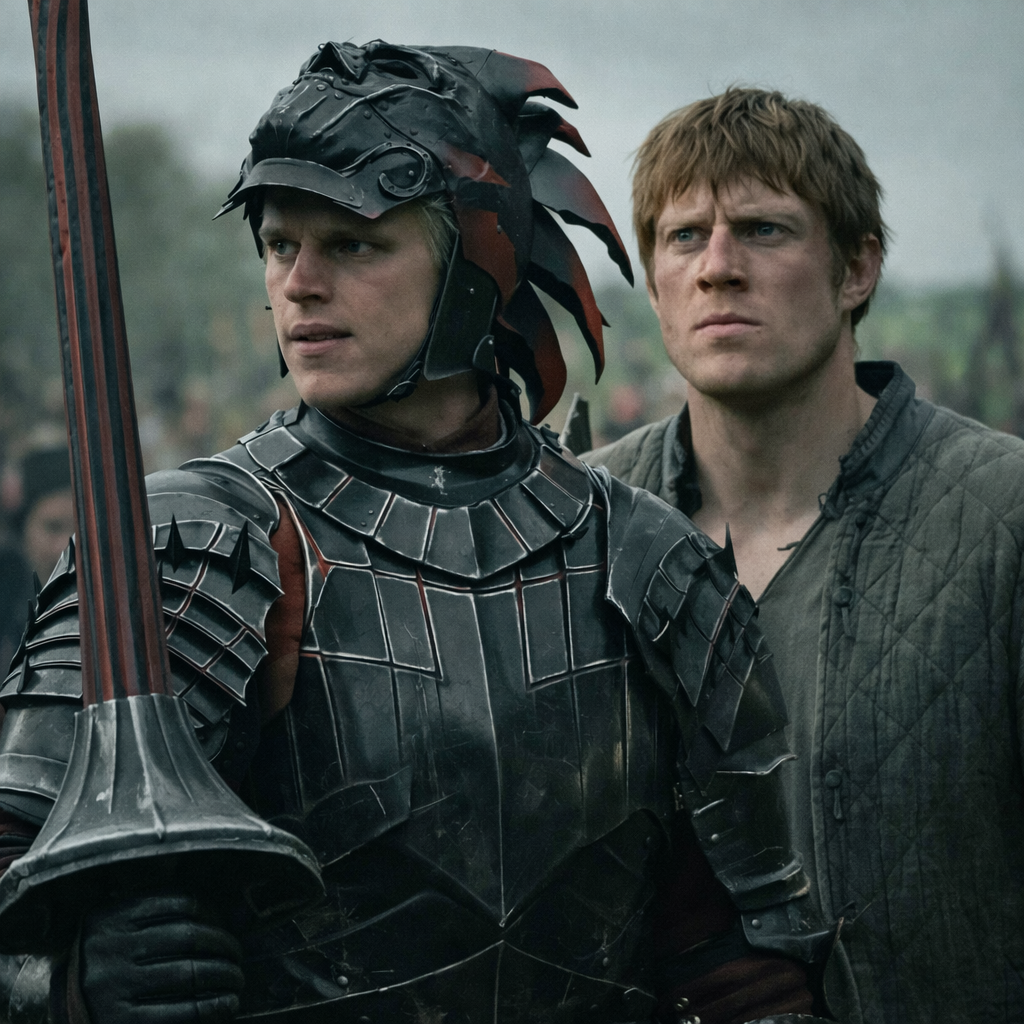
HBO’s latest entry in the “Game of Thrones” universe, “A Knight of the Seven Kingdoms,” has quickly become a fan favorite since its premiere. The series, adapting George R.R. Martin’s “Dunk and Egg” novellas, follows the adventures of the towering hedge knight Ser Duncan the Tall and his squire Egg, who is secretly the young Prince Aegon Targaryen. Unlike the dragon-heavy spectacle of “House of the Dragon,” this show delivers grounded, character-driven stories filled with humor, honor, and subtle political intrigue.
Now, showrunner Ira Parker has revealed an extraordinarily ambitious vision for the series’ future: up to 12-15 seasons spread across more than three decades. In an interview with Esquire, Parker outlined a plan to produce blocks of 4-5 seasons every ten years. The first block would cover Egg’s childhood adventures, the second his time as a young prince, and the final one his adult years as he ascends toward the Iron Throne as King Aegon V.
This phased approach would allow lead actors – including Dexter Sol Ansell as young Egg and the adult Dunk portrayer – to age naturally alongside their characters. No heavy makeup or recasting would be needed for the passage of time, preserving authenticity in a way few long-running shows achieve. Parker emphasized that this structure suits the source material’s gradual pace, avoiding the creative burnout and rushed storytelling that plagued some later seasons of the original “Game of Thrones.”
The plan draws from Martin’s extensive groundwork. While only three “Tales of Dunk and Egg” novellas have been published – “The Hedge Knight,” “The Sworn Sword,” and “The Mystery Knight” – Martin has provided the showrunners with detailed outlines for 10-12 additional stories. These span the duo’s entire lives, from humble beginnings to major historical events in Westeros. If adapted at a rate of one novella per season or adjusted blocks, the series could easily surpass the original “Game of Thrones'” eight seasons in length.
HBO has already shown commitment. Season 1, covering the first novella, earned strong viewership and critical praise for its fresh take on the franchise. Season 2 is in production with an expected 2027 premiere, maintaining an annual release schedule – a feat “House of the Dragon” has struggled to match due to its larger scale. Parker noted that HBO’s current plan focuses on the three published novellas, but the extra outlines from Martin open the door for expansion if ratings hold.
Why does this long-term vision feel “perfect” for the series? First, it aligns with the stories’ strengths. Martin’s novellas are shorter, episodic tales emphasizing personal growth, knighthood ideals, and quiet heroism over massive battles. A drawn-out timeline lets these moments breathe, building deep emotional investment in Dunk and Egg’s bond. Viewers could watch Egg mature from a runaway prince into a reformer king, mirroring real-life aging and adding layers of poignancy.
Second, it addresses common pitfalls in long-running fantasy adaptations. Rapid production often leads to quality dips, as seen in parts of “Game of Thrones.” By spacing blocks a decade apart, the team avoids exhaustion, allows for real-world actor development, and keeps the story fresh. It also prevents the need to rush Martin’s unfinished material – a criticism that dogged the original series’ final seasons.
Third, the approach turns the show into a true generational epic. Fans who start watching in their 20s could follow the saga into their 50s, passing it down to children. This real-time evolution echoes landmark series like “The Simpsons” or “Doctor Who,” but in a prestige fantasy format. It could redefine viewer loyalty in streaming era, where binge culture dominates.
Challenges remain significant. Sustaining a major HBO production over 30 years requires consistent viewership, budget stability, and actor availability. Careers change, health issues arise, and the TV landscape shifts dramatically. Parker acknowledged it’s a “long shot,” but the ambition reflects confidence in the material and audience passion.
Martin’s involvement adds credibility. The author has expressed hope to write more Dunk and Egg tales, and his outlines ensure the show won’t outpace source material like “Game of Thrones” did. If he continues contributing, the series could remain faithful while expanding the lore.
Fan reactions have been mixed but largely enthusiastic. Many praise the idea of authentic aging and long-form storytelling in a franchise often criticized for rushed endings. Others question practicality, pointing to production realities and potential audience fatigue.
HBO CEO Casey Bloys has confirmed annual releases for now, signaling strong support. With “House of the Dragon” wrapping up and other spinoffs in development, “A Knight of the Seven Kingdoms” stands out for its intimate scale and potential longevity.
If Parker’s vision comes to fruition, it could mark a bold new chapter for prestige television – a Westeros saga that grows with its audience over decades. Whether HBO greenlights the full plan depends on future seasons’ success, but the blueprint exists. For fans craving more from Dunk and Egg, the prospect of a 30-year journey is as thrilling as it is audacious.
In an era of short attention spans and quick cancellations, this could prove that some stories are worth waiting for – one decade at a time.