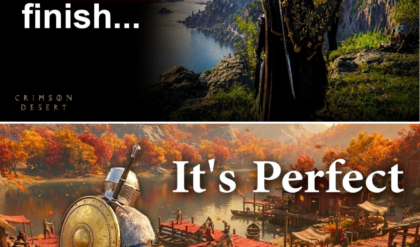
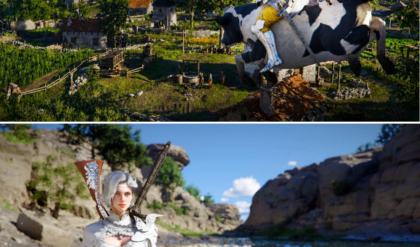
Stop trying to “complete” Crimson Desert. You’re being played. 🔥
Ever sat down to knock out some side quests, only to realize 11 days later that you’re brewing alchemy potions, managing a livestock ranch, and chasing a legendary mount you heard about on Discord? Most games have a “main story” and “filler content.” Crimson Desert doesn’t have “side content” at all.
Everything you do feeds into everything else. Crafting powers your combat, exploration fills your knowledge entries, and your base camp—the Grey Mane Camp—isn’t just a home; it’s a self-sustaining economy that dictates how strong you actually are. Pearl Abyss didn’t just build an open-world RPG; they crammed an entire MMO’s worth of systems into a single-player experience, and they never once told you it was optional.
Are you playing the game, or is the game’s infinite loop playing you?
Discover why the finish line in Crimson Desert is a myth: 👇
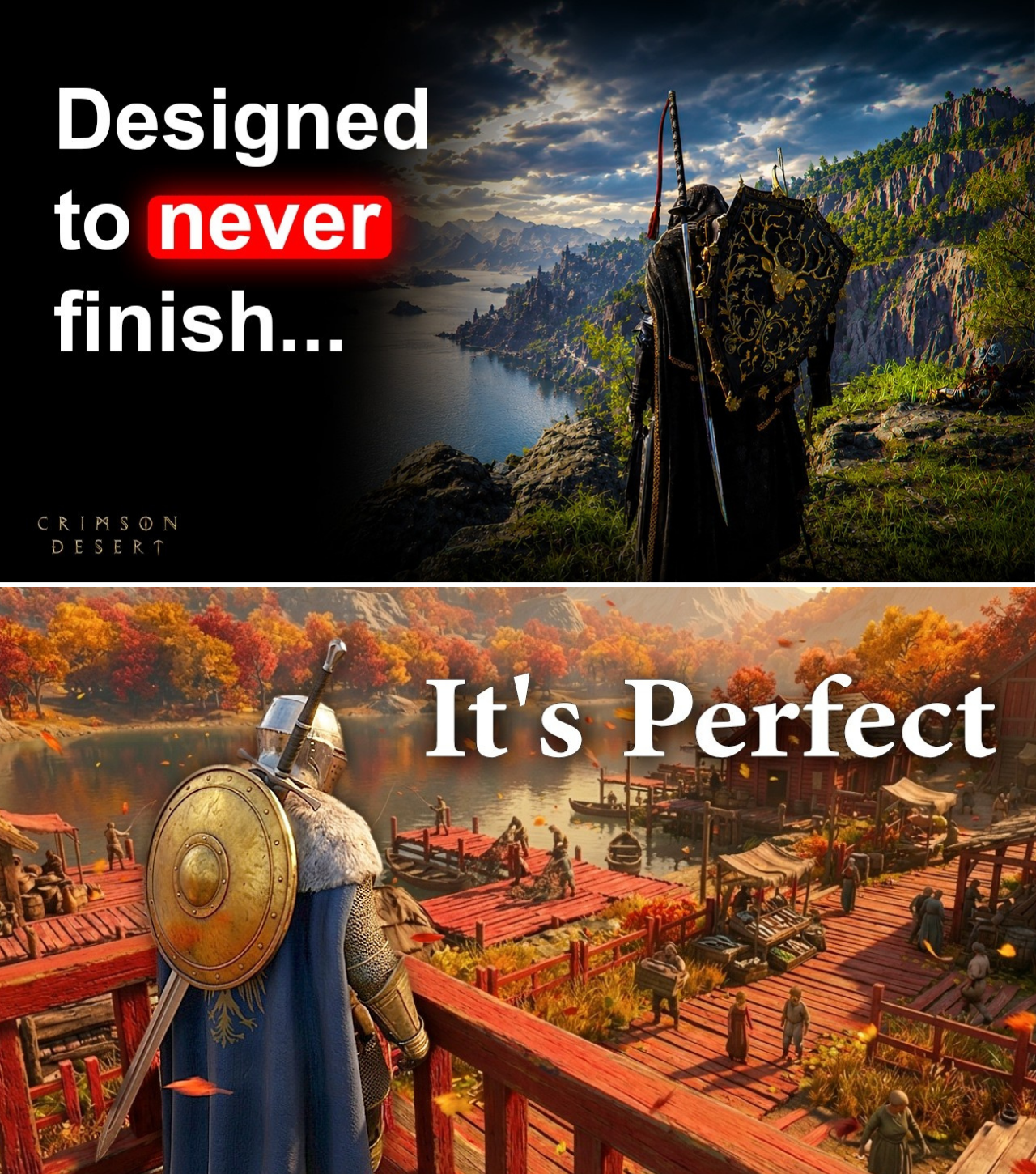
In the traditional architecture of an open-world action RPG, “side content” serves a clear purpose: it provides optional distractions for the player to engage with at their leisure, typically yielding vanity rewards or minor upgrades. However, Crimson Desert has systematically dismantled this design trope. By weaving every life skill, crafting loop, and exploration objective into a singular, interdependent progression system, developer Pearl Abyss has created an experience that defies the very concept of “finishing” a game.
The “No Side Content” Philosophy
The genius—and the exhaustion—of Crimson Desert lies in its refusal to compartmentalize. As players have observed, the game’s systems operate as a closed, self-reinforcing circle. Alchemy requires gathering, gathering requires exploration, and the resulting buffs are essential for the high-intensity, combat-focused narrative encounters.
Central to this is the Grey Mane Camp, which functions far less like a traditional player hub and more like a high-stakes resource management engine. Players can dispatch NPCs to handle remote resource gathering, influence faction-held territories, and even weaken fortresses before personally engaging in combat. When these infrastructure elements are combined with a “knowledge system” that rewards environmental curiosity with permanent stat increases and skill points, the line between “optional content” and “character progression” effectively vanishes.
MMO DNA in a Single-Player Box
The core of Crimson Desert‘s design stems from the pedigree of its developers, who previously built Black Desert Online. In a massively multiplayer environment, content is distributed across a massive player base; one player focuses on trading, another on combat, another on life skills.
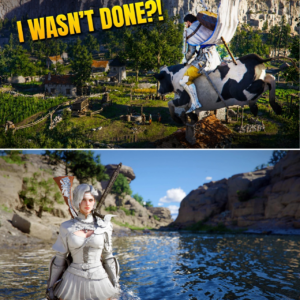
Crimson Desert effectively forces a single player to assume the role of an entire MMO server. The game does not differentiate between “main quest” and “side activity”—it presents everything as “the game.” This creates a psychological phenomenon where players find themselves perpetually redirected. A simple trek across the map for a story objective is interrupted by a “purple icon” (indicating a challenge for a rare Abyss Artifact), which leads to a combat trial, which requires a specific potion, which requires ingredients found at a local camp, which requires a new mount. The game essentially uses its own mechanics to ensure the player is always off-track, while simultaneously making that divergence feel like the most efficient way to grow in power.
The Myth of Completion
The implementation of the “re-blockading” system further cements this design. By allowing enemy forces to periodically retake liberated territories, Pearl Abyss ensures that the world state remains fluid. The map is not a checklist to be cleared; it is a resource to be managed.
For the completionist, this is a distinct point of friction. The traditional “clear-the-map” mindset, which has dominated open-world design for over a decade, is incompatible with a world that refuses to stay conquered. The game effectively forces the player to engage with its systems not to reach a conclusion, but to maintain a status quo.
A New Standard or a Psychological Trap?
Whether this design represents a daring evolution of the genre or an elaborate, endless “chores” trap remains the subject of heated debate in the community. What is certain is that the player base is reacting with a mixture of bewilderment and addiction.
By removing the “exit ramps” usually found in single-player games, Crimson Desert has created a rare “infinite” loop. It is a game that does not ask for your time—it demands your focus. For those who enjoy the satisfaction of a clean, completed checklist, Crimson Desert will undoubtedly be a source of frustration. But for those who enjoy the feeling of a world that is always reacting, always changing, and always offering “just one more system” to master, it may well be the most compelling—and inescapable—open world ever designed.
The finish line in Crimson Desert doesn’t exist; for those currently traversing the landscapes of Pywell, the journey is not just the destination—it is a cycle that resets every time you think you’ve finally reached the end.
News
The Maritime Horizon – Is Pearl Abyss Preparing to Re-Define the Open World Genre?
CRIMSON DESERT’S FIRST DLC IS LEAKED… AND IT CHANGES EVERYTHING. ⚓️🔥 Five million copies sold. A patch schedule that puts every other AAA studio to shame. And now? The silence is finally broken. Pearl Abyss has officially confirmed in their…
The “Living Map” Paradox – Is Crimson Desert’s Relentless Evolution a Masterstroke or a Burden?
The game that literally won’t let you quit… and it’s driving completionists absolutely insane. 🔥 Ever feel like you’ve finally “beaten” an open-world game, only to find the map you spent 200+ hours clearing has changed overnight? Most developers give…

The Gilded Age Season 4: A Dual Revolution in New York Society
The Gilded Age Season 4 is officially bringing a RECKONING. 🗽🔥 The Season 3 finale left us in absolute disbelief, but the pieces for Season 4 are falling into place, and the stakes have never been higher. We’re moving beyond…

The First Son and the Prince Return: Secret Plots, Star Power, and Everything We Know About ‘Red, White & Royal Blue 2’
The Royal Chaos is BACK! Alex and Henry’s next chapter just got VERY real. 🇬🇧🇺🇸👑 Stop trying to stay calm! The sequel to Red, White & Royal Blue is officially filming, and new behind-the-scenes leaks are dropping bombshells that change…

The Snake in the Grass: ‘Marshals’ Season 2 Sets the Stage for a High-Stakes Dutton Crossover
Is the Dutton legacy about to CRUMBLE? 🏔️⚠️ The Season 1 finale of Marshals left us all gasping, but the Season 2 trailer just dropped a bomb that changes EVERYTHING. We thought we knew who the enemy was, but the…

The Brier University Revolution: What to Expect from ‘Off-Campus’ Season 2
Brier University is officially back in session! 🏒🔥 Stop everything—the Off-Campus Season 2 updates are HERE and the drama is reaching levels we weren’t even prepared for. While we were all obsessing over Garrett and Hannah, the show was secretly…
End of content
No more pages to load