RECYCLED EXOTICS AND PAYWALL FRICTION: INSIDE THE GROWING CONTROVERSY OVER FORZA HORIZON 6 UPDATE 2
Playground Games just blinked, and the entire high-stakes economy of Forza Horizon 6 Update 2 is reportedly in absolute freefall. Prominent franchise veterans are breaking their silence over a deceptive progression system, and fans are claiming they’re being aggressively pushed toward an expensive corporate paywall!
The upcoming Japanese “Decades” festival expansion promised to rewrite the social meta with dedicated Time Attack hubs, but a shocking recycling tactic has left players asking if their heavily earned progression points are being intentionally manipulated. Why did the studio quietly re-introduce an unstable multi-player race mode that they previously scrubbed from the registry, and what are the hidden changes to the unlock thresholds?
The enthusiast community is completely melting down right now—get the unedited patch breakdown, recycled car lists, and the full future outlook below! 👇🔥
The honeymoon phase for Microsoft’s premier open-world racing sandbox has officially slammed into a concrete barrier. Just weeks after launching its visually spectacular rendition of automotive culture across Japan, Playground Games is facing severe institutional pushback over the structural blueprint for its impending Update 2 patch. What was marketed as a grand expansion of the live-service ecosystem has instead triggered a wave of exhaustion and burnout across prominent enthusiast networks.
A biting technical and economic critique delivered by automotive gaming authority BlackPanthaa has galvanized the community’s fears. The breakdown details an aggressive reliance on recycled assets, a highly controversial adjustment to progression scoring thresholds, and corporate steering that critics claim intentionally forces players away from the free Festival Playlist and directly into the premium, paid Car Pass framework.
The Illusion of Evolution: Car Meets and the Decades Arena
At the forefront of Update 2’s promotional campaign is the concept of the Evolving World—a dynamic environmental system engineered to alter the topography of the map across the game’s operational lifecycle [00:38]. For this specific deployment, developers are introducing the Horizon Decades festival branding, anchoring the social hub around a newly constructed asset dubbed the Hokubu Time Attack Circuit [00:54].
The circuit is designed to address a persistent community complaint regarding Forza Horizon 6‘s under-utilized social infrastructure: the Car Meets [01:25]. By driving up to the designated Hokubu parking areas, players are seamlessly phased into a shared instanced lobby specifically optimized for vehicle display and aesthetic networking [01:01].
However, community tracking data suggest the update is largely cosmetic. Veteran racers point out that the underlying telemetry and event setups remain virtually unchanged, prompting concerns that the Hokubu track serves as a superficial stop-gap while the studio scrambles to address deeper network stabilization and automated credit exploits.
Amidst the structural criticism, some economic relief was confirmed: despite widespread fears of an automated bank-wipe targeting high-tier players following recent progression exploits, prominent creators confirmed their private profiles remained un-touched. “No, I still have 20 million… because I put the work in,” BlackPanthaa reported, signaling that Playground Games is currently prioritizing leaderboard security over aggressive, retrospective currency clawbacks [02:10].
The Asset Recycler: Asset Hoarding and the Premium Car Pass
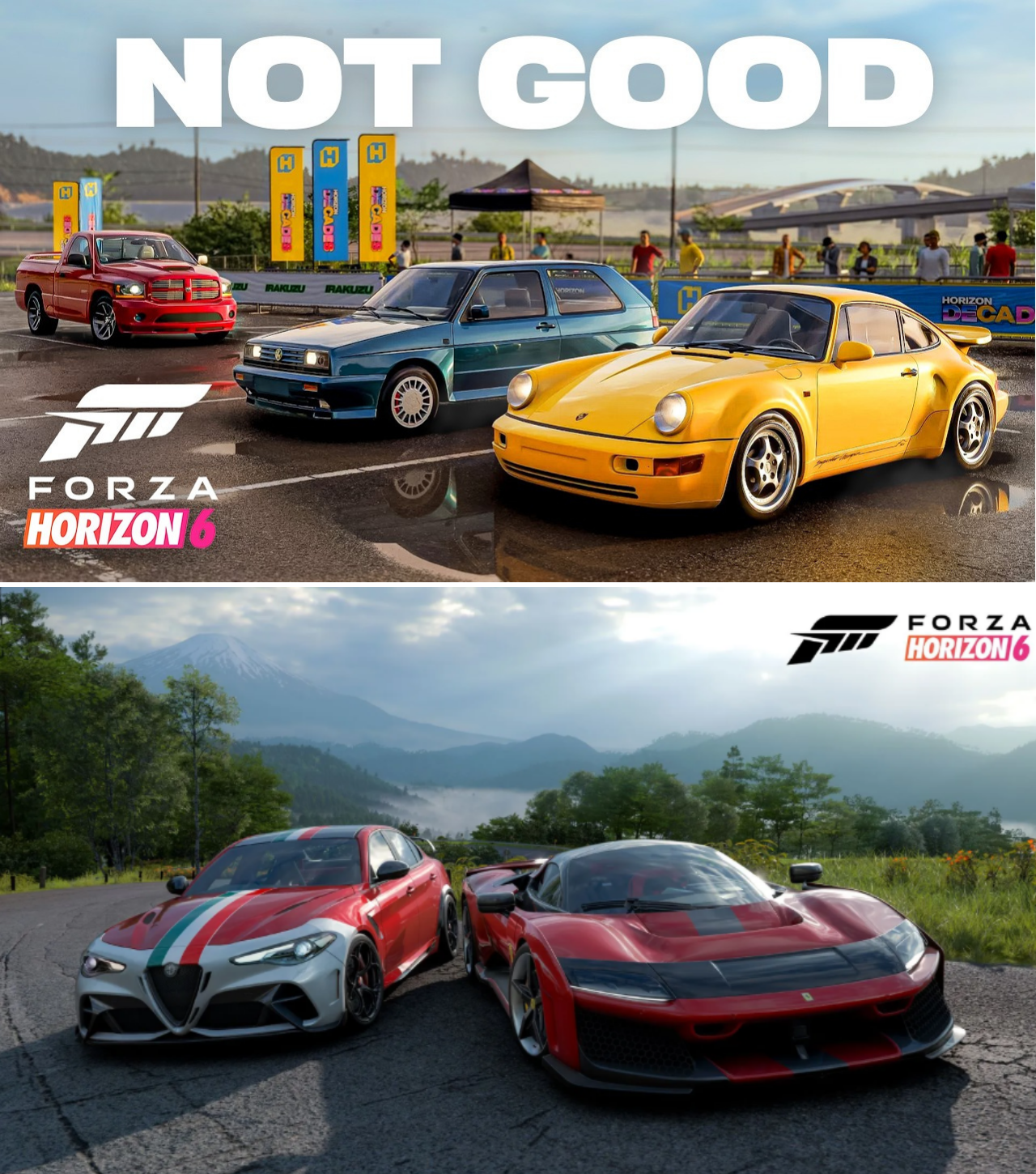
The focal point of player fury is directed squarely at the vehicle roster designated for the Update 2 Festival Playlist. The catalog features recognizable performance machinery, including the Porsche 911 Turbo S, the Volkswagen Rally Golf, the 2018 Lotus Exige Cup, and the classic Lamborghini Countach [02:22, 02:50].
The systemic issue, as isolated by the community database, is that nearly every vehicle slated for the free progression tiers is a direct port from previous Forza titles [03:17]. Fans who spent multiple years unlocking these exact vehicles in prior iterations are expressing extreme frustration at being forced to re-grind the same digital real estate to re-acquire assets they consider baseline requirements.
This recurring porting strategy highlights a structural disparity between free and premium content. While the free seasonal playlist consists of recycled legacy assets, the paid premium Car Pass consistently receives cutting-edge, uniquely licensed machinery. The upcoming June and July telemetry schedules confirm that premium subscribers will secure exclusive access to high-profile assets, including:
The Mazda “Mad Mike” Drift Wagon: Slated for deployment on June 25 [07:59, 09:04].
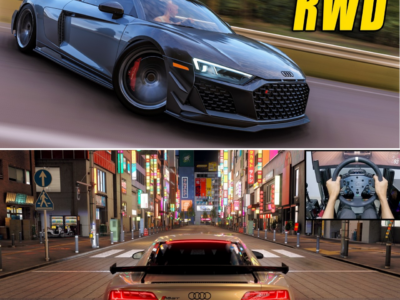
The Audi R8 V10 GT RWD: A highly anticipated rear-wheel-drive performance variant deploying on June 18 [08:06].
The Nissan Skyline GT-R 40th Anniversary Edition: A highly unique four-door variant of the R33 generation, arriving July 2 [08:36].
The Toyota GR Corolla: The widely requested, wide-body hot hatch deploying on July 9 [09:09].
The stark contrast in vehicle quality has led to accusations that Microsoft is deliberately utilizing the Fear Of Missing Out (FOMO) loop as an economic weapon [04:44]. By flooding the free ecosystem with uninspired, repetitive filler while locking pristine, community-requested platforms behind a premium paywall, the studio is effectively squeezing casual drivers out of the non-paid progression pipeline.
The Return of The Trial: Progression Points Inflation
Compounding the fatigue, Playground Games is officially re-introducing The Trial—a notorious, highly polarized multiplayer event layout [06:26]. The mode groups a convoy of human players against a grid of max-difficulty AI Drivatars.
The historical consensus surrounding The Trial remains overwhelmingly negative due to chaotic matchmaking parameters, where random teammates frequently engage in aggressive griefing, internal ramming, and terminal corner-bombing rather than working as a cohesive racing unit [06:38]. “It’s highly recommended to try and create a group of friends… because randoms never really seem to work as a team,” industry observers warn [07:03, 07:15].
More alarming than the mode’s return is an unannounced adjustment to the structural progression metrics. Leak data from internal test builds indicate that the studio is systematically increasing the required point thresholds necessary to unlock seasonal vehicles [06:45]. By inflating the seasonal point requirements while simultaneously forcing players into high-friction, un-coordinated multiplayer events like The Trial, the casual gameplay loop is rapidly transforming into an exhausting, corporate-mandated chore.
A Blueprint for Preservation: The Permanent Playlist Alternative
As player retention indicators begin to show early signs of stagnation in only the second major patch cycle, prominent community figures are presenting concrete alternatives to reverse the trend. The prevailing blueprint demands the total eradication of time-gated FOMO mechanics in favor of a Permanent Playlist Vault system [12:04]. Under this architecture—already successfully deployed in competing live-service franchises—players can actively select, buy, and execute legacy seasonal playlists at their own pace, eliminating the artificial weekly pressure [12:04, 12:38].
Additionally, critics suggest that if Playground Games must rely on recycled car frames due to licensing constraints, those models should be permanently deposited directly into the standard Autoshow registry [13:53]. The highly coveted hard-to-find tiers should be reserved exclusively for unique performance sub-variants—such as a specialized Nismo Z-Tune variant of the Nissan Skyline R34—or highly customized Forza Edition platforms packed with unique tracking coefficients [13:21].
Looking Toward the Italian Horizon
While Update 2 is tracking to be a critical low point for player sentiment, a small contingent of the community is maintaining a position of forced optimism. Early database leaks point toward Series 3 as the true baseline patch for the game, rumored to feature a massive influx of pristine, highly requested Italian Exotics from manufacturers whose licensing arrangements were delayed during the game’s initial launch window [09:26].
Whether Series 3 can successfully heal the systemic wounds inflicted by Update 2’s aggressive recycling and point inflation depends entirely on Microsoft’s willingness to listen to its core demographic. Until the studio breaks its strict corporate radio silence and addresses the fundamental flaws of its live-service architecture, the shimmering neon highways of Tokyo will continue to feel increasingly vacant.