Stranger Things ChatGPT Writing Claims Addressed by Documentary Director
Stranger Things fans are in FULL meltdown mode right now… and this time it’s not just about the finale 🔥🤖
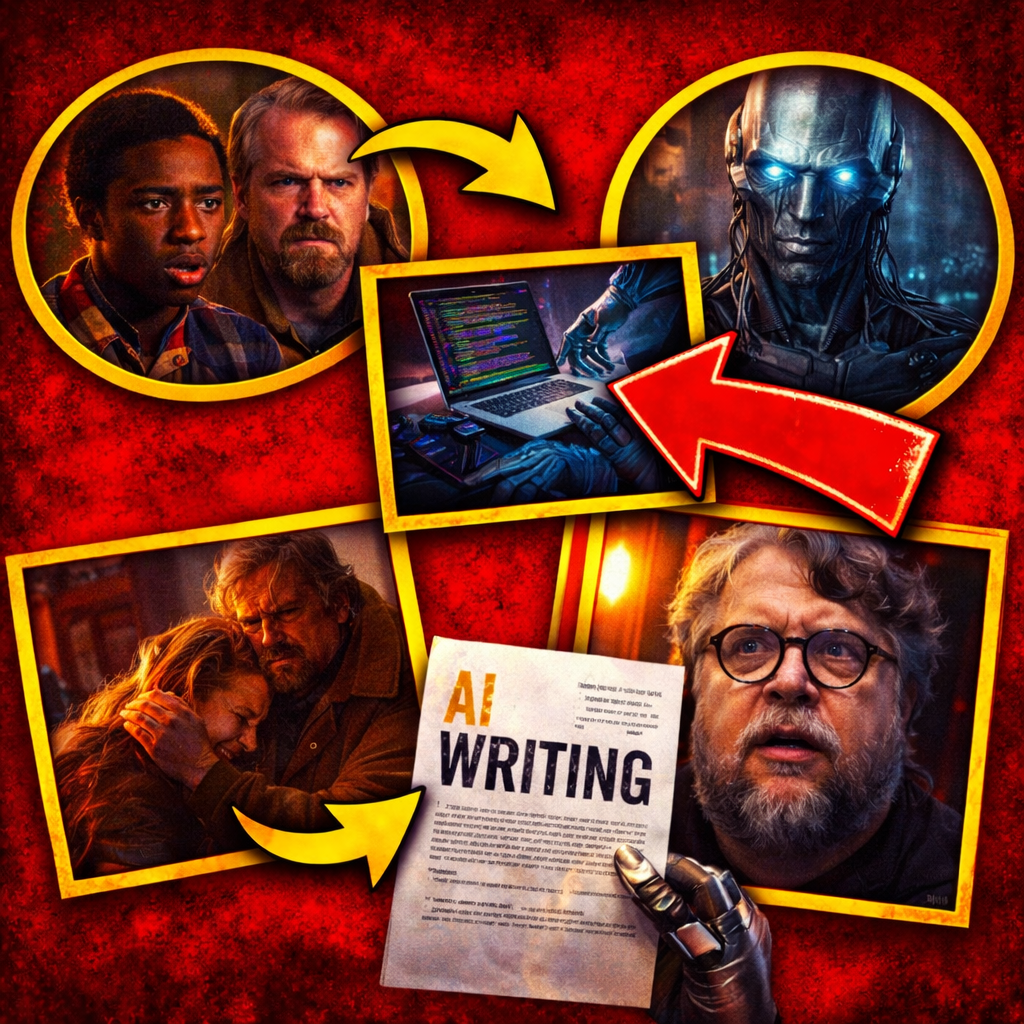
You paused, zoomed, and freaked out: In the new doc One Last Adventure, there’s a crystal-clear shot of the Duffer Brothers’ laptop… with what looks like MULTIPLE ChatGPT tabs open while they’re supposedly crafting the controversial Season 5 ending.
Read more:
The release of Stranger Things’ final season on December 31, 2025, was followed quickly by Netflix’s behind-the-scenes documentary, One Last Adventure: The Making of Stranger Things 5, which premiered on January 12, 2026. Directed by Martina Radwan, the two-hour film offers an intimate look at the year-long production process, including intense writers’ room sessions, on-set challenges, and the pressure to deliver a satisfying series finale titled “The Rightside Up.”
The finale itself divided fans. It featured a massive battle against Vecna and the Mind Flayer, Eleven’s apparent sacrifice to close the Upside Down gates, and an epilogue flashing forward to the characters’ futures—college life, relationships, and a nostalgic return to the Wheeler basement for Dungeons & Dragons. While some praised the emotional focus on friendship and growth, others criticized it as overly safe (no major hero deaths), ambiguous (Eleven’s fate left open-ended), rushed, and plagued by unresolved plot holes, including military loose ends and underutilized threats.
The backlash intensified with online theories like “Conformity Gate,” suggesting a hidden alternate ending or altered script for mainstream appeal. Then, eagle-eyed viewers dissecting the documentary frame by frame claimed to spot a ChatGPT tab open on a laptop used by one of the Duffer Brothers (Matt and Ross) during script revisions for the finale episode. Screenshots circulated rapidly on social media, fueling accusations that generative AI was used to write parts—or all—of the divisive conclusion. Some tied it to revelations in the doc that production on the feature-length Episode 8 began before the script was fully completed, implying shortcuts were taken.
The claims sparked widespread debate. Detractors argued the finale’s perceived flaws—overexplained monologues, convenient resolutions, and a lack of bold risks—matched stereotypical AI-generated writing: formulaic, lacking depth, and prioritizing efficiency over creativity. Supporters of the theory pointed to Hollywood’s ongoing AI controversies, including the 2023 writers’ strikes over generative tools, as context for suspicion.
Martina Radwan, who spent a full year embedded with the production team, directly addressed the rumors in a January 14, 2026, interview with The Hollywood Reporter. When asked if she witnessed any use of generative AI in the writers’ room that could be considered unethical, Radwan responded unequivocally: “No, of course not.” She described the room as a space of “creative exchanges” and “conversation,” not solitary script-pounding. “People think ‘writers room’ means people are sitting there writing,” she explained. “No, it’s story development.”
On the specific screenshot, Radwan questioned the assumption: “I mean, are we even sure they had ChatGPT open?” She noted that even if a tab was visible, it didn’t prove misuse. “Doesn’t everybody have it open, to just do quick research?” she asked, comparing it to having an iPhone nearby while working. Radwan emphasized the impracticality of relying on AI for such a complex narrative: “How can you possibly write a storyline with 19 characters and use ChatGPT? I don’t even understand.” She stressed witnessing genuine human collaboration—debates, idea bouncing, and emotional investment—rather than automated output.
Radwan expressed heartbreak over the scrutiny: “What I find heartbreaking is everybody loves the show, and suddenly we need to pick it apart.” She portrayed the process as pressured but authentic, with the Duffers and team navigating tight deadlines through traditional creative methods. Netflix and the Duffer Brothers did not respond to requests for comment on the AI allegations.
The controversy fits into broader fan frustration with the finale’s choices. Critics noted the episode’s length allowed for spectacle but diluted stakes, with the Mind Flayer’s role minimized and Eleven’s powers seemingly exhausted in a way that echoed earlier seasons without fresh payoff. The ambiguity around her survival—hinted at through Mike’s D&D narration and subtle clues like a blue bracelet—drew comparisons to divisive closes like Lost, but without the same level of lore resolution.
Supporters of the show argue the ending honored its core themes: friendship enduring trauma, childhood magic fading into adulthood, and moving forward. The epilogue’s nostalgia—mirroring Season 1’s basement scene with a new generation—provided closure for many. Radwan’s comments reinforce this view, portraying the Duffers as committed storytellers facing real-world production realities, not shortcuts via AI.
As Stranger Things transitions to legacy status—with spin-offs in development—the ChatGPT claims highlight how intensely fans dissect every detail when a long-running series ends. Whether the tab was truly ChatGPT or simply a browser artifact, Radwan’s firsthand account pushes back against unsubstantiated leaps. The documentary, meant to celebrate the journey, inadvertently became evidence in ongoing debates about the finale’s quality.
Ultimately, the writing process—as Radwan describes it—was collaborative and human-driven, even under strain. While the finale remains polarizing, the director’s defense suggests the creative heart of Stranger Things stayed intact, free from the AI involvement some feared.