Bridgerton Season 4’s biggest heartbreak… and the showrunner just DEFENDED killing him off?! 😱💔
Right in the middle of all the romance? That sudden, gut-wrenching death?
Jess Brownell says it HAD to happen exactly then — and it actually SAVES the main love story.
Fans are divided: Too cruel? Or genius storytelling?
She spilled why the timing was perfect… and how it changes EVERYTHING for Benedict & Sophie.
Click below for her full justification – prepare to rethink the whole season 🔥 You agree with her choice? YES or NO!
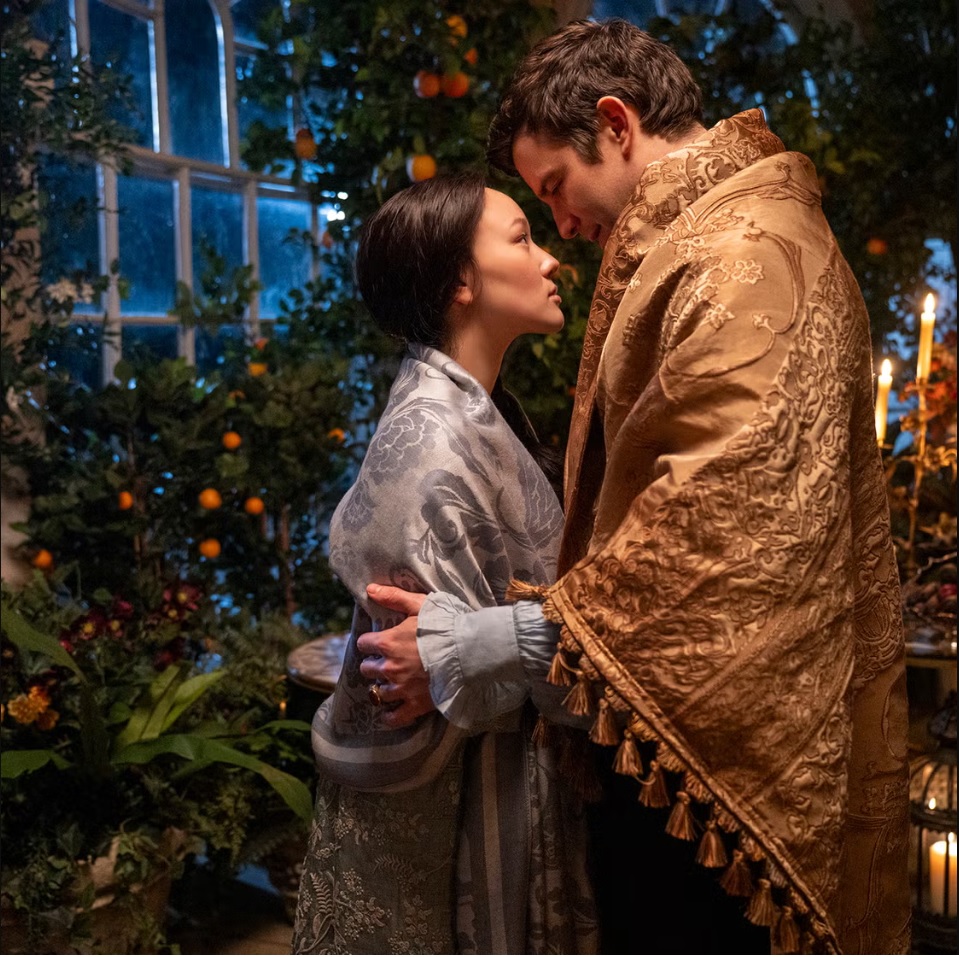
Netflix’s Bridgerton Season 4 delivered one of its most emotional blows yet with the unexpected death of John Stirling (Victor Alli), husband to Francesca Bridgerton (Hannah Dodd). Occurring in Episode 6 of the season, the event shifted the narrative tone temporarily from the central romance between Benedict Bridgerton (Luke Thompson) and Sophie Baek (Yerin Ha) to profound grief. Showrunner Jess Brownell has since addressed fan reactions and explained the deliberate choice to include—and time—this tragedy, emphasizing its narrative purpose within the season’s broader story.
John’s death, caused by a ruptured cerebral aneurysm while he slept after complaining of a headache, mirrors the source material in Julia Quinn’s When He Was Wicked (the sixth Bridgerton novel). In the book, the loss is a cornerstone of Francesca’s arc, leading to widowhood, inheritance pressures, and eventual new beginnings. The series adaptation places this pivotal moment during Benedict’s season, prompting questions about why such a heavy event was woven into a storyline centered on lighter, Cinderella-inspired romance.
In interviews with outlets including People, Entertainment Weekly, and CinemaBlend, Brownell defended the decision, stating that John’s death was integral to Benedict and Sophie’s journey. “For me, the reason why we put John’s death in this season has everything to do with Benedict and Sophie,” she told CinemaBlend. The couple faces immense class-based obstacles in Regency society—Benedict, a viscount’s son, pursuing a woman of lower status and questionable legitimacy. Brownell explained that the tragedy prompts a reevaluation: “Because, look, life is short.” John’s sudden passing underscores the fragility of life, motivating Benedict and his mother Violet (Ruth Gemmell) to prioritize love over societal barriers.
Brownell elaborated in a People exclusive that the loss “plays a major role in Benedict and Sophie’s story.” It shifts perspectives, making the family more sympathetic to Benedict’s unconventional match. “We felt like it was the right timeline to allow us to really get to know Francesca and John as a couple, but also to allow ourselves enough time to properly grieve John,” she added. Placing the death mid-to-late season (Episode 6) gave viewers space to invest in the couple’s quiet, affectionate bond before the heartbreak, while leaving room in later episodes for mourning and forward momentum.
The timing also balanced the season’s emotional arcs. Benedict and Sophie’s romance culminates in a joyful resolution, complete with a post-credits wedding scene. Brownell noted that ending on pure happiness after such loss would feel abrupt; instead, the death occurs early enough in Part 2 to process grief without overshadowing the finale. “It felt like this landing at the end of the season—but not in the final episode—made a lot of sense,” she told Entertainment Weekly, allowing “space for things to get to a nice happy ending with Benedict and Sophie.”
Brownell informed actor Victor Alli of the character’s fate from the start of casting. “It was important to me that Victor knew very clearly what his timeline was, so he didn’t get surprise killed off,” she told People. This transparency allowed Alli to portray John with depth, emphasizing his gentle nature and deep connection with Francesca. The death scene itself is handled sensitively: John’s body is never shown on screen, focusing instead on Francesca’s devastating discovery and scream, which draws in cousin Michaela Stirling (Masali Baduza). Brownell described grief as presenting “in so many different ways,” aiming to portray Francesca’s quiet resilience amid shock.
The choice aligns with Bridgerton’s evolving structure. Since Season 3, Francesca’s storyline has unfolded gradually across seasons, building toward her book’s events. Introducing John in Season 3 and developing their marriage in Season 4 creates investment before the tragedy. Brownell stressed the need to “fall in love with Fran and John” first, making the loss more impactful. This setup also advances future arcs: John’s death opens doors for Michaela’s role (a gender-swapped adaptation of book character Michael) and explores themes of second chances, fertility, and inheritance.
Fan reactions have been mixed. Book readers anticipated the event but felt its placement in Benedict’s season diluted focus or felt jarring amid romance. New viewers expressed shock, with some praising the emotional depth and others questioning the tonal shift in a show known for escapism. Brownell acknowledged the risk: the death was “meant to be jarring,” heightening realism in a genre often avoiding such permanence. Yet she framed it as service to the story, reinforcing Bridgerton’s core message that love triumphs despite adversity—including mortality.
Comparisons to previous seasons highlight consistency in handling loss. Earlier installments featured deaths (like Edmund Bridgerton’s off-screen bee sting) to propel character growth, but rarely on-screen or mid-romance. John’s demise stands out for its suddenness and visibility, yet Brownell maintained it avoids excessive morbidity. Previous decisions, like softening Francesca’s book miscarriage, reflect similar tonal considerations.
The event also ties into larger ensemble threads. Violet’s perspective shifts, drawing parallels to her own widowhood and encouraging empathy for Benedict’s choices. It subtly advances Francesca’s arc without fully centering it, teasing Seasons 5 and 6. Brownell has remained coy on the next lead but noted progress on Francesca and Eloise’s stories.
Ultimately, Brownell’s justification centers on emotional truth and narrative propulsion. By justifying the timing and purpose, she positions John’s death not as gratuitous tragedy but as a catalyst for growth, perspective change, and deeper appreciation of love’s urgency. As Bridgerton continues its multi-season plan, such bold choices underscore the show’s willingness to blend Regency romance with real human stakes.
News

The Glass Cannon Queen: How Damiane’s High-Skill Ceiling is Redefining Crimson Desert Combat
KLIFF WHO? 🗡️ DAMIANE IS OFFICIALLY BROKEN! 🔥 If you’re still maining Kliff, you’re playing Crimson Desert on “Hard Mode” without even knowing it! 😱 The community has just uncovered Damiane’s “Infinite Pressure” loop, and it’s making boss fights look…

Beyond the Veil: The High-Stakes World of Abyss Core Synthesis and Legendary Crafting in Crimson Desert
ENDGAME IS HERE! 🛡️ UNLOCK THE POWER OF THE ABYSS! 🌀 Stop struggling with boss fights! The latest discovery in the Crimson Desert community has just cracked the endgame wide open. 😱 We’re not just talking about “better” gear—we’re talking…

The Gold Rush of Patch 1.05: How ‘Golden Apple’ Farming is Breaking the Crimson Desert Economy
CRIMSON DESERT PLAYERS ARE GETTING RICH! 💰 PATCH 1.05 INFINITE GOLD FARM! 🔥 Have you seen the “Golden Glimmer” yet? If not, you’re missing out on the biggest economy exploit since launch! 😱 The latest 1.05 Patch has completely revamped…

Shadow Economy: Pearl Abyss Stealth-Updates Back Alley Shops with Exclusive New Gear Sets
YOUR SILVER IS BURNING A HOLE IN YOUR POCKET! 💰 NEW GEAR JUST DROPPED! 🛡️ Stop everything! Pearl Abyss just stealth-dropped a massive update to the Back Alley Shops, and if you haven’t checked the shady corners of Pywel lately,…

Crimson Desert Unveils 3 New Legendary Animals: A Hunter’s Guide to Pywel’s Most Elusive Beasts
STOP SCROLLING! 🚨 THE LEGENDARY BEASTS HAVE ARRIVED! 🐾 Are you tired of the same old mounts and pets? The Crimson Desert community is losing its mind over 3 NEW Legendary Animals that just dropped! 😱 We’re talking about creatures…

Mastering the Abyss: The Definitive Guide to Unlocking Every Element in Crimson Desert
You’ve been playing Crimson Desert WRONG if you’re still using basic steel against Pywel’s endgame bosses! 🛑 Did you know there’s a hidden “Abyss Shortcut” that lets you skip hours of grinding and unlock Lightning, Flame, Frost, and Wind in…
End of content
No more pages to load