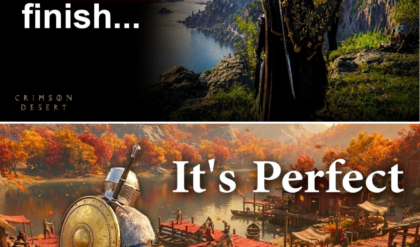
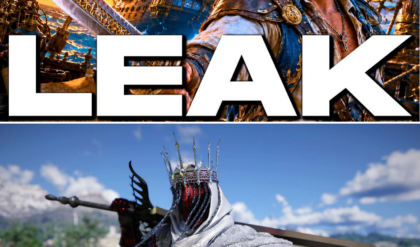
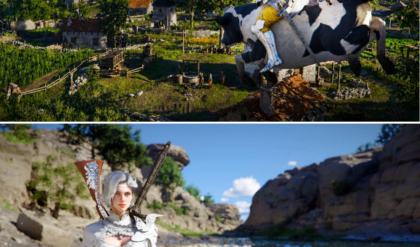
The game legacy media is afraid to talk about… and it’s arguably the greatest open world ever made. 🌍🔥
Check the math: 93% of Crimson Desert players haven’t “finished” the game. Not because it’s too hard, but because they simply refuse to leave. While the big outlets might be missing the point, the community has realized the truth: this isn’t a game you “speedrun.” It’s a world you inhabit.
With a map more than double the size of Red Dead Redemption 2 that is actually packed with life (not just empty space), Pearl Abyss has quietly created a benchmark that makes modern AAA “checklist” games look like tech demos. Every square inch of Pywell is interactive, every NPC matters, and the weekly updates are turning this into the most aggressive content-delivery machine in gaming history.
Why are the critics silent while the community is thriving?
Get the full breakdown on why Crimson Desert is the new king of the open world: 👇

In the current climate of video game criticism, there is a recurring narrative pattern: a major release arrives, legacy media outlets publish their scores, and the conversation moves on. Crimson Desert, however, has broken this cycle. With a reported 93% of its player base still actively engaging with the world months after launch, the game has defied the standard metrics of “completion” and “churn” that usually define the life cycle of a AAA title.
The “Anti-Speedrun” Design
The most striking statistic currently circulating within the Crimson Desert community is the remarkably low completion rate of the main campaign. For traditional critics, a low completion rate is often interpreted as a failure of narrative design—a sign that players are getting bored or frustrated. The player experience, however, suggests the opposite.
Players are not abandoning Crimson Desert; they are choosing to live in it. The game’s design philosophy encourages a “snail’s pace” approach, where the sheer density of interactivity—from the behavior of local wildlife to the minute-to-minute changes in the environment—creates a sense of place that makes the pursuit of a “main quest” feel secondary. In a genre dominated by “checklist” gameplay, where players rush from objective to objective, Crimson Desert is an outlier that rewards, and effectively necessitates, a slower, more deliberate exploration.
Scaling Against the Giants
When comparing the sheer scale of the map to genre benchmarks like Red Dead Redemption 2, Crimson Desert offers more than double the explorable surface area. However, the achievement is not merely the size; it is the density. By ensuring that almost every element of the world is interactable, Pearl Abyss has bypassed the “mile wide and an inch deep” criticism that frequently plagues massive open-world titles. The world of Pywell feels reactive, not static.
The Disconnect Between Critics and Community
There is a growing friction between the assessment of legacy media outlets and the reality of the player experience. While some mainstream critics initially struggled to categorize the game—or perhaps misidentified its slow-burn nature for a lack of focus—the community has pivoted to embrace the title as a living, evolving platform.
The weekly update cadence from Pearl Abyss has played a massive role in this shift. By treating the game as a living service that evolves in real-time, the developers have transformed the post-launch period into a continuous stream of content. Each update functions like a “present” for the community, reinforcing the idea that the game is not a static product that can be checked off a list, but a project that is constantly responding to the very players inhabiting it.
A New Standard for Immersion
Crimson Desert is essentially serving as a case study for a new era of open-world development. It does not treat the player as a consumer of content, but as a resident of a virtual space. The freedom to ignore the main narrative, to focus entirely on camp management, life skills, or simply observing the ecosystem, validates a playstyle that most modern games actively discourage.
As the industry grapples with the escalating costs and diminishing returns of traditional narrative-driven open worlds, Crimson Desert offers a compelling alternative. It suggests that if a developer provides a world with enough depth, mystery, and mechanical connectivity, the players will not only stay—they will become the game’s loudest advocates.
In the end, the metrics speak for themselves. The legacy media may be debating the game’s merits, but the player base is, quite literally, still inside the world. For those seeking the next evolution of the genre, Crimson Desert is not just a game to play; it is a world to experience.
News
The MMO Paradox – Inside the Infinite Loop of Crimson Desert
Stop trying to “complete” Crimson Desert. You’re being played. 🔥 Ever sat down to knock out some side quests, only to realize 11 days later that you’re brewing alchemy potions, managing a livestock ranch, and chasing a legendary mount you…
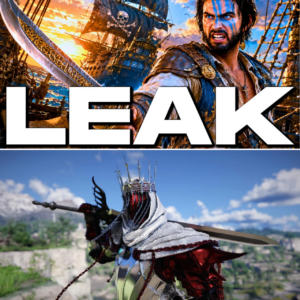
The Maritime Horizon – Is Pearl Abyss Preparing to Re-Define the Open World Genre?
CRIMSON DESERT’S FIRST DLC IS LEAKED… AND IT CHANGES EVERYTHING. ⚓️🔥 Five million copies sold. A patch schedule that puts every other AAA studio to shame. And now? The silence is finally broken. Pearl Abyss has officially confirmed in their…
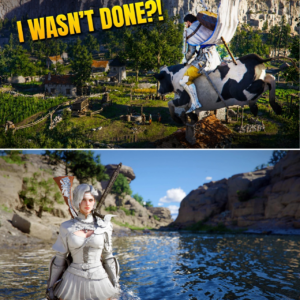
The “Living Map” Paradox – Is Crimson Desert’s Relentless Evolution a Masterstroke or a Burden?
The game that literally won’t let you quit… and it’s driving completionists absolutely insane. 🔥 Ever feel like you’ve finally “beaten” an open-world game, only to find the map you spent 200+ hours clearing has changed overnight? Most developers give…

The Gilded Age Season 4: A Dual Revolution in New York Society
The Gilded Age Season 4 is officially bringing a RECKONING. 🗽🔥 The Season 3 finale left us in absolute disbelief, but the pieces for Season 4 are falling into place, and the stakes have never been higher. We’re moving beyond…

The First Son and the Prince Return: Secret Plots, Star Power, and Everything We Know About ‘Red, White & Royal Blue 2’
The Royal Chaos is BACK! Alex and Henry’s next chapter just got VERY real. 🇬🇧🇺🇸👑 Stop trying to stay calm! The sequel to Red, White & Royal Blue is officially filming, and new behind-the-scenes leaks are dropping bombshells that change…

The Snake in the Grass: ‘Marshals’ Season 2 Sets the Stage for a High-Stakes Dutton Crossover
Is the Dutton legacy about to CRUMBLE? 🏔️⚠️ The Season 1 finale of Marshals left us all gasping, but the Season 2 trailer just dropped a bomb that changes EVERYTHING. We thought we knew who the enemy was, but the…
End of content
No more pages to load