A Knight of the Seven Kingdoms Episode 4 Delivers Peak George R.R. Martin Storytelling—Proving the Author Remains Unbeatable When Fully Engaged
🚨 HOLY WESTEROS: Episode 4 of A Knight of the Seven Kingdoms Just DROPPED THE MIC on EVERY Game of Thrones Spinoff—And Proves George R.R. Martin is Straight-Up UNSTOPPABLE When He’s Locked In! 😱⚔️🐉
Full details:
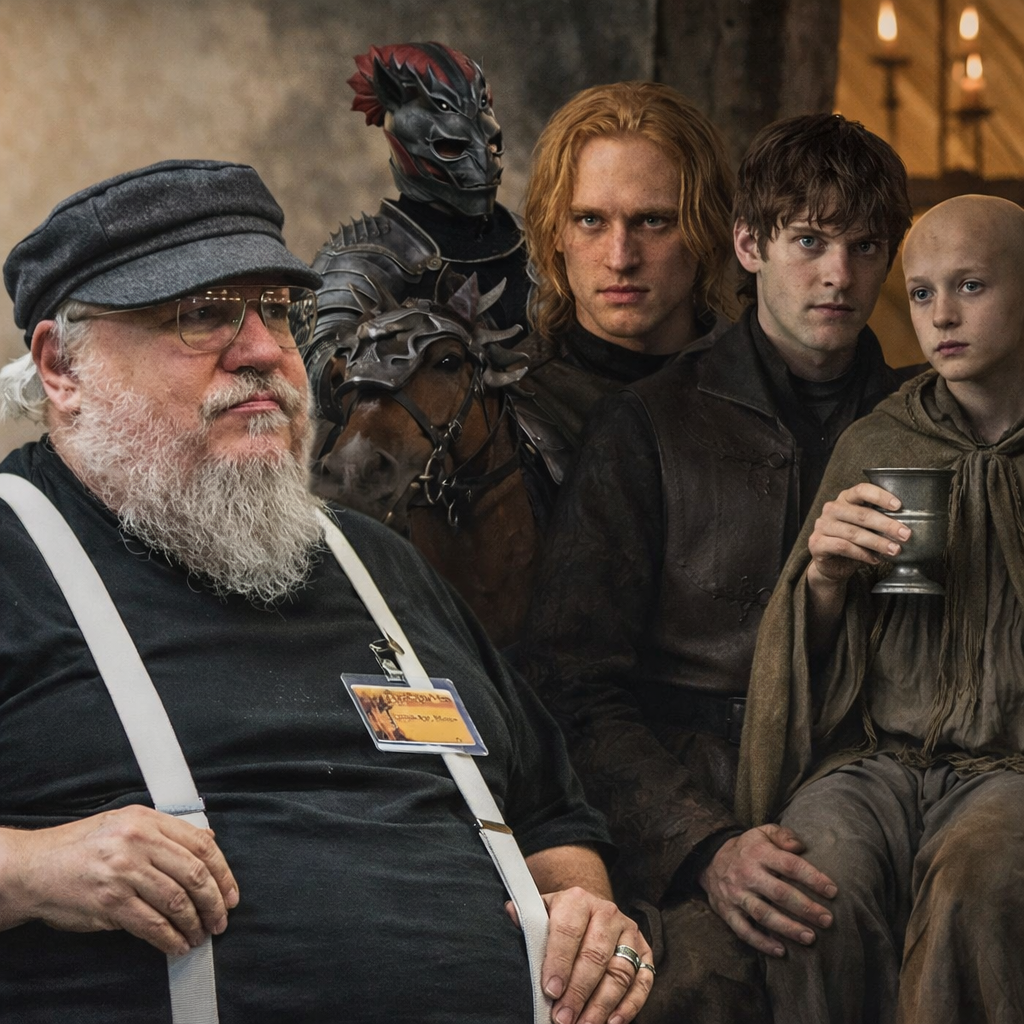
HBO’s A Knight of the Seven Kingdoms has been building steadily since its premiere, offering a grounded, character-driven contrast to the dragon-heavy spectacle of House of the Dragon and the sprawling epic of the original Game of Thrones. But with Episode 4, titled “Seven,” the series hits a new high, earning widespread acclaim as one of the strongest installments in the entire A Song of Ice and Fire television universe. Critics and fans alike are hailing it as proof that George R.R. Martin—when deeply involved and “locked in”—delivers storytelling that’s emotionally resonant, thematically rich, and impossible to ignore.
The episode, which aired early due to the Super Bowl schedule, picks up immediately after the shocking close of Episode 3. Ser Duncan the Tall (Peter Claffey), the towering hedge knight, finds himself imprisoned after punching Prince Aerion “Brightflame” Targaryen (Finn Bennett) for assaulting a puppeteer. The revelation that his squire Egg is actually Prince Aegon Targaryen (Dexter Sol Ansell), heir to the Iron Throne, has escalated the stakes dramatically. Aerion, humiliated and vengeful, pushes for a rare Trial of Seven—a brutal, ancient combat where each side fields seven knights, a format rooted in Andal traditions and rarely invoked in Westerosi history.
Dunk, facing execution or mutilation, invokes his right to trial by combat. But Aerion twists the challenge into the more deadly Trial of Seven, forcing Dunk to recruit six champions willing to risk their lives for a lowborn hedge knight accused of attacking royalty. The episode masterfully balances tension, character development, and world-building as Dunk navigates royal politics, betrayal, and unexpected alliances.
Key moments include a heartfelt prison reunion between Dunk and Egg, where the young prince apologizes for his deception. Dunk, initially furious, softens, showing the genuine bond that’s formed between the unlikely pair. “He’s a good boy,” Dunk tells Prince Baelor Breakspear (Bertie Carvel), the heir to the throne, during a tense audience. Baelor, portrayed as a principled and honorable figure, grapples with family loyalty versus justice.
The episode’s emotional core arrives when Dunk addresses the assembled nobility and smallfolk, delivering a powerful speech questioning the essence of knighthood. Mocked by the lords and met with defeated silence from the commoners, his words hang in the air—until Prince Baelor strides forward. Declaring his support for Dunk as a true knight who “protected the innocent,” Baelor volunteers as one of Dunk’s champions. As he takes the field, composer Ramin Djawadi’s iconic Game of Thrones main theme swells in a remixed, triumphant form, marking the first full play of the motif in the series. The moment has been described by viewers as goosebump-inducing, evoking the grandeur of early Game of Thrones seasons.
Critics have praised the episode’s fidelity to Martin’s source material from “The Hedge Knight” novella. Reviews from outlets like Forbes, Den of Geek, and Decider highlight the attention to detail: exquisite armor designs (noted as the best in any Martin adaptation), raw performances, and a focus on themes of honor, class disparity, and moral courage. Forbes contributor Erik Kain called it emotionally stirring, comparing it to the franchise’s peak moments and suggesting it might surpass the original series for some viewers disillusioned by later seasons.
Den of Geek’s Lacy Baugher emphasized the episode’s exploration of “what being a knight really means,” as Dunk’s actions snowball into life-or-death consequences. The armorer Steely Pate reforging Dunk’s shield and the knighting of Raymund Fossoway add layers of chivalric tradition. Vulture and Collider noted the episode’s buildup to the Trial of Seven, with shocking allies emerging amid the political fallout.
Social media erupted following the airing. Reddit threads on r/television, r/HouseOfTheDragon, and r/freefolk overflowed with praise: “Goosebumps,” “literal chills,” and “this is why GOT is the best fiction.” Fans screamed at their screens during Baelor’s entrance, with many calling it the most powerful moment since the Red Wedding or early House of the Dragon highs. Some contrasted it favorably to House of the Dragon‘s drawn-out pacing, praising the concise, half-hour format that keeps momentum high.
The episode’s success ties directly to Martin’s involvement. Showrunner Ira Parker has revealed that Martin insisted on shorter episodes to preserve the novella’s intimate scale, refusing compromises that might dilute the story. This fidelity—combined with strong direction, writing, and performances—has elevated the series. Unlike adaptations criticized for deviating too far or rushing conclusions, A Knight of the Seven Kingdoms feels like the books brought to life.
The Trial of Seven setup promises high-stakes action in upcoming episodes, with Dunk assembling his team amid royal intrigue. Prince Daeron’s prophetic dreams and other Targaryen family tensions add foreboding layers. Yet the episode’s power lies not in spectacle but in its human elements: Dunk’s unwavering moral code, Egg’s growth, and Baelor’s stand for justice in a corrupt system.
As the franchise continues expanding, Episode 4 stands as a reminder of Martin’s enduring strength. When focused on character-driven narratives rooted in Westerosi history and ethics, his world-building shines brightest. No dragons are needed—just knights, vows, and the courage to stand against odds.
Fans are already anticipating the Trial’s resolution and what it means for the Targaryen dynasty. With Season 2 in production and Martin’s novellas providing rich material, A Knight of the Seven Kingdoms could redefine expectations for Game of Thrones spinoffs. Episode 4 isn’t just strong television—it’s a declaration that the author who built this universe remains invincible when fully committed. In a landscape of reboots and sequels, that’s a rare and thrilling feat.