Stranger Things Series Finale: A Messy But Emotional Farewell That Could Have Been Far Worse
You won’t believe what almost ruined Stranger Things forever… 😱
The Season 5 finale dropped, and fans are raging: messy battles, plot holes everywhere, Eleven’s fate left hanging like a bad cliffhanger, and an ending that felt safe, cheesy, and way too nostalgic. It was chaotic, overexplained, and left huge questions unanswered—some are even calling it worse than Game of Thrones or Lost.
But hold on… the Duffer Brothers had an ALTERNATE ending in the works that was SO MUCH WORSE.
Full details:
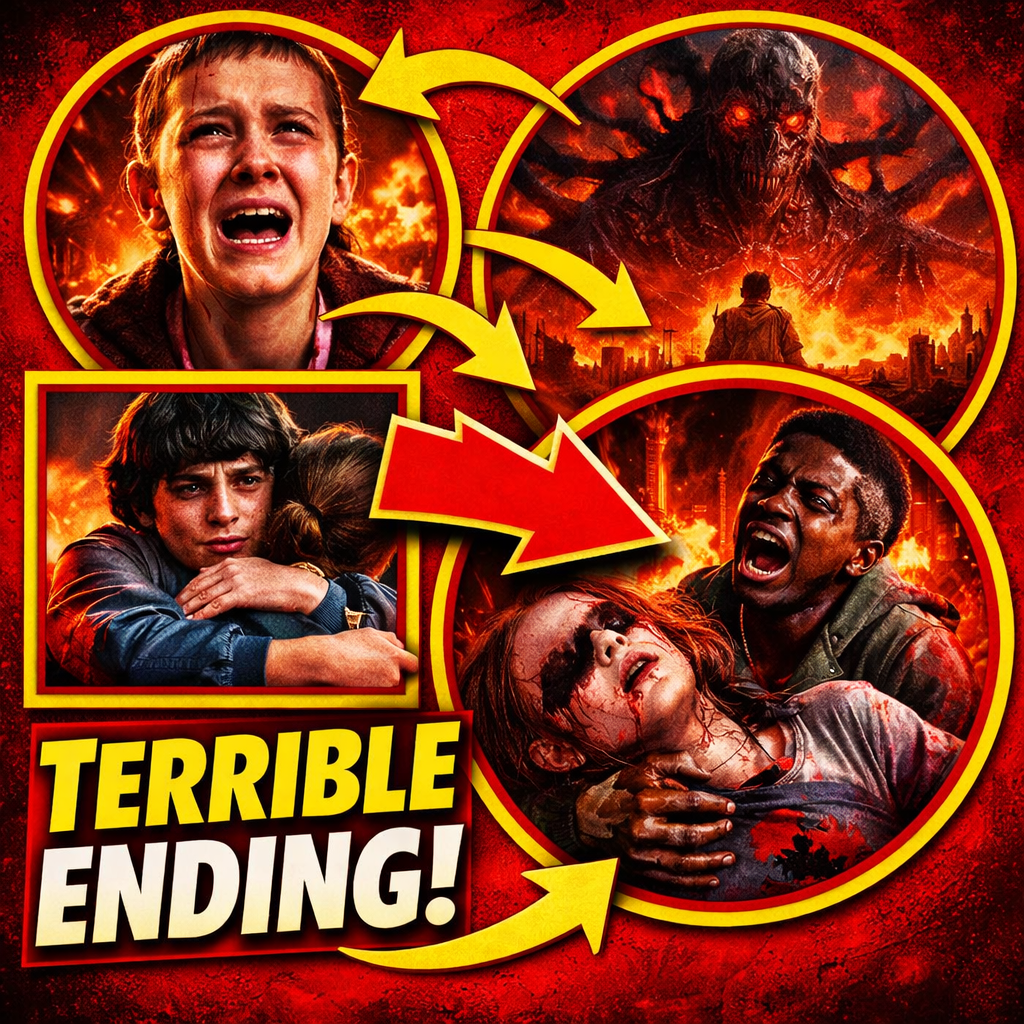
After nearly a decade of building hype, Netflix’s Stranger Things finally wrapped up its fifth and final season on December 31, 2025, with a two-hour-plus series finale that hit screens amid massive anticipation—and equally massive controversy.
Titled “The Rightside Up,” the episode delivered high-stakes action against Vecna and the Mind Flayer, emotional goodbyes, and a nostalgic epilogue that mirrored the show’s very first scene: the core group of friends gathered in the Wheeler basement for one last Dungeons & Dragons campaign. But for many longtime viewers, the ending felt overstuffed, cautious, and frustratingly unresolved.
Critics and fans alike have described the finale as “messy,” “indulgent,” and “clunky.” The battle sequences, while spectacle-heavy, were criticized for lacking real consequences—no major character deaths among the heroes, despite years of buildup suggesting high stakes. Eleven’s apparent sacrifice to close the gates to the Upside Down and end the threat was left deliberately ambiguous, with the Duffer Brothers later explaining in interviews that they wanted audiences to decide for themselves whether she survived or not.
Matt and Ross Duffer told Netflix’s Tudum platform that the choice reflected the reality of Eleven’s life after years of government experiments and supernatural battles: “What we wanted to do was confront the reality of what her situation was after all of this and how could she live a normal life.” The brothers emphasized that the extended epilogue—showing time jumps with characters moving on to college, relationships, and new chapters—was meant to provide emotional closure rather than another twist-filled shock.
Yet the ambiguity didn’t sit well with everyone. Online forums exploded with disappointment. Reddit threads compared it unfavorably to the finales of Lost and Game of Thrones, with one user calling it “worse than the LOST finale” and another lamenting a “mediocre plot holes mess of a final battle” followed by “an hour of just normalcy.” Review bombing hit the season hard, dropping audience scores on platforms like Rotten Tomatoes. Some fans accused the show of playing it too safe, avoiding the bold risks that defined earlier seasons.
The complaints weren’t limited to the ambiguity around Eleven. Plot holes piled up: Why did the military let the heroes walk free after chaos and casualties? What happened to lingering side characters like Murray or Vickie? The Mind Flayer’s role felt underutilized despite its return as a major threat. And the writing was slammed for over-explaining emotions through monologues instead of letting scenes breathe.
But amid the backlash, one revelation stood out as potentially far more damaging: an alternate ending the creators once considered—and ultimately scrapped—would have been catastrophic for the fanbase.
Persistent fan theories throughout the series had speculated that the entire Stranger Things saga was “all in their heads”—specifically, a long-running Dungeons & Dragons campaign imagined by the kids from Season 1. The Upside Down, Vecna, Eleven’s powers? Just a game. The horrors, friendships, and growth? Pure fantasy played out around a table in Hawkins.
Screen Rant and other outlets highlighted how this theory gained traction again as the finale approached, with some fearing the Duffer Brothers might actually go there for a meta twist. Reports confirmed the idea had been floated in early discussions, with writers’ room boards even noting alternate versions where Eleven was “gone (not dead)” in a less final way.
Had they pulled the trigger on the “it was all a D&D game” ending, the backlash could have been apocalyptic. It would have retroactively invalidated nearly ten years of investment—turning beloved characters’ traumas into pretend play and reducing the show’s themes of friendship conquering evil to childish imagination. Fans who stuck with the series through monster battles, government conspiracies, and emotional growth would have felt betrayed on a massive scale.
The Duffer Brothers ultimately rejected it, opting instead for a grounded (if divisive) close that honored the characters’ real journeys. In interviews, they stressed the importance of legacy: passing the D&D torch to a younger generation in the epilogue symbolized moving on from childhood while cherishing what it built.
Still, the decision to keep Eleven’s fate open-ended sparked its own firestorm. Some praised it as poetic, allowing viewers to believe in her survival (hinted at through Mike’s storytelling in the final D&D session). Others saw it as a cop-out—another way to avoid committing to a truly heartbreaking loss.
Fan reactions split sharply. On one side, supporters called the finale “heartfelt” and “a perfect goodbye,” appreciating the nostalgia and character focus. “They nailed the epilogue,” one Reddit user wrote. On the other, detractors fumed over “cheesy endings,” “unanswered questions,” and a perceived lack of stakes. Conspiracy theories even emerged, like “Conformity Gate” (claiming the ending was altered for mainstream appeal) or “Divorce Gate” (joking that personal changes among the creators affected the writing).
The finale’s theatrical release in some markets only amplified the scrutiny. Screened in cinemas for superfans, it became a cultural event—and a lightning rod for debate.
Ultimately, Stranger Things ends much as it began: in a basement, with friends around a table, rolling dice and telling stories. The show that launched a generation of nostalgia-fueled sci-fi horror gave its audience closure, even if imperfect. It avoided the nuclear option of the meta D&D twist, which could have erased everything fans loved.
Whether the finale redeems the season or drags it down remains up for debate. But one thing is clear: by steering away from that alternate nightmare ending, the Duffer Brothers preserved the heart of what made Stranger Things special—real stakes, real bonds, and a world worth fighting for—even if the landing wasn’t flawless.