🚨 PRIME VIDEO JUST DROPPED THEIR SECRET WEAPON… And It’s Being Called One Of Their ALL-TIME BEST Fantasy Shows! 😱✨🐉
After years of mixed fantasy hits and misses (we’re looking at you, certain billion-dollar epics), Prime Video has quietly delivered a 3-season masterpiece that’s finally getting the love it deserves.
This could be the show that changes how you see fantasy TV forever! 👇🔥
Read more:
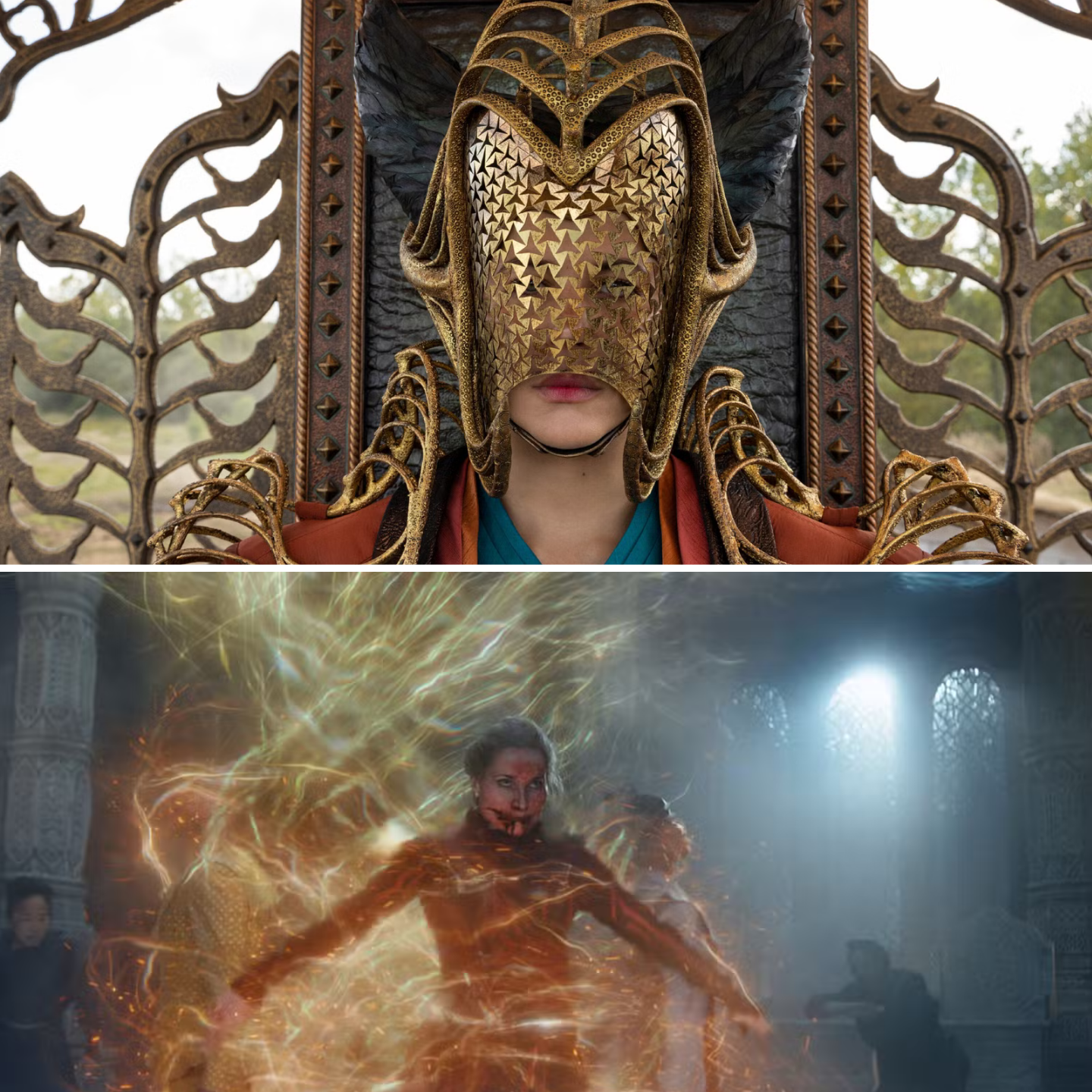
Prime Video has quietly built one of its strongest fantasy offerings in recent years, and the consensus is clear: after three seasons, The Wheel of Time stands as one of the streamer’s finest achievements in the genre. Adapted from Robert Jordan’s sprawling 14-book series—one of the best-selling fantasy sagas ever written—the show has evolved from a promising but uneven debut into a confident, character-driven epic that critics and audiences increasingly praise for its ambition, performances, and world-building.
Launched in 2021, The Wheel of Time follows Moiraine Damodred (Rosamund Pike), an Aes Sedai sorceress who believes one of five young villagers from the remote Two Rivers is the prophesied Dragon Reborn—the figure destined to either save or destroy the world. Joined by a core group including Rand al’Thor (Josha Stradowski), Perrin Aybara (Marcus Rutherford), Mat Cauthon (Dónal Finn in later seasons), Egwene al’Vere (Madeleine Madden), and Nynaeve al’Meara (Zoë Robins), the story spans continents, ancient prophecies, and a battle against the Dark One’s forces. The series blends high fantasy tropes with themes of gender dynamics, power, destiny, and moral ambiguity in a world where women channel the One Power safely while men risk madness.
Season 1 received mixed reviews, with critics noting strong visuals, Pike’s commanding performance, and solid production values but pointing to pacing issues, deviations from the books, and occasional narrative stumbles. Audience scores reflected similar division, as longtime readers grappled with changes to condense Jordan’s dense lore. Despite this, the show became Prime Video’s most-watched original of 2021, proving broad appeal even amid controversy.
The turning point came in Seasons 2 and 3. Showrunner Rafe Judkins and his team refined the storytelling, focusing more on character arcs, emotional stakes, and faithful yet adaptive elements from the source material. Season 2 introduced deeper exploration of the Aes Sedai’s political intrigue at the White Tower, the Aiel’s warrior culture, and the Forsaken’s schemes. Performances sharpened, with standout turns from Sophie Okonedo as Siuan Sanche and Daniel Henney as Lan Mandragoran adding gravitas. Critics praised the uptick in quality, calling it more confident and daring.
Season 3, which premiered in March 2025 with a three-episode drop followed by weekly releases, cemented the show’s redemption. Adapting material from books four through six, it delivered epic set pieces, including confrontations in the Aiel Waste, battles against Shadowspawn, and pivotal moments in Rand’s journey toward accepting his destiny. Episodes like the fourth installment were hailed as among the best in fantasy television, blending action, mythology, and character growth seamlessly. The season’s Rotten Tomatoes scores reflected near-universal acclaim, with reviewers noting how the series had “transformed” into a genuinely special epic.
Prime Video’s investment paid off in scope and spectacle. The production featured elaborate sets, practical effects for magic and creatures, and sweeping cinematography that captured the world’s vastness—from the White Tower’s marble halls to the arid Aiel Waste and shadowy Blight. The emphasis on female empowerment—amplifying the Aes Sedai’s matriarchal structure and women’s central role in magic—set it apart from more patriarchal fantasy narratives, offering fresh dynamics while staying true to Jordan’s spirit.
Comparisons to other Prime fantasy projects are inevitable. The Lord of the Rings: The Rings of Power, with its massive budget and Tolkien ties, has drawn polarized reactions over lore fidelity and pacing. In contrast, The Wheel of Time has grown stronger with each season, earning a reputation as a reliable binge. Articles position it as the ideal alternative or companion to Rings of Power, highlighting similar high production values but greater narrative consistency and respect for its source.
The cast has become a major draw. Pike’s Moiraine remains a standout—cool, calculating, yet deeply human—while the younger ensemble has matured, delivering nuanced portrayals of growth amid chaos. Supporting players like Okoneded, Henney, and Laia Costa as the Forsaken Moghedien add layers of intrigue and menace.
Though the series concluded after three seasons (with no immediate renewal announced as of early 2026), its legacy endures. Fans have called for more, and the show’s improvement arc serves as a model for long-form adaptations: start ambitious, learn from feedback, and deliver escalating quality. Prime Video’s fantasy slate—including The Legend of Vox Machina‘s perfect scores and Good Omens‘ charm—benefits from this success, proving the streamer can compete in a crowded genre.
For viewers seeking an immersive escape, The Wheel of Time offers a complete three-season journey that’s rewarding from start to finish. Its blend of prophecy, power struggles, and personal redemption resonates in a post-Game of Thrones era hungry for smart, spectacle-driven fantasy. As one critic put it, the show “became a case study in how a genre series can improve in real time”—a testament to perseverance and vision.
In an industry where many adaptations falter, Prime Video’s The Wheel of Time has spun a wheel that turned in its favor, emerging as one of the platform’s best fantasy series and a worthy entry in the modern epic TV canon.
News
Beauty in Black Season 3: The End of an Empire and the Rise of a New Order
THE BELLERY EMPIRE IS OFFICIALLY CRUMBLING! 😱 Is Season 3 the Final Stand? If you thought the Season 2 finale was “wild,” you clearly weren’t ready for the absolute CHAOS of that boardroom coup! ♟️ The Belleries are in cuffs,…

The Future of ‘Nemesis’: Will the High-Stakes Crime Thriller Return for Season 2?
IS NEMESIS SEASON 2 FINALLY HAPPENING? The Truth Behind the Netflix Cliffhanger! 🚨 The cat-and-mouse game between Isaiah Styles and Culin Wilder left us ALL in shock—and the internet is officially LOSING IT. 📉 While Netflix is playing coy with…

The Outlander Conundrum: Does the Season 8 Finale Secretly Tease a Feature Film?
IS THIS THE END OF JAMIE AND CLAIRE? The Outlander Finale Secret You Missed! 😱 The credits rolled on Outlander Season 8, but the internet is absolutely SCREAMING. 🗣️ While everyone is debating that “dead or alive” cliffhanger, a massive…

Why ‘The Night Manager’ Remains the Gold Standard of Modern Espionage Thrillers
🚨 THE SPY THRILLER EVERYONE IS OBSESSED WITH IS BACK FROM THE DEAD! 🚨 Forget the flashy gadgets—this is the most “dangerously addictive” game of cat-and-mouse ever filmed, and it’s officially sweeping the charts again! 🌎 Tom Hiddleston and Olivia…

Nate Bargatze and Mandy Moore’s ‘Solo Act’ Hits Home: Why Parents Can’t Stop Watching This New Comedy
🚨 PARENTING LEVEL: CATASTROPHIC! 🚨 We’ve all seen the “super-dad” tropes, but this is the first time a show has dared to show what actually happens when the “Perfect Dad” is left home alone for 72 hours. 😱 Nate Bargatze…

The ‘Man on Fire’ Phenomenon: Why Netflix’s Newest Crime Saga Is Keeping Millions Awake
🚨 FORGET EVERYTHING YOU’RE WATCHING. THE DARKEST THRILLER ON NETFLIX JUST DROPPED AND THE INTERNET IS LOSING ITS MIND! 🚨 If you think you know “revenge,” you’ve seen nothing yet. This isn’t just a crime drama—it’s a psychological descent into…
End of content
No more pages to load