🚨 HE DIED BROKE AND FORGOTTEN IN THE MUD… BUT THIS ONE HEDGE KNIGHT MAY HAVE BEEN THE BIGGEST FRAUD IN WESTEROS HISTORY – AND THE TRUTH COULD SHATTER EVERYTHING YOU THINK YOU KNOW ABOUT SER DUNCAN THE TALL! 😱
What if the man who “knighted” the tallest, most legendary knight in the Seven Kingdoms… was never a real knight himself?
Read more:
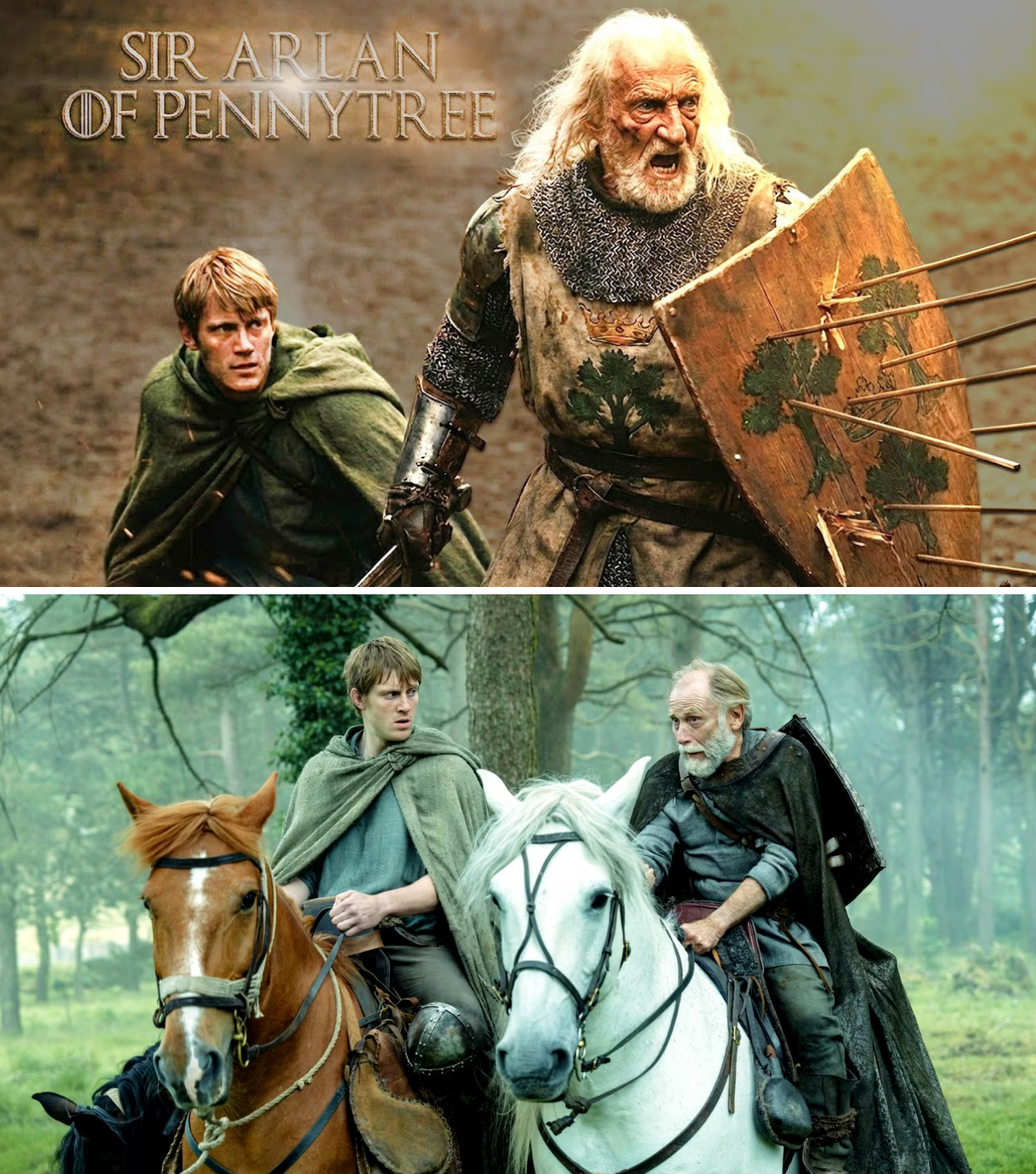
In the sprawling saga of Westeros, few figures are as quietly influential yet as overlooked as Ser Arlan of Pennytree. A hedge knight of modest means, he appears in George R.R. Martin’s “A Knight of the Seven Kingdoms” novellas primarily through flashbacks and the memories of his famous squire, Ser Duncan the Tall. Yet with the premiere of HBO’s new series “A Knight of the Seven Kingdoms” in 2026, Arlan has suddenly become a focal point of speculation. Who was this man who shaped one of the realm’s most legendary knights? Was he the honorable mentor Dunk remembers, or something far more complicated? The books and the television adaptation present a portrait that invites questions without easy answers.
Arlan was born around 150 AC in the small village of Pennytree, located in the Riverlands on the ever-shifting border between House Blackwood and House Bracken. The village’s name, as Arlan himself explained in one of the show’s tender flashback scenes, comes from an ancient oak tree where locals nail pennies in memory of sons lost to endless wars. Control of Pennytree flipped back and forth for centuries, a symbol of the region’s instability. Little is known of Arlan’s early family life beyond one key detail: as a young boy, his grandfather took him to King’s Landing, where he witnessed the last Targaryen dragon before it perished the following year. This fleeting childhood memory surfaces repeatedly in both the books and the series, underscoring Arlan’s connection to a fading era of wonder and power.
Rising from these humble roots, Arlan became a skilled soldier and eventually earned his spurs as a knight. His coat of arms — a silver winged chalice on a brown field — offers no clear tie to any major house, though some fans note a superficial resemblance to House Hersy’s sigil. Whether this is coincidence or hint of distant relation remains unknown. Arlan lived the classic life of a hedge knight: traveling the realm, taking temporary service with lords great and small, and competing in tourneys for coin and glory.
His tournament record was respectable for a man of low birth. In Lannisport he unhorsed the young Ser Damon Lannister. In 193 AC at a melee in King’s Landing he toppled Lord Stokeworth and the Bastard of Harrenhal. Most memorably, at Storm’s End around 200 AC he faced Prince Baelor Targaryen, breaking four lances according to the prince himself — though Arlan always insisted the number was seven. Baelor, known as Baelor Breakspear, returned Arlan’s armor and horse without ransom, an act of princely generosity that Arlan recounted with pride for the rest of his life. After that near-victory against one of the realm’s finest knights, Arlan hung up his lance and never jousted again, reportedly saying, “It is not every man who can boast that he broke seven lances against the finest knight in the Seven Kingdoms. I could never hope to do better, so why should I try?”
Arlan also saw real warfare. During the First Blackfyre Rebellion he and his nephew Roger fought beneath the banners of Lord Hayford, a Targaryen loyalist. At the Battle of the Redgrass Field, Roger was slain and Arlan stood beside Lord Hayford when the lord fell to Lord Gormon Peake. Three years before the events of “The Hedge Knight,” Arlan and his squire Dunk served Lord Dondarrion in the campaign against the Vulture King in the Red Mountains. He spent time in service to House Florent and even escorted a Dornish merchant alongside the infamous Ser Bennis of the Brown Shield. These scattered employments paint a picture of a reliable, unremarkable professional soldier who survived by wits and loyalty rather than fame.
The turning point in Arlan’s life came when he discovered a starving orphan boy in the slums of Flea Bottom. That boy was Dunk — later Ser Duncan the Tall. After losing his nephew Roger at Redgrass Field, Arlan took the tall, awkward youth as his new squire. The two traveled the roads together for roughly a decade. Arlan taught Dunk the practical arts of knighthood: how to care for horses (Thunder, Chestnut, and Sweetfoot), how to swing a sword, and, more importantly, the quiet code of a true knight. He was not a glory-seeker. He enjoyed simple pleasures — watching sunsets, sharing a horn of ale, and telling stories. One drunken night he promised to take young Dunk to a brothel but forgot by morning, a humorous detail that humanizes the old knight in the books.
Yet the relationship was not without tension. Arlan repeatedly told Dunk he intended to knight him one day. That day never came while Arlan lived. In early 209 AC, as the pair headed toward the tourney at Ashford Meadow, Arlan caught a chill and died on the roadside. Dunk buried him on a hill facing the sunset, speaking a heartfelt eulogy: “You were a true knight, and you never beat me when I didn’t deserve it.” Then Dunk claimed the dead man’s armor, horses, and name. At Ashford he told the steward Plummer that Ser Arlan had knighted him on his deathbed, dubbing him Ser Duncan the Tall with only a robin in a thorn tree as witness. Two years later he repeated the claim to Lady Rohanne Webber. No independent confirmation exists.
This is where the story grows murkiest — and where the HBO series leans hardest into ambiguity. In flashbacks and fever-dream visions throughout Season 1, viewers see a more gritty, fallible Arlan. Portrayed by British actor Danny Webb, the character is shown as a hard-drinking wanderer who, in one memorable sequence, drunkenly slays two gold cloaks in a back alley to rescue young Dunk from the City Watch. He passes out under trees, tells the Pennytree origin story with melancholy, and appears to die mid-conversation only to wake and finish his tale with the line, “A true knight always finishes his story.” During Dunk’s trial of seven against Prince Aerion Targaryen, Arlan’s spectral voice urges his former squire to rise and fight. In the season finale, his spirit rides beside Dunk and Egg toward Dorne.
These added scenes amplify the central question the books only hint at: Did Arlan actually knight Dunk? Or did Dunk, desperate to escape his lowborn origins, simply take the title for himself? Some viewers and readers have gone further, speculating that Arlan himself may never have been formally knighted. Theories circulating on forums suggest possible identity theft during the chaos of the Blackfyre Rebellion — a commoner assuming a dead knight’s armor and name to survive. Others point to Arlan’s reluctance to knight Dunk as evidence he knew the ceremony’s weight and feared passing on a title he himself had never truly earned. The show deliberately leaves these threads dangling, letting Dunk’s visions and memories raise doubt without resolution.
Neutral observers note that knighthood in Westeros has always been flexible. Any knight can make another knight, and hedge knights often operated in gray areas. Arlan’s life embodied the ideal Martin frequently explores: true knighthood is not a title granted by ceremony but a code lived through daily choices. Arlan never sought glory, never refused a cup of wine that might be his last for a year, and never abandoned the orphan he took in. Dunk, in turn, carries those lessons forward, becoming the “true knight” Arlan hoped he would be.
In the broader tapestry of “A Song of Ice and Fire,” Arlan’s small life intersects with larger events. His childhood sighting of the last dragon ties him to the Targaryen dynasty’s decline. His service in the Blackfyre Rebellion places him at one of the realm’s bloodiest turning points. His decision to train Dunk sets in motion the adventures that will eventually entangle the giant knight with Targaryen princes, Dornish plots, and the mystery of the dragon eggs.
As “A Knight of the Seven Kingdoms” continues into future seasons, Arlan’s presence is expected to fade. Showrunner Ira Parker has indicated that the mentor’s spirit has completed its narrative purpose: Dunk is now his own man. Yet the questions linger. Was Ser Arlan of Pennytree simply a good-hearted hedge knight who died too soon? Or was he a man carrying secrets — about his own dubbing, his true name, his loyalties — that died with him on that Ashford road?
The books and the series offer no definitive proof either way. What they do offer is a poignant reminder that in Westeros, as in life, the most important legacies often belong to those history barely remembers. Ser Arlan never wore a crown, never sat on the Iron Throne, never commanded great armies. He simply rode the roads, trained a boy, and tried to live as a knight should. In the end, perhaps that is the only truth that matters.
News
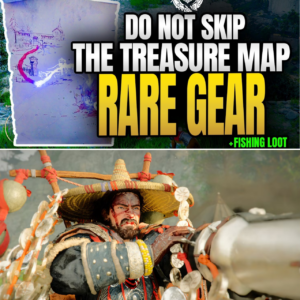
The Art of Discovery – Why Ulzok’s Cave Rewards the “Unrushed” Player
Think you’ve cleared the map? You’re missing the secret gear hidden in Ulzok’s Cave. 🕵️♂️🔥 Exploration in Crimson Desert is all about those “Aha!” moments, but some secrets are buried so deep the community is still hunting for them. We’re…
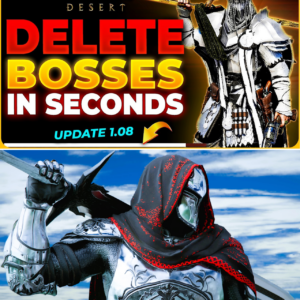
The Gold Rush – Maximizing Wealth in the Current Crimson Desert Meta
21 Gold Bars in ONE run? Stop wasting your time with outdated gold farms. 💰🔥 If you’re still grinding low-yield trade routes, you are falling behind. We’ve discovered a “golden” method that turns your inventory into a gold mine in…
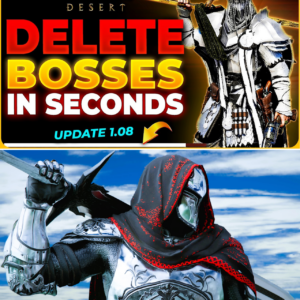
The New Meta – Analyzing the Post-1.08 “Boss-Melter” Build
The game-breaking build that just dropped after Update 1.08. 🔫🗡️ Pearl Abyss just enabled guns for Cliff, and the meta has officially been broken. We’re talking about a Two-Handed Sword + Bleed Shotgun hybrid that deletes bosses in seconds. This…
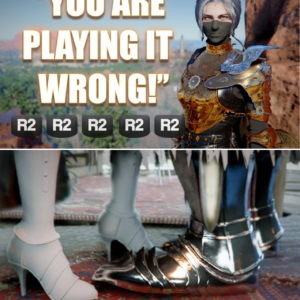
Beyond the Surface – Why Crimson Desert’s Combat Demands Mastery
Stop mashing buttons! You’re playing Damiane like a beginner. 🎮🔥 Think the combat in Crimson Desert is just “hold R2 to win”? You couldn’t be more wrong. While everyone else is stuck on basic attacks, the top-tier players have already…
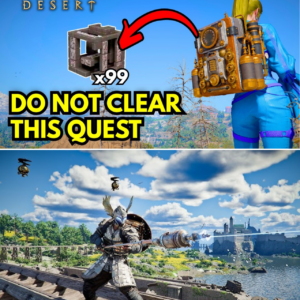
The Efficiency Trap – Optimizing Abyss Artifact Farming in Crimson Desert
Stop grinding combat. This “broken” Disruptor farm nets you 30+ Abyss Artifacts in minutes. ⚡🔥 Everyone is out here fighting bosses for XP, but the real secret to farming Abyss Artifacts is actually… not fighting at all. By utilizing the…
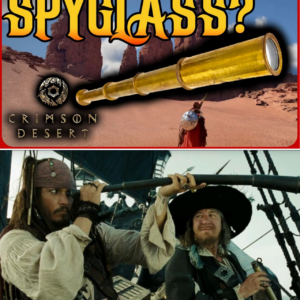
The Horizon Problem – Why a Spyglass is the Missing Link in Crimson Desert’s Exploration
Crimson Desert’s map is massive, but we’re playing half-blind. Pearl Abyss, we need to talk. 🔭🔥 Exploration in Crimson Desert is top-tier, but there’s one glaring omission that’s killing the experience: a functional, portable Spyglass. Sure, we have Photo Mode,…
End of content
No more pages to load