🤯 The Open-World RPG That Time Forgot (But Shouldn’t Have)
Three years before Dragonborn ever yelled “Fus Ro Dah,” another Bethesda masterpiece dropped—and secretly changed the entire genre forever.
Think you know true gaming freedom? You haven’t seen anything yet.
A generation of players missed the real revolution. Don’t be one of them. Find out which ‘underrated’ titan laid the foundation for every epic open world you love today, and why its moral choices still haunt players decades later.
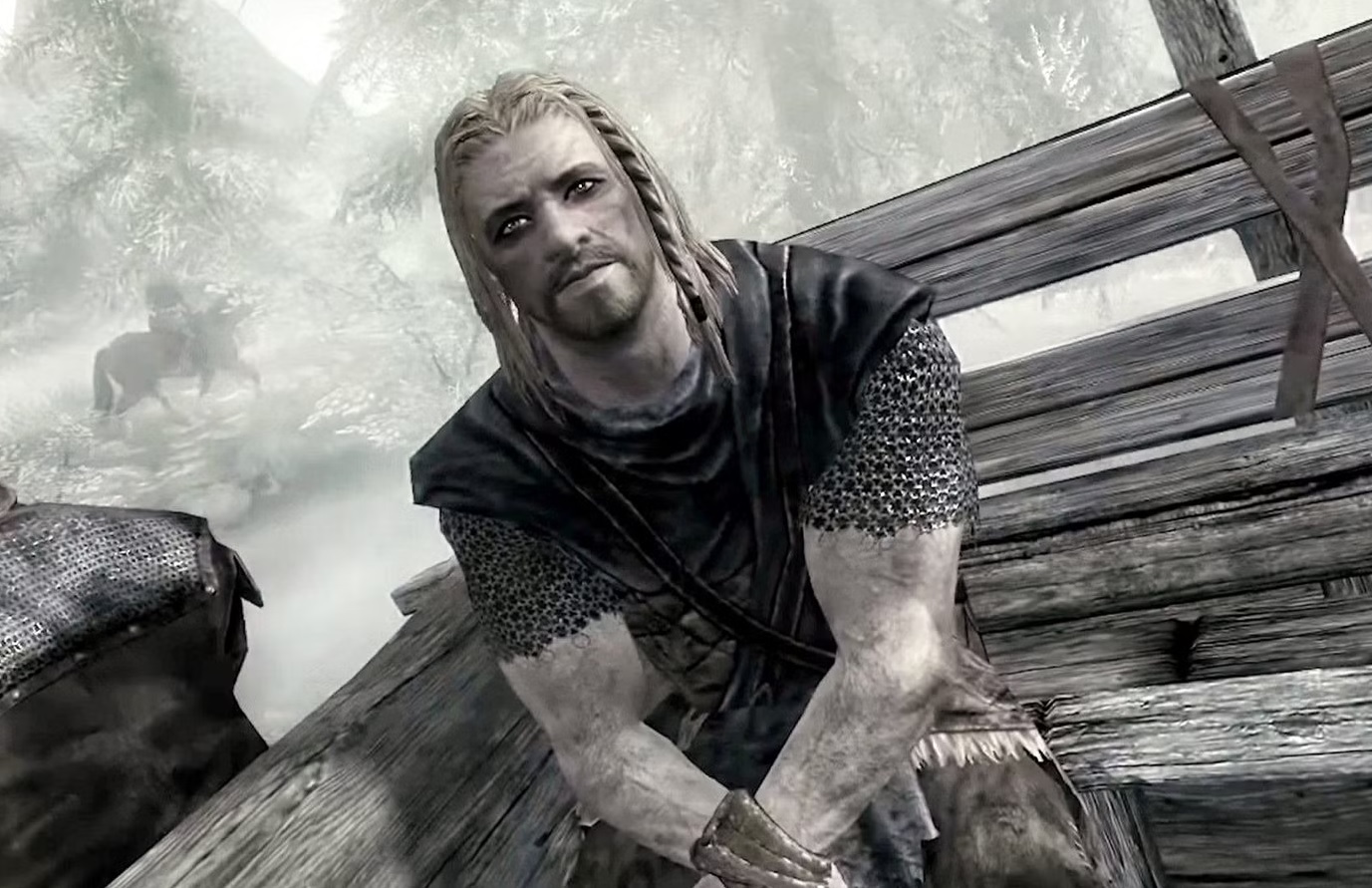
For over a decade, the gaming world has been obsessed with one name: Skyrim. Bethesda’s 2011 Nordic fantasy epic, featuring dragons, civil wars, and the iconic “Dovahkiin,” is rightfully hailed as the open-world role-playing benchmark. It’s the game every new fantasy RPG must be compared to, a cultural behemoth that has dominated the landscape. But while fans continue to sing the praises of the Dragonborn, they are missing the uncomfortable truth: the true ‘gold standard’ was set three years earlier by a far grittier, far more important game.
We are talking about Fallout 3, the 2008 masterpiece that wasn’t just a sequel; it was a revolution. It took a beloved, but niche, isometric PC franchise and forcefully dragged it into the 3D first-person perspective, defining the exact template that Skyrim would later refine, polish, and ultimately overshadow.
The Radical Shift That Paid Off
In 2008, the decision by Bethesda to transform Fallout was met with outrage and skepticism. Hardcore fans of the original titles saw the shift from turn-based strategy to a first-person shooter/RPG hybrid as a betrayal—a gross concession to the console market. Yet, what emerged from the rubble of pre-release controversy was a game that proved the naysayers catastrophically wrong, not only transforming the Fallout series but setting a whole new bar for interactive storytelling.
Fallout 3 thrust players into the desolate, monochromatic ruin of Washington D.C.—the Capital Wasteland. Gone were the bright, if politically charged, colors of The Elder Scrolls IV: Oblivion (2006). In its place was a chilling, oppressive atmosphere where every dilapidated building told a story of nuclear Armageddon. This environment, vast and menacing, was a masterclass in world-building, where the simple act of exploring felt dangerous and genuinely rewarding, a feeling often diluted in later, more accessible open-world titles.
But the real genius lay in its uncompromising Karma system and moral ambiguity. Unlike the more traditional good-versus-evil narratives prevalent at the time, Fallout 3 forced players to confront truly stomach-churning moral dilemmas. Should you detonate the small, thriving town of Megaton for a reward? Should you enslave innocents at The Pitt for “the greater good”? The game’s design ensured that these choices were not just narrative branches; they fundamentally altered how factions, companions, and the entire world reacted to your presence. This level of consequence, the very core of true role-playing, is what many argue was sacrificed for broader appeal in the snowy peaks of Skyrim. Fallout 3 offered freedom, but it demanded accountability—a lesson that the modern RPG seems to have forgotten.
IV. The S.P.E.C.I.A.L. Difference: When Stats Truly Mattered
The modern Action-RPG often relies on simplifying mechanics to appeal to the widest possible audience. While Skyrim made its skills system accessible—nearly every player can be a stealth archer—Fallout 3 operated on a deeper, almost unforgiving level of character definition: S.P.E.C.I.A.L. (Strength, Perception, Endurance, Charisma, Intelligence, Agility, and Luck).
This was no mere cosmetic addition. Your chosen S.P.E.C.I.A.L. stats at the very beginning of the game didn’t just affect damage numbers; they locked and unlocked entire swaths of content, dialogue options, and even major quest resolutions. A character with low Intelligence was a hilarious imbecile, cut off from scientific opportunities. A character with high Charisma could talk their way out of a firefight, bypassing a whole dungeon.
This is the crucial distinction: Fallout 3 demanded true role-playing. You couldn’t simply “grind” your way to becoming a master of everything. You were forced to commit to a specific character archetype—a genius scientist, a dumb brute, or a charming silver-tongued smooth-talker—and live with those limitations. This commitment fostered an immersion level that current open-world games struggle to replicate, where the player is often less a person and more a powerful, generalized deity.
V. The Uncompromising Wasteland and Its Hidden Horrors
While Skyrim is littered with ancient ruins and dragons, the encounters often feel grand and predictable. Fallout 3, however, excelled in creating moments of genuine existential dread and discovery. The world was deliberately ugly, a testament to nuclear terror, yet endlessly fascinating.
Consider the harrowing journey through the subway tunnels of D.C., where every corner could hide a Super Mutant brute or a feral Ghoul. The limited fast-travel options, especially early on, forced players to truly engage with the desolate landscape. This constant sense of peril, amplified by the chillingly upbeat 1940s radio tunes, forged a uniquely dark and cohesive atmosphere.
The quest design was equally relentless. While Skyrim offers noble quests for Jarls, Fallout 3 tasked players with extinguishing the hopes of entire communities. One famous quest involved deciding the fate of Tenpenny Tower, a haven of wealthy elitists, and whether to let Ghouls (the mutated but sentient victims of the fallout) move in. The outcome, regardless of the choice, was grim, often ending in betrayal or slaughter. This focus on gray morality and desperate survival is where Fallout 3 earns its title as a ‘Masterpiece’—it refused to offer a clean, simple hero fantasy.
VI. The Architectural Blueprint for Skyrim’s Success
Despite their aesthetic differences, Skyrim fundamentally owes its structural success to its predecessor. Fallout 3 served as the groundbreaking test case for several core Bethesda concepts that were later perfected in the land of Tamriel:
The First-Person/Third-Person Hybrid: Solidifying the camera mechanics and integrating V.A.T.S. (Vault-Tec Assisted Targeting System) as a combat stop-gap paved the way for Skyrim’s fluid combat.
Radiant AI and Dungeon Delving: The procedural systems that govern character schedules and the placement of environmental storytelling elements were heavily road-tested in the Capital Wasteland. The formula of “Find a location, clear out the hostiles, grab the loot/unique item, and find an exit shortcut” was established here.
The Sense of Scale: Fallout 3 delivered a truly enormous, seamless world map on aging hardware, proving that Bethesda’s engine (Gamebryo) could handle a high degree of player freedom and graphical fidelity (for the time).
If Skyrim is the polished, multi-million selling blockbuster, then Fallout 3 is the brilliant, rough-around-the-edges prototype that provided the exact blueprint. It took the risks, alienated some original fans with its radical changes, and ultimately established the immersive, open-ended, choice-driven structure that gamers now expect.
VII. The Legacy: A Call to Revisit the Capital Wasteland
It is easy for new players, conditioned by Skyrim’s sleek design and widespread popularity, to dismiss the ten-year-old visuals and sometimes clunky mechanics of Fallout 3. But to do so is to miss the origin point of the modern open-world genre.
Fallout 3 is not simply a piece of gaming history; it is a profound exercise in digital ethics and character commitment. It forced players to ask: Who are you, really, when civilization collapses and only the rawest moral choices remain?
While the Dragonborn battles dragons, the Lone Wanderer battles the moral decay of humanity. For any gamer looking for a truly challenging, deeply immersive, and consequential RPG experience—one where your choices genuinely carry the weight of a nuclear winter—it is time to put down the steel sword and pick up the laser rifle.
News

The Boroughs Season 2: Unresolved Glitches and the Future of Netflix’s Supernatural Hit
WAS THE ENDING JUST A GLITCH? 😱 THE BOROUGHS SEASON 2 THEORY THAT’S SHATTERING FANS! We thought the nightmare in The Boroughs was over, but that final scene just changed EVERYTHING. 🔍 Did Sam Cooper really win, or did he…

Sullivan’s Crossing Renewed for Season 5: Navigating New Heartbreak in Nova Scotia
MAGGIE SULLIVAN’S HEART IS SHATTERED! 💔 IS THIS THE END OF HER HAPPY ENDING? Just when we thought the drama in Sullivan’s Crossing couldn’t get any messier, the Season 5 renewal announcement dropped like a bombshell! 💣 The Season 4…

The Uncertain Future of Nemesis: Is a Season 2 Comeback on the Horizon?
IS NEMESIS SEASON 2 DEAD OR ALIVE? 🚨 THE TRUTH IS SHOCKING! The streets are talking, and fans of the hit crime thriller Nemesis are in a total frenzy! 🤯 We left Season 1 with Col Train Wilder on the…

My Life with the Walter Boys Season 3: Ranch Crises, New Entrants, and a Crossroads for Cole
THE WALTER RANCH IS FALLING APART! 😱 IS GEORGE GONE FOR GOOD? Just when we thought the dust settled, My Life with the Walter Boys Season 3 is here to break us all over again! 💔 From that heart-stopping health…

Your Fault: London – Why the Highly Anticipated Sequel is Taking a Darker, More Mature Turn
IS THIS THE END FOR NOAH AND NICK? 💔 THE DRAMA JUST SKYROCKETED! We all thought they were stronger than ever, but Your Fault: London is about to prove us all wrong. 😱 If you thought the first movie was…

Off Campus Season 2: A Deep Dive into the Heartbreak and Hopes for Brier University
THE TRAGEDY THAT WILL BREAK EVERY HOCKEY ROMANCE FAN’S HEART! 💔🏒 Is Off Campus Season 2 already planning to shatter our souls? After the explosive finale of Season 1, we thought we knew where Dean and Allie were heading—but leaks…
End of content
No more pages to load