THE GAME THAT CHANGED EVERYTHING! 🤯 WHY AAA STUDIOS ARE RUNNING SCARED!
For years, big studios told us we couldn’t have it all—they said if a world is huge, it has to be shallow. If the graphics are next-gen, the interactivity has to suffer. They blamed engines, they blamed “limited time,” and they blamed us for “not having enough time for deep games.”
Crimson Desert just proved all of those excuses were total nonsense. Pearl Abyss quietly raised the bar so high that your favorite “check-list” RPGs are about to feel like relics of the past. Once you experience this level of seamless, systemic freedom, there is no going back. 👇
🔥 WATCH THE DEEP DIVE ON WHY THE INDUSTRY IS PANICKING:
As the dust settles on its first month, Crimson Desert is being hailed as more than just a successful RPG; it is being viewed as a “dangerous” disruption to the established AAA gaming industry. By delivering a world that refuses to compromise on scale, detail, or interactivity, Pearl Abyss has effectively removed the long-standing excuses used by major studios to justify shallow systems and empty open worlds.
The Custom Engine Advantage
At the heart of the controversy is the BlackSpace Engine—a proprietary tool built by Pearl Abyss specifically for this project. For years, industry giants have blamed engine limitations (such as Unreal or Unity) for scaling back ambitious features. Crimson Desert proves that when technology is built around a vision—rather than forcing a vision into existing tools—scale and performance can coexist seamlessly.
Systems Over Checklists
Analysts point to the “density” of the game’s systems as its greatest achievement. Unlike the “checklist” design of titles like Assassin’s Creed Valhalla or Far Cry 6, Crimson Desert utilizes an overlapping architecture where exploration, crafting, combat, and traversal are interconnected.
Emergent Gameplay: The game’s heavy reliance on physics-based systems means that the most memorable moments are often player-driven rather than scripted by developers.
Depth vs. Simplicity: The success of the game’s complex combat proves that players do not need “simplified” systems to stay engaged; they simply want depth that feels weighted and expressive.
Seamlessness as a New Standard
One of the most immediate shifts in player expectation is the removal of the barrier between gameplay and cinematics. While titles like God of War (2018) pioneered this flow, Crimson Desert pushes it further, making traditional, cutscene-heavy structures feel instantly outdated. The fluidity of switching between characters and modes creates a level of immersion that most studios claimed was too resource-heavy to achieve.
Iteration Over Stagnation
The post-launch support for the game has been equally disruptive. With over 10 updates and patches in its first month, Pearl Abyss has reframed “live service” as a design philosophy centered on rapid quality-of-life improvements and player feedback rather than aggressive monetization. This prioritization of the player experience over extraction has set a new precedent for how modern games should be supported after release.
The Inevitable Shift
The real impact of Crimson Desert may not be its sales figures, but the “impossible-to-justify” reality it creates for other developers. Studios can no longer claim that dense worlds, complex combat, and massive scale cannot work together. As expectations shift, players will likely begin to find other worlds feeling empty and systems feeling disconnected.
In the words of one community strategist, “Crimson Desert didn’t just release; it changed the standard”. The question now is not if other studios can catch up, but if they are willing to abandon the “trade-off” model that has defined the industry for a decade.
News
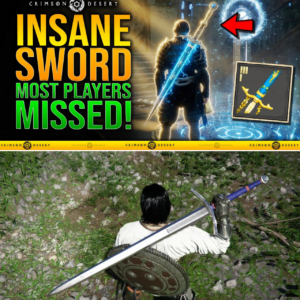
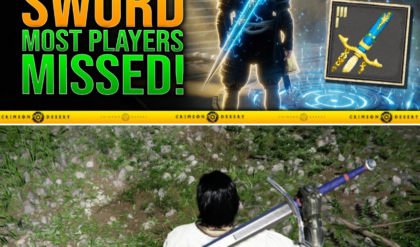
THE DANDELION DEBUT: Is This Secret Longsword the New High-Attack Meta?
BETTER THAN DARKBRINGER? 🗡️💎 THE SECRET “DANDELION” LONGSWORD HAS BEEN FOUND! Move over, Darkbringer—there’s a new king of attack power in Pywel! The Dandelion Longsword has been hiding in plain sight, and it’s officially one of the most beautiful and…
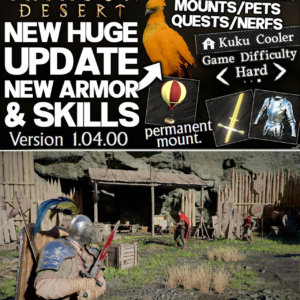
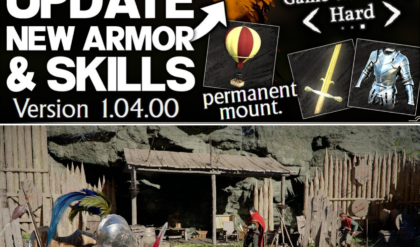
THE 1.04 REVOLUTION: How Pearl Abyss Just Redefined the Crimson Desert Experience
CRIMSON DESERT IS FINALLY “PLAYABLE”! 🍻🦅 PATCH 1.04 IS A MASSIVE W! The Greymanes are celebrating today! The legendary Golden Beer is officially fixed, meaning permanent double rewards for your missions are back on the menu. But that’s just the…
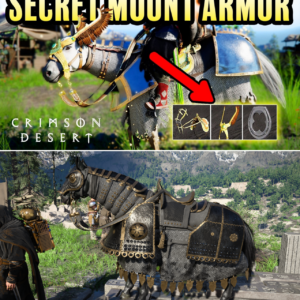
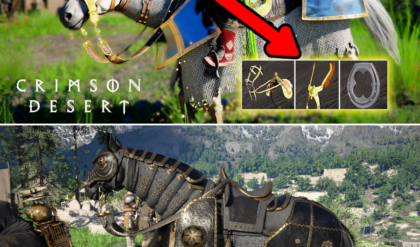
THE DELESYIAN STEALTH: Uncovering the Hidden Contribution Armor of the Northeast
THE SECRET OF DELESYIA 🛡️🐎 UNLOCK THE RAREST HORSE ARMOR IN CRIMSON DESERT! Think you’ve seen every mount upgrade in Pywel? Think again. There is a hidden “Contribution” set locked behind a social stealth mechanic that most players completely miss….

THE ELANTRIMA ENIGMA: Hunting the Most Aesthetic Mount in Crimson Desert
STOP RIDING BASIC HORSES! 🐎✨ THE MOST BEAUTIFUL MOUNT IN PYWEL HAS BEEN FOUND! Forget speed for a second—if you want to turn heads from Hearnen to Pailune, you need the Elantrima. It’s being called the most stunning horse in…
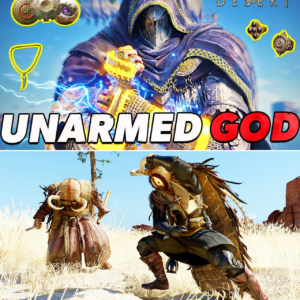
THE “MARTIAL MASTER” META: Why Unarmed Combat is the Ultimate Power Flex in Crimson Desert
FISTS OF FURY! 👊⚡️ THIS UNARMED BUILD IS BREAKING CRIMSON DESERT! Who needs a Greatsword when you can weapon-mog bosses with your bare hands? After 250 hours, a “Ninja-Wizard” martial arts build has been uncovered that makes unarmed combat more…
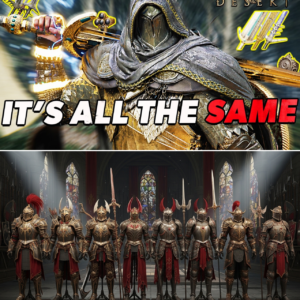
THE PLACEHOLDER PARADOX: Is Crimson Desert’s Item System a “Generic” Rush Job?
IS CRIMSON DESERT ACTUALLY “BROKEN”? 🕵️♂️ THE CONSPIRACY THEORY ROCKING THE COMMUNITY! Why does a “Necklace of Lightning” have ZERO lightning powers? Why is a legendary Tier 5 sword statistically identical to your rusty starter blade? Veteran players are waking…
End of content
No more pages to load