THE END OF “GROCERY LIST” OPEN WORLDS? WHY CRIMSON DESERT IS A NIGHTMARE FOR GTA VI! 😱🔥
Stop what you’re doing. The bar for open-world games didn’t just move—it was just yeeted into another dimension. 🚀 After spending 50+ hours in Pywel, going back to your favorite “map-clearing” games feels like switching from 4K back to a 1990s tube TV. It’s that bad.
Crimson Desert is doing the unthinkable: it’s treating you like an adult. No more hand-holding, no more 1,000 mindless icons on a map, and NO more scripted boredom. Whether you’re suplexing a bandit, riding a BEAR into a dynamic faction war, or scaling a skyscraper-sized boss Shadow of the Colossus style—everything feels alive. 🐻⚔️
Rockstar and Ubisoft should be sweating. When a world reacts to your choices this naturally, the old “Theme Park” design feels dead. But be warned: the first 8 hours are a BRUTAL learning curve. Can you handle a game that doesn’t care if you get lost?
Is this the GTA VI killer, or just a beautiful, buggy mess? The community is DIVIDED. Read the full exposé on why the industry is panicking! 👇
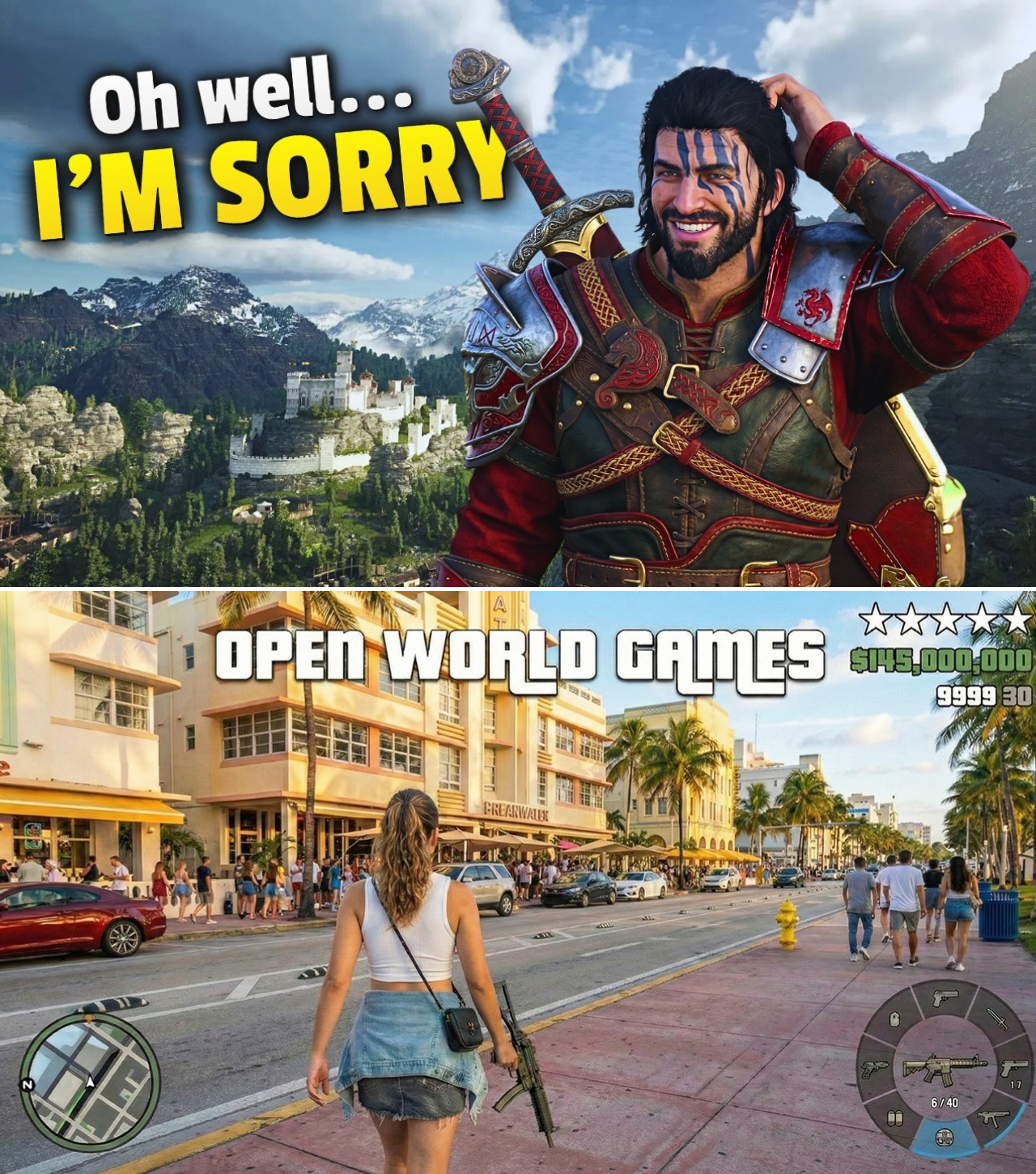
For over a decade, the “Rockstar Formula” has been the undisputed gold standard of gaming. Pop a map, clear a camp, follow the yellow line, repeat. But a new titan from the East, Pearl Abyss’s Crimson Desert, has officially declared war on the “Grocery List” design philosophy, and the industry tremors are being felt from Seoul to New York.
As Crimson Desert surpasses 4 million copies sold, a narrative is emerging across Discord servers and Reddit threads: Pywel isn’t just a map; it’s a “living, breathing problem” for every other developer in the genre.
The “Theme Park” vs. The “Living Continent” The core of the controversy lies in how Crimson Desert handles exploration. While titles like Assassin’s Creed or even the venerable Grand Theft Auto series rely on scripted set-pieces and predictable NPC behaviors, Pywel operates on “Emergent Freedom.”
“In most games, you’re in a theme park designed to keep you busy,” noted gaming analyst gamepawn in a recent viral breakdown. “In Crimson Desert, you’re in a world that doesn’t wait for you.”
Events in Pywel happen organically. A trade route might collapse because you took out a specific faction leader 10 miles away. An NPC might remember you not because of a scripted dialogue tree, but because the game’s systemic AI tracked your previous “unintended” actions. This level of depth is reportedly making early playtesters of other upcoming AAA titles feel “restricted” and “boxed in.”
Combat Without Borders: Suplexes and Synergies The gameplay mechanics are where the “problem” for competitors becomes most apparent. Crimson Desert refuses to put combat and traversal into separate boxes. Players can seamlessly transition from high-speed parkour to dual-wielding Hwando blades, mid-air grapples, and even professional wrestling moves like suplexes.
The ability to use the environment—kicking enemies off real-time calculated cliff edges or using trees as improvised slingshots—creates a level of tactical unpredictability that makes the standard “cover-and-shoot” or “hack-and-slash” systems feel like relics of a bygone era. Even Dingga Bakaba, director of Dishonored, has weighed in, noting that the game’s “systems-first” approach creates a “magic” that only reveals itself once the player accepts the world’s brutal rules.
The 8-Hour “Filter” However, it’s not all praise in the land of Pywel. The game has a notorious “learning curve” that is currently acting as a filter for casual players. Unlike most modern titles that frontload explosions to prevent refunds, Crimson Desert is unapologetically difficult in its opening hours.
Reports have surfaced of players fumbling for hours just to figure out how to light a lantern or manage a “clunky” inventory system. “The story isn’t winning any Oscars, and the UI is a mess,” admitted one reviewer on Steam, where the game’s rating recently climbed to “Very Positive” following a string of technical patches.
A Technical Arms Race The “Crimson Problem” also extends to hardware. To achieve this level of systemic interaction, the game demands monstrous PC specs. Console players are reporting significant “environmental pop-in” and screen tearing without Variable Refresh Rate (VRR) enabled.
This technical barrier is a double-edged sword. While it sets a new visual and mechanical benchmark, it leaves smaller studios—and even mid-tier AAA developers—in the dust. They simply cannot afford the six-year development cycle and massive budget Pearl Abyss poured into their proprietary engine.
The Rockstar Ultimatum As the world waits for GTA VI, the goalposts have moved. It is no longer enough to have a large map with high-fidelity textures. Players now expect a world where the systems “talk to each other.”
Crimson Desert may not be the “GTA Killer” in terms of cultural zeitgeist, but it has fundamentally shifted player expectations. Once you’ve experienced a world where you can ride a bear into a dynamic warzone that changes the political landscape of a province, going back to “clear 17 identical bandit camps” feels less like a game and more like a chore.
The message to the industry is clear: evolve or become obsolete. Pywel is watching.
News
The Mid-Season Strategic Shift: What’s Next for High Potential Season 3
The High Potential wait is officially painful—but it’s for a genius reason! 🕵️♀️💥 You’ve noticed it: High Potential is nowhere to be found on ABC’s Fall 2026 schedule. Panic? Not yet. The network just dropped a bombshell explanation for the…

The Aftermath of Mid-Wilshire’s Darkest Hour: The Rookie Season 9 Preview
The Mid-Wilshire team is in their biggest crisis yet—and the Rookie Season 8 cliffhanger left us absolutely shattered! 🚔🔥 Lucy and Tim have been abducted, and nobody knows they’re gone. The season finale didn’t just break viewership records; it left…
Grey Sloan in Crisis: What to Expect from Grey’s Anatomy Season 23
The bridge collapsed, and Grey Sloan Memorial will never be the same! 🏥💥 If you thought the Season 22 finale was brutal, Season 23 is coming to pick up the pieces—but not everyone is making it out. With Owen and…

Chronological Collisions: How Blood of My Blood Season 2 Plans to Integrate the Outlander Finale
The Outlander reunion of the century is finally happening—and it’s not where you think! 😱⏳ Fans have been theorizing for years, but the Blood of My Blood Season 2 trailer just dropped the biggest hint yet: Claire is coming to…

Beyond the Books: Why Off Campus Season 2 Is Poised to Shatter Fan Expectations
The Off Campus Season 1 finale was just the beginning—Season 2 is officially rewriting the rules! 🏒🔥 Think you know what happens next because you’ve read the books? Think again. The showrunners just confirmed they are going completely off-script, and…
Unearthing the Curse: Widow’s Bay Episode 6 Prepares for a Narrative Storm
The Widow’s Bay mystery just hit a breaking point—and we finally know what’s buried in Richard Warren’s grave! 😱 If you thought the “True Sight” mushrooms were crazy, wait until you see what’s actually hidden inside the founding father’s resting…
End of content
No more pages to load