😲 SCIENTISTS STUNNED: A jaw-dropping discovery about Scottish DNA just flipped everything we thought we knew about Scotland’s ancient roots! 🏴 From hidden connections to far-off lands to secrets buried in the bones of the Picts, this revelation will leave you speechless. Could you be carrying the DNA of Scotland’s mysterious past? Click the link to uncover the truth that’s rewriting history!
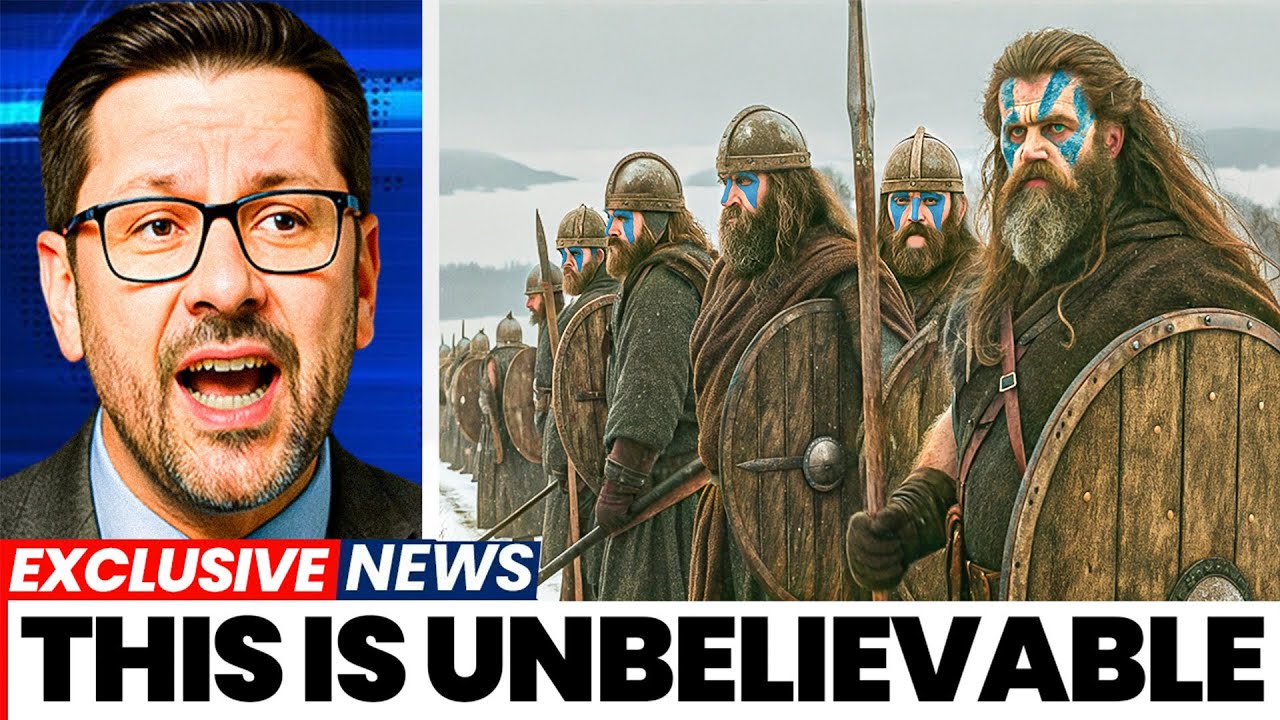
In 2012, a groundbreaking study titled Scotland’s DNA sent ripples through the scientific community, revealing what researchers called an “extraordinary” and “unexpected” diversity in the genetic makeup of Scotland’s population. Far from being a homogenous Celtic enclave, Scotland’s DNA tells a story of ancient migrations, surprising connections to distant regions, and a complex tapestry of ancestry that challenges long-held myths. From the enigmatic Picts to Viking settlers and even traces of African and Asian heritage, the discoveries have reshaped our understanding of Scotland’s past. This article explores the findings, their historical context, and their implications, drawing on key studies and archaeological insights to uncover what makes Scottish DNA so remarkable.
The Scotland’s DNA Project: A Genetic Revolution
Launched by geneticist Dr. Jim Wilson of Edinburgh University and historian Alistair Moffat, the Scotland’s DNA project (later expanded to Britain’s DNA) analyzed the genetic profiles of nearly 1,000 Scots, uncovering a treasure trove of diversity. The study identified nearly 100 distinct male lineages and over 150 female lineages, tracing origins to Europe, Asia, Africa, and beyond. Published in 2012, the findings highlighted Scotland’s unique position at the northwestern edge of Europe as a melting pot of ancient migrations.
One of the most striking revelations was the discovery of four new male lineages, accounting for one in ten Scottish men. These lineages, previously unknown, underscored the depth of genetic variation. Even more surprising were connections to regions far beyond Europe. For instance, actor Tom Conti was found to share the M34 marker with Napoleon Bonaparte, a lineage of Saracen origin, linking him to the Middle East. Similarly, comedian Fred MacAuley’s DNA suggested an ancestor who was a slave in 9th-century Dublin, despite his name hinting at Viking roots.
The Picts: Debunking Myths with DNA
The Picts, often called Scotland’s “painted people,” have long been a source of fascination and mystery. Medieval accounts, like those of the Venerable Bede, suggested they were exotic immigrants from Scythia or Thrace. However, a 2023 study published in PLOS Genetics challenged these narratives, revealing that the Picts were not foreigners but had deep local roots tied to Iron Age populations in Britain and Ireland.
Researchers analyzed genomes from two Pictish cemeteries—Balintore in Easter Ross and Lundin Links in Fife, dating to the 5th to 7th centuries AD. Using identity-by-descent (IBD) analysis, they found that Pictish DNA closely resembled that of other Iron Age groups in the British Isles, particularly in western Scotland, Wales, Northern Ireland, and Northumbria. This suggests the Picts were not a distinct migrant group but part of a broader Celtic continuum, debunking myths of their exotic origins.
The study also dispelled the notion of Pictish matrilocality. Mitochondrial DNA (mtDNA) analysis showed no shared maternal ancestors among the skeletons, indicating that Pictish society was not structured around female bloodlines, as some historians speculated. Instead, their genetic legacy persists in modern populations, particularly in western Scotland, proving the Picts didn’t vanish but integrated into later Gaelic culture.
Unexpected Ancestral Connections
The Scotland’s DNA project revealed astonishing connections to distant regions. Approximately 1% of Scottish men carry Berber ancestry, likely linked to the medieval caliphate of Cordoba, though the exact mechanism remains a mystery. DNA from Roman-period Illyria (modern Croatia) was also detected, possibly tied to Roman occupation of lowland Scotland. Traces of southeast Asian and Siberian ancestry further highlight Scotland’s role as a crossroads of ancient migrations.
These findings suggest that Scotland’s geographic position at Europe’s northwestern edge made it a destination for diverse groups. For example, the Norse Viking influence is evident in Orkney and Shetland, where genetic patterns mirror those of ancient Gaels, Picts, Britons, and Norse settlers. A 2024 study using ORCADES and VIKING volunteer data showed that these regions retain high levels of Norwegian ancestry, offering insights into Viking movements and the founding of Iceland.
The Genetic Echoes of Ancient Kingdoms
A 2019 study further illuminated Scotland’s genetic landscape, showing that modern Scots often live in the same regions as their Dark Age ancestors (476–1000 AD). Researchers identified six genetic clusters corresponding to ancient kingdoms like Strathclyde, Pictland, and Gododdin. Orkney and Shetland displayed unique genetic identities, with the highest Norwegian ancestry outside Scandinavia. This genetic continuity suggests limited population movement, even after centuries of industrialization.
The study also revealed that the Isle of Man is predominantly Scottish in genetic makeup, and some founders of Iceland likely originated from northwest Scotland and Ireland. These findings underscore the enduring legacy of Scotland’s ancient populations, preserved in the DNA of modern residents.
The Role of Migration and Intermarriage
The genetic diversity of Scotland is not just a story of ancient settlers but also of continuous migration and intermarriage. A 2021 analysis by Scottish Origenes traced the origins of the Gaels, suggesting they were exiled Celtic tribes from the Rhine region who arrived in Britain around 55 BC, fleeing Roman invasions. These Proto-Gaels settled north of the Clyde Estuary and Firth of Forth, evolving into the Gaelic-speaking Scots.
The Bronze Age brought another wave of migration, particularly of women, as evidenced by a 2024 study on Orkney. Unlike mainland Europe, where male pastoralists dominated, Orkney saw an influx of female immigrants carrying Indo-European ancestry from the Black Sea steppes. This reversed the typical pattern, with Neolithic male lineages persisting longer in Orkney before being replaced in the Iron Age.
Implications for Modern Scots
The discovery of such diverse ancestry has profound implications. For one, it challenges the notion of a singular “Scottish” identity. Modern Scots carry markers from Ice Age refuges in southern France and Spain, Viking raiders, Roman soldiers, and even Berber traders. Over 70% of Scottish men belong to the R1b haplogroup, linked to the Beaker People who arrived 4,500 years ago, bringing advanced pottery and cultural practices.
These findings also have practical applications. Genetic research can aid in identifying rare DNA variants linked to diseases, as rural populations in Scotland retain unique genetic patterns. This could lead to breakthroughs in medical research, particularly for conditions influenced by ancient ancestry.
For individuals, DNA testing has become a way to reconnect with this complex heritage. Stories like that of Ian Carswell, an Australian of Scottish descent, show how markers like M284 link modern people to the first post-Ice Age settlers. Over 8,000 Scots have taken such tests since 2011, uncovering personal histories that span continents and millennia.
Critical Reflections on the Narrative
While these discoveries are compelling, they must be approached critically. Early media reports, like those from 2012, sometimes sensationalized findings, as seen in claims about Fred MacAuley’s slave ancestor. Such narratives, while intriguing, rely on speculative interpretations of genetic data. The Berber ancestry, for instance, remains unexplained, and theories about Cordoba’s influence lack concrete archaeological support.
Moreover, the emphasis on male lineages (Y-DNA) and mitochondrial DNA (mtDNA) can oversimplify the genetic picture. Autosomal DNA, which captures broader ancestry, is less frequently discussed but equally important. Future studies, like those underway at Stockholm University, aim to fill these gaps by analyzing more genomes and integrating archaeological data.
Conclusion
The shocking discoveries about Scottish DNA reveal a nation far more diverse than previously imagined. From the local roots of the Picts to unexpected links with Berber, Illyrian, and Asian populations, Scotland’s genetic story is one of convergence and resilience. These findings challenge romanticized notions of Celtic purity and highlight the power of DNA to rewrite history. As research continues, Scots and their diaspora can explore their heritage with newfound clarity, connecting personal stories to a global narrative. The past, it seems, is not lost—it’s written in our genes.
News
The Mid-Season Strategic Shift: What’s Next for High Potential Season 3
The High Potential wait is officially painful—but it’s for a genius reason! 🕵️♀️💥 You’ve noticed it: High Potential is nowhere to be found on ABC’s Fall 2026 schedule. Panic? Not yet. The network just dropped a bombshell explanation for the…
The Aftermath of Mid-Wilshire’s Darkest Hour: The Rookie Season 9 Preview
The Mid-Wilshire team is in their biggest crisis yet—and the Rookie Season 8 cliffhanger left us absolutely shattered! 🚔🔥 Lucy and Tim have been abducted, and nobody knows they’re gone. The season finale didn’t just break viewership records; it left…
Grey Sloan in Crisis: What to Expect from Grey’s Anatomy Season 23
The bridge collapsed, and Grey Sloan Memorial will never be the same! 🏥💥 If you thought the Season 22 finale was brutal, Season 23 is coming to pick up the pieces—but not everyone is making it out. With Owen and…
Chronological Collisions: How Blood of My Blood Season 2 Plans to Integrate the Outlander Finale
The Outlander reunion of the century is finally happening—and it’s not where you think! 😱⏳ Fans have been theorizing for years, but the Blood of My Blood Season 2 trailer just dropped the biggest hint yet: Claire is coming to…

Beyond the Books: Why Off Campus Season 2 Is Poised to Shatter Fan Expectations
The Off Campus Season 1 finale was just the beginning—Season 2 is officially rewriting the rules! 🏒🔥 Think you know what happens next because you’ve read the books? Think again. The showrunners just confirmed they are going completely off-script, and…
Unearthing the Curse: Widow’s Bay Episode 6 Prepares for a Narrative Storm
The Widow’s Bay mystery just hit a breaking point—and we finally know what’s buried in Richard Warren’s grave! 😱 If you thought the “True Sight” mushrooms were crazy, wait until you see what’s actually hidden inside the founding father’s resting…
End of content
No more pages to load