The game that literally won’t let you quit… and it’s driving completionists absolutely insane. 🔥
Ever feel like you’ve finally “beaten” an open-world game, only to find the map you spent 200+ hours clearing has changed overnight? Most developers give you a checklist. Pearl Abyss is giving us a living nightmare—and honestly? We can’t stop playing.
From secret NPC spawns that only trigger late-game, to “re-blockading” systems where cleared camps turn back into war zones, Crimson Desert is officially killing the “one-and-done” completionist grind. Are we looking at the most brilliant evolution of open-world design, or just a mountain of chores disguised as “content”?
The community is divided, the map is evolving, and my OCD is screaming. Want to know why everyone is rushing back to zones they finished months ago?
Check out the full breakdown here: 👇
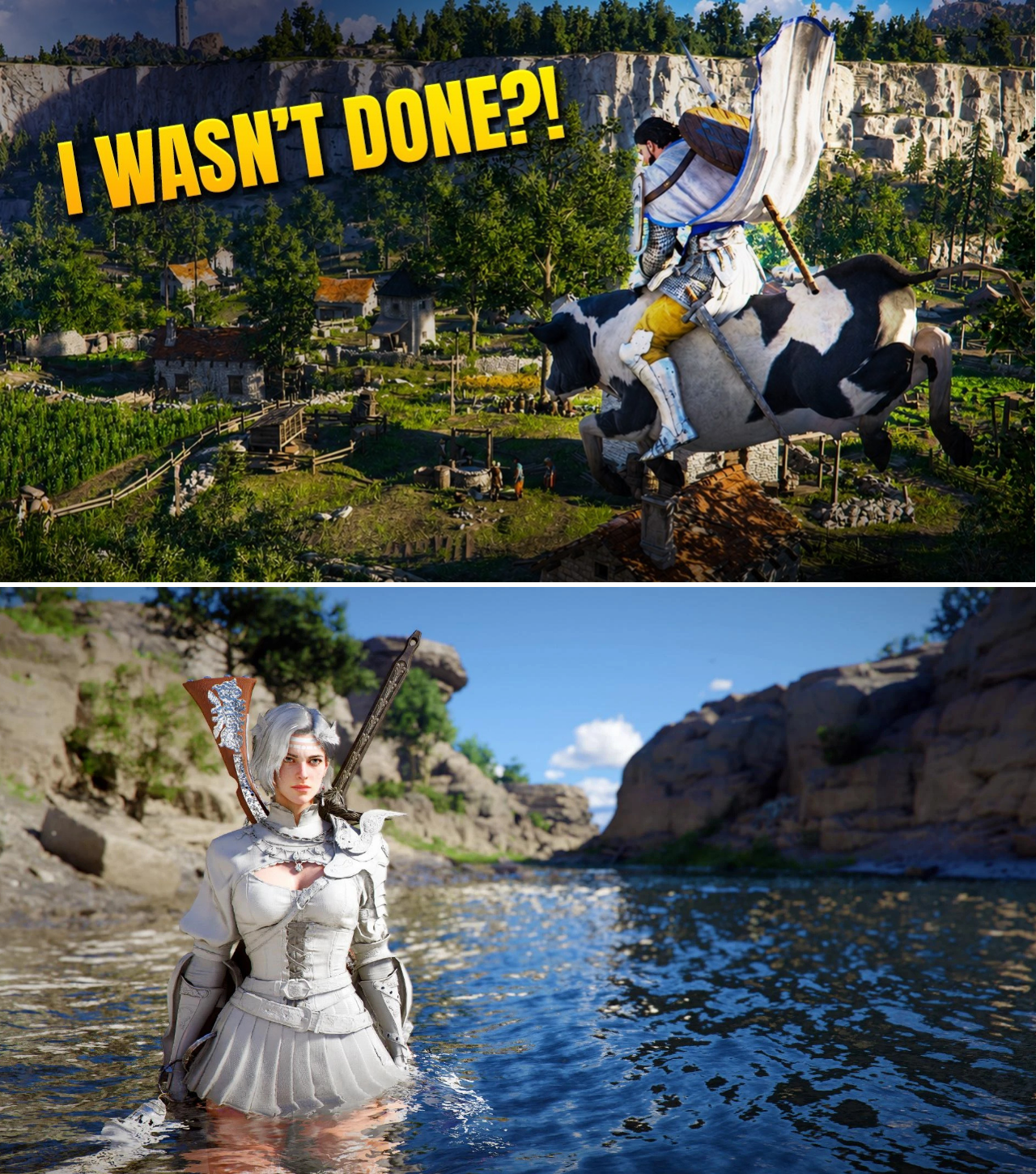
In the saturated landscape of modern open-world gaming, the standard progression loop is predictable: arrive at a new region, clear the surrounding camps, unlock the local fast-travel point, and move on. The map becomes a shrinking list of tasks, a “to-do” list that eventually fades into a completed, static space. However, Crimson Desert has begun to aggressively challenge this design philosophy, and the resulting player experience is as polarizing as it is ambitious.
The Death of the “Completed” Zone
As highlighted by recent community discussions and content deep-dives, Crimson Desert is increasingly utilizing a “dynamic world” architecture that prevents players from ever truly feeling the map is finished. Unlike traditional titles where an area retires once its main objectives are met, Crimson Desert treats its geography as a living, breathing entity.
Players are reporting that NPC quest lines and environmental changes are often gated behind total story progression rather than regional exploration. A village visited at the 80-hour mark may be barren, only to reveal new, vital content once the narrative has advanced further. For the completionist, this is a chaotic shift; for the explorer, it is a revelation. It effectively forces players to stop treating the map as a static canvas to be wiped clean and instead view it as a shifting sequence of layers that require backtracking and patience.
The “Re-blockading” Controversy
Perhaps the most contentious addition to the post-launch suite is the “re-blockading” system. Once an area has been cleared, Pearl Abyss has implemented mechanics that allow enemy forces to reclaim these territories.
On one side of the aisle, players argue this creates a necessary sense of stakes. In many open-world games, the world eventually loses its threat as the player grows more powerful, turning the late game into a victory lap. By forcing camps to respawn and enemies to reclaim lost ground, the game maintains a baseline level of challenge. However, the opposing viewpoint is equally vocal: if not balanced correctly, this risks turning the game into a “chore simulator.” There is a fine line between a world that feels alive and one that feels like a floor being mopped while someone walks over it with muddy boots.
Quality of Life vs. Ambition
The rapid cadence of updates from Pearl Abyss suggests an aggressive, real-time development strategy. Beyond territory reclamation, the integration of boss rematches—allowing players to fight high-fidelity, scaled versions of previously defeated bosses—has been widely praised as a smart move that respects the game’s core strength: its combat spectacle.
Yet, this ambition is creating significant friction. As systems for housing, mounts, and treasure detection continue to expand, the game’s user interface is struggling to keep pace. The “knowledge helm” and treasure detection mechanics, in particular, are frequently cited as needing further refinement. When a game demands that you backtrack, re-engage with old content, and hunt for new secrets, the player tools—map markers, tracking logs, and progress clarity—must be impeccable. Without these, the experience shifts from “discovery” to “tedious homework.”
The Future of the Frontier
Crimson Desert stands at a critical juncture. Pearl Abyss has clearly made the choice to favor complexity over predictability. By refusing to let players “finish” the game in the traditional sense, they are attempting to solve the biggest problem in the genre: player churn.
If the developers can continue to polish the interaction between these layered systems and provide the necessary navigation tools to manage them, they may have created a new gold standard for the “living world.” If not, they risk collapsing under the weight of their own design, turning a masterpiece of scale into an unmanageable pile of systems.
For now, the player base remains hooked, caught between the frustration of an ever-moving finish line and the undeniable thrill of a world that still has secrets left to give. One thing is certain: in Crimson Desert, the map is never quite what you think it is, and for many, that is exactly why they are staying.
News

The Gilded Age Season 4: A Dual Revolution in New York Society
The Gilded Age Season 4 is officially bringing a RECKONING. 🗽🔥 The Season 3 finale left us in absolute disbelief, but the pieces for Season 4 are falling into place, and the stakes have never been higher. We’re moving beyond…

The First Son and the Prince Return: Secret Plots, Star Power, and Everything We Know About ‘Red, White & Royal Blue 2’
The Royal Chaos is BACK! Alex and Henry’s next chapter just got VERY real. 🇬🇧🇺🇸👑 Stop trying to stay calm! The sequel to Red, White & Royal Blue is officially filming, and new behind-the-scenes leaks are dropping bombshells that change…

The Snake in the Grass: ‘Marshals’ Season 2 Sets the Stage for a High-Stakes Dutton Crossover
Is the Dutton legacy about to CRUMBLE? 🏔️⚠️ The Season 1 finale of Marshals left us all gasping, but the Season 2 trailer just dropped a bomb that changes EVERYTHING. We thought we knew who the enemy was, but the…

The Brier University Revolution: What to Expect from ‘Off-Campus’ Season 2
Brier University is officially back in session! 🏒🔥 Stop everything—the Off-Campus Season 2 updates are HERE and the drama is reaching levels we weren’t even prepared for. While we were all obsessing over Garrett and Hannah, the show was secretly…

Beyond the Ice: The Secret Lives and Real Relationships of the ‘Off-Campus’ Cast
The ‘Off-Campus’ cast is NOT what you think! 🤫💔 We’ve all been obsessing over the chemistry, but the real lives of your favorite Brier University stars are full of secret engagements, long-term relationships spanning a decade, and past flings that…

Behind the Mask: The Rigorous, Secret Reality of Filming ‘Off-Campus’
Think your favorite ‘Off-Campus’ moments were all acting? Think again. 🏒🔥 The behind-the-scenes reality of Brier University is way more intense than what you’re seeing on screen. From secret auditions that ended in tears to a mandatory hockey boot camp…
End of content
No more pages to load