PATCH 3.0.3 FAILED! 😱 5 Broken Bugs Blizzard Can’t Fix!
Think the devs finally balanced the game? Think again! The latest patch was a disaster—or a goldmine, depending on who you ask! We’ve uncovered 5 “broken” mechanics that are still live, from infinite Mythic farming to secret Goblin dungeon exploits that are trivializing Pit 150.
The community is going wild, and the economy is already shifting. Are you missing out on the easiest loot of the season?
Stop wasting your time on “legit” runs and see the top 5 glitches you need to abuse NOW before they get hotfixed 👇
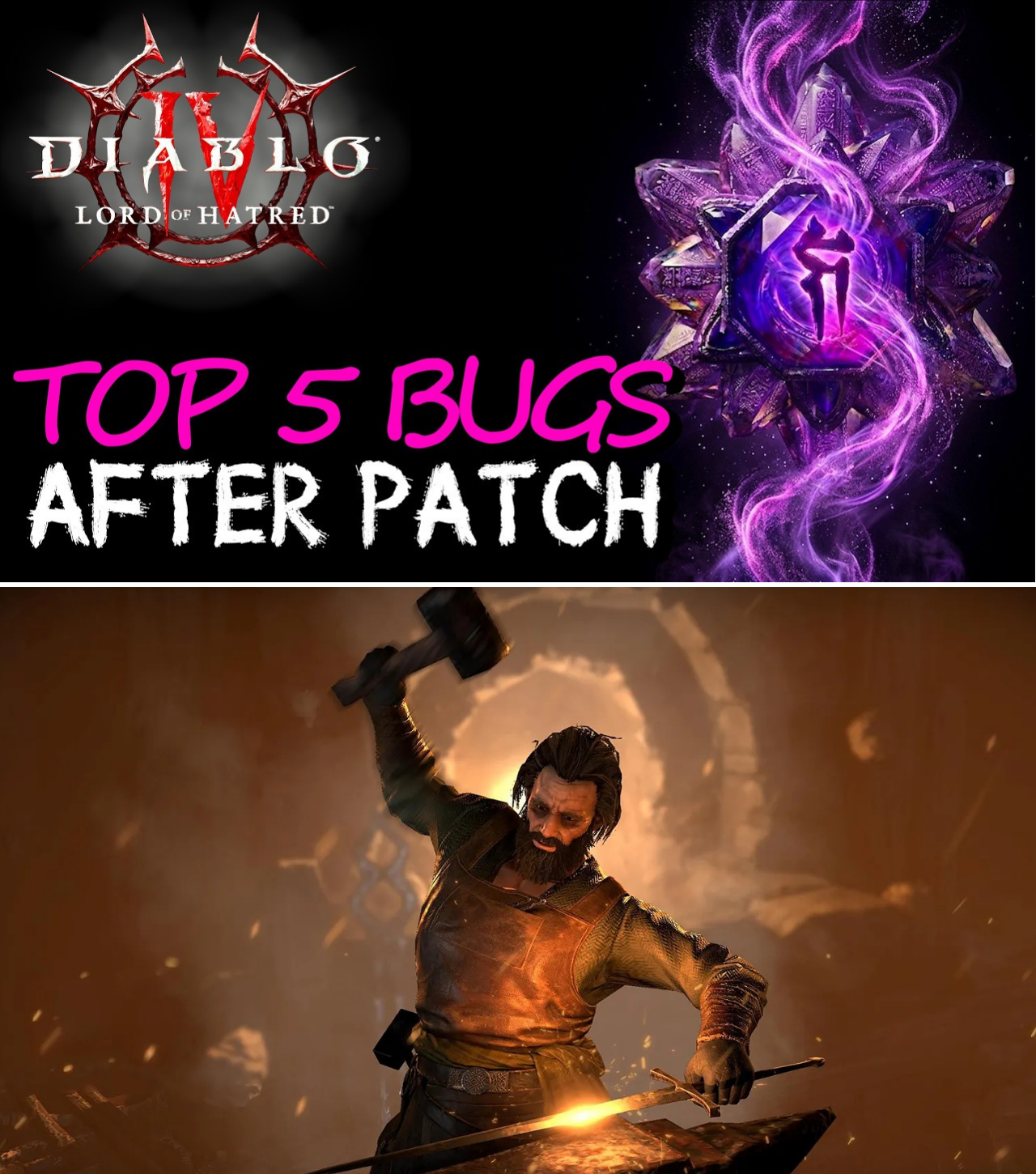
When Blizzard Entertainment deployed Patch 3.0.3 for Diablo IV: Lord of Hatred, the official patch notes promised a season-defining stabilization, aiming to prune the excesses that had been plaguing the endgame since the expansion’s launch. Developers spoke of “balance adjustments,” “stability improvements,” and “targeted fixes” for the most egregious progression loopholes. Yet, barely forty-eight hours into the new deployment, the player base has reached a staggering consensus: the update was a hollow victory. In fact, many of the most lucrative exploits—mechanics that fundamentally break the game’s intended progression curve—remain fully operational, and in some cases, have become even more accessible.
For the hardcore power-gamer, this is a moment of unprecedented opportunity. For the competitive integrity of the Lord of Hatred endgame, however, it represents a deepening crisis. As the community on Reddit, Discord, and X (formerly Twitter) continues to stress-test these “broken” mechanics, a picture emerges of a game struggling to contain the ingenuity of its own player base.
1. The Mythic Paradox: Double Drop Chances via “Out in the Cold”
The most sophisticated exploit currently dominating the meta involves a paradoxical interaction with the “Out in the Cold” node in the War Plans skill tree. Typically, this node is intended to add difficulty by introducing “Beast in the Ice” mechanics into Nightmare Dungeons. However, players have discovered that by initiating a Nightmare Dungeon via a sigil and immediately teleporting to a secondary boss layer, the loot tables become fragmented.
When the boss is defeated, the game engine draws from two distinct loot tables: the standard boss rewards (contained within the reward chest) and the “Beast in the Ice” unique drops that appear as raw loot on the floor. Because these two drops are calculated independently and concurrently, players are effectively doubling their chances of obtaining Mythic Uniques.
The community’s refinement of this bug is clinical. By remaining in the boss layer and manually dropping unwanted items outside the room, players can bypass the need to teleport out, thereby maintaining the “buffed” state of the loot table indefinitely. This is no longer a random occurrence; it is a systematic harvesting of the highest-tier items in the game, and it is happening on a massive scale.
2. The Triple Goblin Dungeon Farm: Loot-Spewing Chaos
The “Triple Goblin” exploit stands as perhaps the most visually chaotic and rewarding bug in the current rotation. By isolating the secret Goblin dungeon and activating specific Shrine combinations—specifically those tied to the “Gauntlet” nodes in the War Plans tree—players are forcing the engine into a respawn loop.
The bug works by exploiting the interaction between Shrine expiration and entity spawning. When a player kills the main boss and the associated treasure goblins while under the influence of a shrine, the game “remembers” the encounter state. Upon the expiration of the shrine, the game attempts to normalize the environment, which triggers a re-summoning event. Skilled players are managing to loop this process twice, resulting in a waterfall of legendary gear, materials, and gold. Reports suggest that some groups are farming up to 60 goblins per hour—a statistic that dwarfs the intended drop rates by orders of magnitude.
3. The “Aerostorm” Rogue: The Build That Refuses to Die
If there is one aspect of Patch 3.0.3 that has left the competitive community baffled, it is the continued survival of the “Aerostorm” Rogue build. Despite widespread speculation that Blizzard would target the interaction between Shadow Clones and “Reign of Arrows,” the build remains untouched.
The mechanics are deceptively simple: players utilize Shadow Clones to mimic the “Reign of Arrows,” which is then amplified by the “Umbra” effect to propagate damage across massive packs. In practice, this creates a damage output that pushes into the “millions of trillions.” Players using this build are clearing Pit 150 with a speed that suggests they are running content intended for lower levels. The implications for the leaderboards are severe; for those who haven’t adopted this build, climbing the ranks has become effectively impossible, creating a “two-tier” community where one group operates on a totally different scale of power than the other.
4. The “Dark Omen” Butcher Loop
The infinite Butcher farm is a testament to the vulnerability of the War Plans navigation system. Unlike traditional sigil-based dungeon access, players discovered that using the “teleport” button on the mini-map to access Nightmare Dungeons preserves the active “Dark Omen” affix regardless of resets.
Because “Dark Omen” forces the Butcher (or other high-tier bosses) to spawn as an invasive element, players have essentially turned the Butcher into a glorified, high-value trash mob. By entering the dungeon, clearing to the spawn point, killing the Butcher, and then resetting via the quest log, the Butcher remains tethered to the location. When combined with shrine-killing nodes—which allow bosses to respawn once the shrine duration ends—players can slay the Butcher multiple times in a single run. This provides a consistent stream of Nightmare sigils, tributes, and unique items that would normally take hours to acquire through conventional grinding.
5. Infernal Horde Ether Lords: The Mythic Gateway
Finally, the “Infernal Horde” exploit has become the go-to farm for those looking to secure Mythic Seals. By intentionally breaking the sequence—opening a Nightmare Dungeon and immediately teleporting to a boss layer before launching an “Infernal Horde” compass—players can “trick” the Horde mechanics into utilizing the loot table of the “Beast in the Ice.”
Prioritizing “Chaos Waves” within the Infernal Hordes ensures a density of Ether Lords that would be impossible to replicate under standard conditions. Each Ether Lord slain under these bugged conditions has a high chance to drop Mythic Uniques and Seals. This exploit has effectively turned the most challenging end-game activity into a target-farmable scenario, rendering the “Infernal Horde” as the primary engine for high-end gear acquisition.
The Systemic Failure: Where Does Sanctuary Go From Here?
The persistence of these five bugs highlights a deepening divide between Blizzard’s design goals and the reality of the game’s engine. Each of these exploits points to a broader structural issue: the War Plans system, intended to streamline content, has instead become a vector for manipulation.
While the developers focus on individual nerfs, the community is moving faster, discovering new ways to chain these bugs together. We are witnessing a “Gold Rush” era in Lord of Hatred. Every day that these bugs remain active, the gap between the “average” player and the “exploit-proficient” player widens, threatening the long-term health of the game’s economy and competitive spirit.
For the time being, the “patch” is merely a suggestion—and for those willing to navigate the labyrinth of glitches, the rewards in Sanctuary have never been greater. Whether Blizzard will respond with heavy-handed rollbacks or further, more surgical nerfs remains the defining uncertainty of the current season. Until then, the exploits remain, and the race to the top continues unabated.
News

The “Forgotten Wisdom” Loop: Is Diablo 4’s New XP Exploit Ruining the Season 13 Grind?
BROKEN! 😱 This “Infinite XP” Glitch Is Getting Everyone to Paragon 300! The devs might patch this any second, but right now, players are abusing a secret “Nightmare Dungeon” loop to farm millions of XP every few minutes! Forget the…

The Wall-Crawler’s Hardest Fight: Why ‘Brand New Day’ is Poised to Reshape the MCU
THE WEB-SLINGER IS BACK! 🕷️ Is this the most anticipated trailer of the decade? Everything changed after No Way Home, and Peter Parker’s new reality is looking darker, lonelier, and more dangerous than we ever imagined. While the world has…

The Verdict is In: Why ‘Dredd’ Remains the Undisputed King of Cult Action
THE JUDGE IS BACK! 🚨 And he’s doing it for free! If you missed the most criminally underrated action movie of the century when it hit theaters, you have zero excuses now. Dredd (2012) is officially back, and starting TODAY,…

The “Gray Lantern” Controversy: Why DC’s Newest HBO Max Series is Dividing the Fandom
DC’s BIGGEST Gamble: Are the Lanterns losing their color? 🟢➡️🩶 The wait for HBO Max’s Lanterns is finally over, but the first look at Kyle Chandler’s Hal Jordan has the entire DC fandom at war! Gone is the iconic, vibrant…

Scooby-Doo’s Second Life: How Netflix is Turning Nostalgia into a Mystery-Solving Empire
ZOINKS! The Mystery Inc. gang is BACK to reclaim their throne! 🐕🔎 They’ve been called “cult classics,” but we all know the truth: the 2000s Scooby-Doo movies were ahead of their time! With Matthew Lillard’s Shaggy finally returning to the…

License to Thrill: How ‘007: First Light’ Redefines the Bond Legacy
BOND. IS. BACK. 🍸 And he’s never been this dangerous before! Forget everything you thought you knew about 007. The new 007: First Light isn’t just another tie-in game—it’s a masterclass in espionage that is currently tearing the gaming world…
End of content
No more pages to load