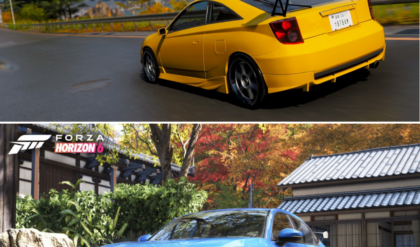
They told you C-Class was just for slow, boring starter cars in Forza Horizon 6… but these 10 sleepers are completely breaking the online lobbies. 🏎️⚠️
While everyone is burning millions of credits on undriveable hypercars, the real elite drivers are quietly manipulating the PI system to turn humble retro hatches and cult classics into literal weapons for Road, Street, and Dirt. If you are still using default presets or relying on raw horsepower to climb the ranks, you are getting absolutely gapped by players who discovered how to extract maximum grip out of the game’s new physics tier—and the definitive ranking changes everything. 👇

The glitz and glamour of multi-million credit hypercars have officially worn off in Forza Horizon 6. As the initial hype of racing through neon-soaked Tokyo streets stabilizes, the competitive community has shifted its focus to a much tighter, more ruthless battleground: C-Class Open Racing (PI 500).
What was once dismissed by casual players as a slow, uninspired starter tier has transformed into the ultimate test of tuning precision and mechanical efficiency. Following an explosive breakdown from the community’s leading meta-analysts, an undisputed Top 10 list has emerged, exposing hidden performance indexes (PI) and sleepers that are completely rewriting the meta across Road, Street, and Dirt biomes.
The C-Class Paradox: Why Slower is Sweeter
With the newly overhauled physics engine of Forza Horizon 6 placing a massive premium on suspension travel, rigid chassis compliance, and authentic tire tracking, the chaotic, high-speed instability of S1 and S2 classes has driven competitive purists away. In C-Class, power limits force drivers to prioritize momentum, cornering lines, and weight transfer.
“In S2 class, a bad tune spins you into a guardrail. In C-Class, a bad tune means you get gapped by a 40-year-old Honda hatchback by ten seconds,” one veteran posted on the official Forza sub-Reddit.
The secret to dominating this division lies entirely in the game’s PI optimization—manipulating engine swaps, drivetrain conversions, and specific tire footprints to keep a car right at the 500 PI cap while maximizing actual track performance.
The Definitive Tier List: Road & Street Specialists
1. 2001 Acura Integra Type R
An absolute powerhouse in the Retro Hot Hatch division. Sitting at a base PI of 471 C, this front-wheel-drive icon leaves builders with just enough room to strip weight and upgrade to sport tire compounds. The high-revving VTEC engine provides an unparalleled mid-range pull out of tight urban street corners, making it an unshakeable point-to-point meta choice.
2. 1993 Autozam AZ-1
A micro-machine causing macro-headaches in online lobbies. Categorized under Eclectic Domestics with a basement-tier base of 342 D, the Autozam is the ultimate lightweight canvas. When fully optimized with a sport suspension and widened rear tracks, its mid-engine layout cuts through tight mountain hairpins with zero body roll, out-handling cars twice its size.
3. 2002 Acura RSX Type S
The heavier, more stable big brother to the Integra. Entering the garage at 462 C, the RSX is frequently converted to an All-Wheel Drive (AWD) platform by top-tier tuners. This conversion effectively tames understeer, creating an incredibly forgiving, high-grip sprint machine tailored for wet Tokyo city circuits.
4. 2023 Acura Integra A-Spec
A modern newcomer asserting its dominance. Starting at 484 C, it requires highly precise, restrictive budgeting in the upgrade menus. However, by leaving the engine internals stock and focusing entirely on anti-roll bars, brake pressure, and weight reduction, it serves as a highly composed, momentum-focused track toy that punishes rival drivers who over-brake.
5. 1965 Austin-Healey 3000 MkIII
The ultimate vintage sleeper. This Classic Sports Car starts at a low 352 D, giving tuners a massive budget to completely overhaul its archaic drivetrain. When fitted with modern street tires and a subtle displacement upgrade, its lightweight chassis achieves an optimal power-to-weight ratio that dominates long, straight stretches of open highway.
The Dirt & Rally Pioneers
6. 1965 Alfa Romeo Giulia Sprint GTA Stradale
A legendary lightweight beauty that has transitioned seamlessly from historical tarmac to gravel dominance. Starting deep in the ranks at 379 D, this rare classic benefits massively from off-road spring upgrades. Its naturally nimble chassis floats over jumps and loose dirt sections without losing tracking momentum, rendering it a top-tier choice for mixed-surface scrambles.
7. 1984 Audi Sport quattro
The undisputed grandfather of rally. While historically revered in higher classes, dialing the Sport quattro back into a highly optimized C-Class build yields terrifying results for the competition. Its legendary, native four-wheel-drive system ensures maximum launch traction out of muddy corners, leaving rear-wheel-drive competitors struggling for grip at the starting line.
8. 1987 Ford Sierra Cosworth RS500
An aggressive, boxy touring car classic that doubles as an incredible hybrid dirt weapon. Thanks to its generous factory turbocharger overhead, tuners can focus their budget entirely on rally tire compounds and aggressive differential locks, creating a vehicle that effortlessly glides sideways through technical trail routes.
FORZA HORIZON 6 - C-CLASS PI OPTIMIZATION CHECKLIST:
• Target Index: Strict 500 PI Cap
• Core Focus: Momentum Retention over Raw Horsepower
• Key Upgrades: Adjustable Anti-Roll Bars & Weight Reduction
• Drivetrain Meta: AWD Conversions for Wet/Dirt; FWD/RWD for Pure Tarmac Grip
The Unconventional Wildcards
9. 1989 Nissan PAO
Don’t let the retro, friendly aesthetic fool you—the Nissan PAO is a genuine lobby terror. Starting out as a low-tier utility option, builders are using its compact, ultra-short wheelbase to build hyper-reactive slalom specialists. It weaves through heavy traffic and tight street layouts with surgical precision, leaving wider saloons completely bottlenecked.
10. 1962 Lincoln Continental
A massive, rolling luxury yacht that defies all laws of physics. The sheer size of the Continental makes it a highly controversial choice, but its high-torque factory V8 engine allows it to act as an unmovable battering ram in public lobbies. When fitted with street-performance brakes and maximum tire widths, it blockades corners cleanly while maintaining surprising straight-line speed.
Discord and Reddit Backlash: “Ban the Sleepers”
As these specific C-Class builds continue to saturate public lobbies, the community reaction across high-tier Discord servers has turned highly defensive. Casual racers complain that the competitive meta has become too optimized, with “purist” un-tuned cars standing absolutely zero chance against hyper-engineered 500 PI builds.
“If I see one more Autozam fly past my stock sports car on a 15-degree incline, I’m throwing my controller out the window,” reads a highly upvoted post on X.
However, veteran tuners argue that this is precisely what makes Forza Horizon 6 so brilliant. The depth of the upgrade system allows mechanical engineering and clever budgeting to triumph over raw vehicle cost.
Whether you prefer the high-revving front-wheel-drive precision of the Acura Integra Type R or the heavy, unstoppable torque of the classic Lincoln Continental, the message from the leaderboards is clear: dismiss the C-Class sleepers at your own peril.
News

SEDAN SUPREMACY: Why the 1000HP Toyota Chaser is Officially Rewriting the Forza Horizon 6 Drift Meta
They swore a 4-door retro super saloon could never match the S-chassis meta in Forza Horizon 6… until this 1000HP monster proved them dead wrong. 🏎️💨 While everyone is busy fighting the snappy physics of light coupes, elite drifters have…

CRACKED OR CURSED? The ‘Smooth-Brain’ 880HP S15 Build That Accidentally Broke The Forza Horizon 6 Drift Meta
They said the VR38 GTR engine swap was completely ruined in Forza Horizon 6… but this single adjustment just broke the entire drifting meta. 🏎️🔥 Everyone is copying this exact setup after a popular creator accidentally stumbled into a game-breaking…

THE BEAUFORT BETRAYAL: ‘Maxton Hall’ Season 3 Trailer Leaks Reveal Expulsion Scandals, Ruined Oxford Dreams, and a Cutthroat Elitist War
RUBY HAS BEEN EXPELLED FROM MAXTON HALL—AND ALL THE EVIDENCE POINTS TO JAMES BEAUFORT! 😱🏫💔 The internet is officially in a state of absolute meltdown over the leaked Maxton Hall Season 3 trailer, and the final chapter of this elite…

A GILDED RECKONING: ‘Old Money’ Season 2 Trailer Leaks Unmask Istanbul Mansion Warfare, Extortion Plots, and a Dangerous Forbidden Romance
THE BOSPHORUS IS RUNNING WITH BLOOD—AND NIH_AL’S FORBIDDEN LOVE JUST SIGNED HER DEATH WARRANT! 😱🏰🔥 The internet is absolutely imploding over the leaked Old Money (Enfes Bir Akşam) Season 2 teaser, and Netflix’s ultra-luxurious, cutthroat Turkish dynasty is descending into…

A TOXIC TRINITY: ‘Off-Campus’ Season 2 Trailer Leaks Unmask a Ruthless Dean-Allie-Hunter Love Triangle and Locker Room Warfare
ALLIE HAS TO CHOOSE—AND ONE OF THESE BRIER HOCKEY STARS IS GOING TO END UP IN A BODY BAG! 😱💔🏒 The absolute craziest Off-Campus Season 2 trailer leak just dropped, and the explosive Dean-Allie-Hunter love triangle has officially pushed the…

A CRUDE RECKONING: ‘Landman’ Season 3 Trailer Leaks Reveal Cartel Assassination Plots, Shadowy Murder Charges, and Cooper’s Perilous Fight for Survival
COOPER IS AS GOOD AS DEAD—AND THE PERMIAN BASIN IS ABOUT TO BECOME HIS GRAVEYARD! 😱💀🛢️ The leaked Landman Season 3 production files just exposed Taylor Sheridan’s darkest twist yet, and West Texas is officially on fire. We watched Tommy…
End of content
No more pages to load