🚨 THE SPY THRILLER EVERYONE IS OBSESSED WITH IS BACK FROM THE DEAD! 🚨
Forget the flashy gadgets—this is the most “dangerously addictive” game of cat-and-mouse ever filmed, and it’s officially sweeping the charts again! 🌎 Tom Hiddleston and Olivia Colman are locking horns in a world where luxury hotels hide the darkest secrets on earth.
Fans are bingeing the entire series in one sitting because the betrayal? It’s not just a plot twist—it’s a weapon. Every episode peels back another layer of an international arms-dealing nightmare that will leave you absolutely breathless.
Think you can spot the traitor before they strike? Find out why this masterpiece is sitting at 91% and why you can’t look away 👇
In the landscape of modern television, few series have managed to age as gracefully—or retain as much cultural grip—as The Night Manager. Nearly a decade after its initial debut, the John le Carré adaptation has seen a massive resurgence in viewership, proving that its blend of high-stakes tension and sophisticated storytelling remains unmatched.
A Masterclass in Tension
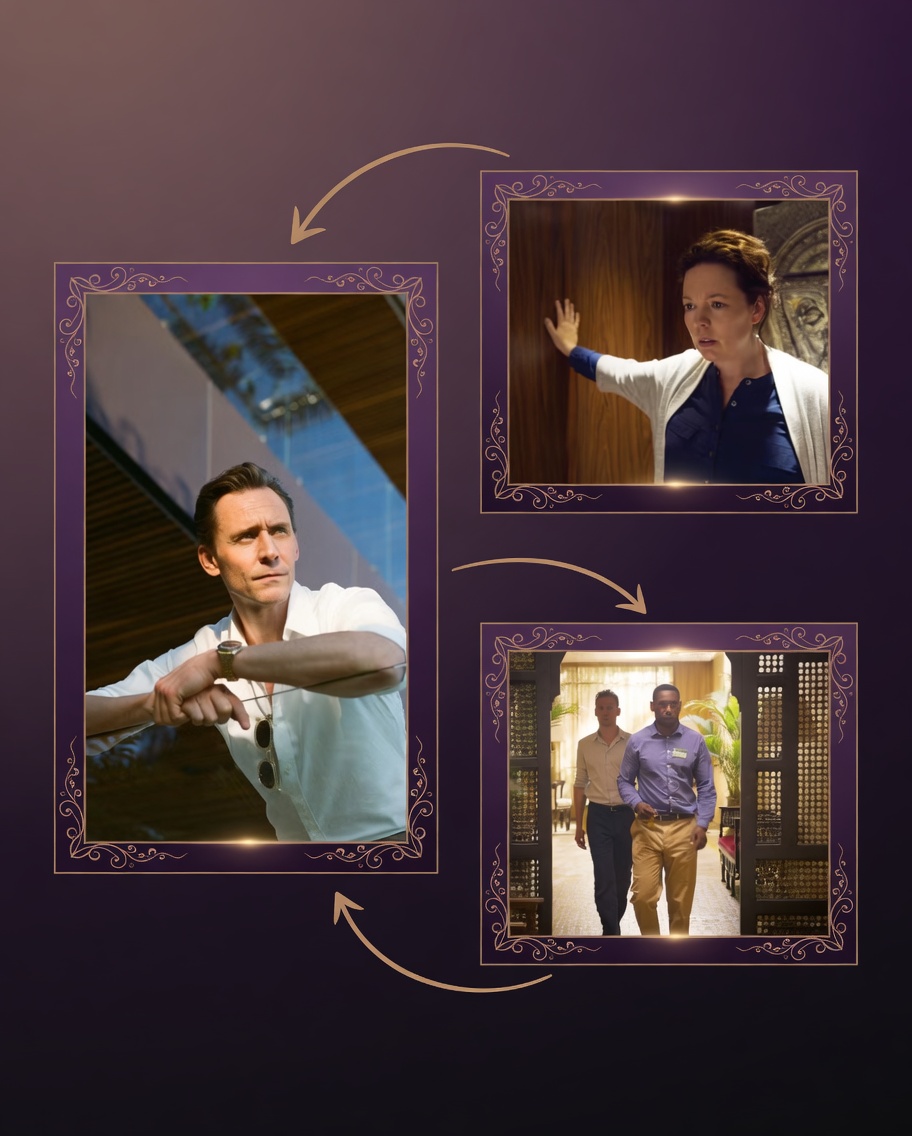
Based on the 1993 novel by the legendary spy novelist John le Carré, the series follows Jonathan Pine (Tom Hiddleston), a former British soldier working as a night manager at a luxury hotel in Cairo. Pine’s life of quiet anonymity is shattered when he is recruited by Angela Burr (Olivia Colman), an intelligence operative desperate to dismantle the empire of Richard Onslow Roper (Hugh Laurie), an international arms dealer masquerading as a philanthropist.
What makes the show so compelling is its refusal to rely on the “shoot-first, ask-questions-later” tropes of the action genre. Instead, The Night Manager operates in the shadows. It is a slow-burn game of intelligence warfare, where a misplaced look or a coded conversation carries as much weight as a bomb blast.
The “Colman-Hiddleston” Dynamic
The chemistry between the leads is what keeps the 91% Rotten Tomatoes score consistently high. Tom Hiddleston’s performance as Pine is a masterclass in controlled intensity; he is a man constantly walking a tightrope, playing the part of a criminal while maintaining the soul of a hero.
Olivia Colman, as the tenacious Angela Burr, provides the series’ moral compass. Her portrayal of a woman navigating the bureaucratic rot of British intelligence while trying to secure justice at any cost is both fierce and deeply human. Together, they create a friction that drives the series forward, transforming a standard espionage plot into a deeply personal quest for vengeance.
Why the Sudden Resurgence?
With the premiere of the series’ second chapter earlier this year (2026), a new generation of viewers has discovered the original season, leading to a “binge-watching” phenomenon across global streaming platforms. Discussions on forums like X and Reddit frequently highlight the series’ “gorgeous” cinematography and its ability to maintain razor-sharp tension without sacrificing character depth.
“It’s not just about the spy stuff,” one Reddit user noted in a recent thread. “It’s about the cost of living a lie. By the time you get to the finale, you’re not just rooting for the mission to succeed—you’re desperate for these people to find some kind of peace.”
The Verdict
As the series continues to dominate streaming charts, The Night Manager cements its place in the pantheon of “all-time” spy dramas. It is a rare show that manages to be both high-brow and wildly addictive, blending the grit of a John le Carré novel with the gloss of a modern blockbuster.
For those who have yet to dive in, the series is a stark reminder of what happens when top-tier writing meets a cast operating at the peak of their craft. It is a high-stakes, international game of chess where every move feels fatal—and you won’t be able to turn it off until the final checkmate.
News

Nate Bargatze and Mandy Moore’s ‘Solo Act’ Hits Home: Why Parents Can’t Stop Watching This New Comedy
🚨 PARENTING LEVEL: CATASTROPHIC! 🚨 We’ve all seen the “super-dad” tropes, but this is the first time a show has dared to show what actually happens when the “Perfect Dad” is left home alone for 72 hours. 😱 Nate Bargatze…

The ‘Man on Fire’ Phenomenon: Why Netflix’s Newest Crime Saga Is Keeping Millions Awake
🚨 FORGET EVERYTHING YOU’RE WATCHING. THE DARKEST THRILLER ON NETFLIX JUST DROPPED AND THE INTERNET IS LOSING ITS MIND! 🚨 If you think you know “revenge,” you’ve seen nothing yet. This isn’t just a crime drama—it’s a psychological descent into…

Welcome to ‘The Boroughs’: Why Netflix’s New Sci-Fi Mystery Has Everyone Hooked
🚨 STOP SCROLLING: You Are About to Be Obsessed with This “Senior” Mystery! 🚨 The internet is calling it the “Stranger Things” for the retirement generation, but let me tell you—this is far more twisted than anything you’ve seen before….

The Haunting Complexity of ‘Nuremberg’: Is This Russell Crowe’s Most Polarizing Performance?
🚨 IS RUSSELL CROWE LOSING HIS MIND… OR GIVING THE PERFORMANCE OF THE CENTURY? 🚨 The internet is absolutely split down the middle right now. You’ve seen him as a gladiator and a genius, but you have NEVER seen him…

The Final Binge: Why ‘Hampstead’ Is Disappearing and Why You Need to See It Now
🚨 THIS IS THE FINAL WARNING: A Cinematic Masterpiece Is Vanishing From Netflix Tonight! 🚨 Everyone is talking about this “hidden gem” disappearing from streaming, but barely anyone realized the heartbreaking connection hiding behind the scenes until now. 💔 What…

The Ultimate Garage: 10 Essential Vehicles to Dominate Forza Horizon 6
IS YOUR GARAGE READY? THE 10 “MUST-OWN” CARS IN FORZA HORIZON 6! 🏎️🔥 Stop wasting your credits on “shiny” garage queens! Whether you’re hunting world records, dominating the streets of Japan, or looking for the perfect drift machine, these 10…
End of content
No more pages to load