Bridgerton Season 4 already broke your heart with Francesca & John? 😭💔
You have NO idea.
In the books… what happens next is so much darker.
She thought she was carrying his last piece of him forever. Then everything shattered in the cruelest way possible.
Netflix changed the ENTIRE thing.
Too heartbreaking for TV? Or hiding something massive for later?
Click below for the real book truth that has fans screaming 🔥 You read the books?
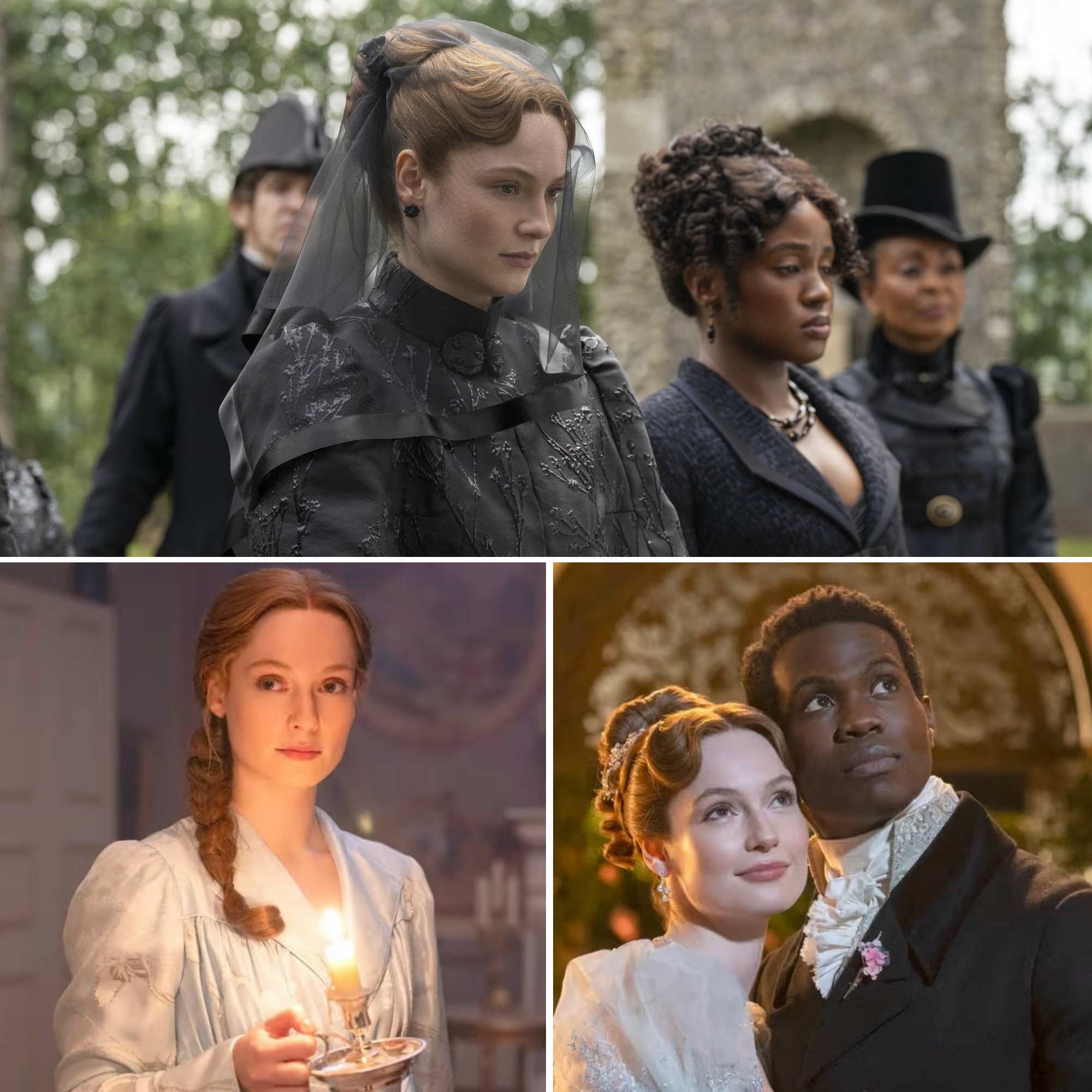
Netflix’s Bridgerton has never shied away from adapting Julia Quinn’s popular Regency romance novels with a mix of fidelity and creative changes. Season 4, which focuses heavily on Francesca Bridgerton’s (Hannah Dodd) journey, introduced one of the series’ most significant deviations yet: the handling of her potential pregnancy following the sudden death of her husband, John Stirling (Victor Alli).
In the show, Francesca and John share a tender, understated romance marked by challenges in conceiving a child. Their quiet affection builds steadily until John’s tragic passing from a ruptured cerebral aneurysm while asleep—a plot point faithful to the source material. Devastated but composed, Francesca later reveals to her sisters that she believes she is pregnant, using the possibility as emotional armor amid her grief. The family, concerned about the Kilmartin earldom’s inheritance, insists on a medical confirmation. After an uncomfortable examination, the doctor confirms she is not expecting. The false hope crumbles, intensifying her sorrow but allowing her to move forward in processing her loss and forming new connections, including with John’s cousin Michaela Stirling.
This version contrasts sharply with Quinn’s 2004 novel When He Was Wicked, the sixth entry in the Bridgerton series. In the book, Francesca discovers she is genuinely pregnant shortly after John’s death. Viewing the child as a lasting legacy from her beloved husband, she grapples with grief while facing pressure from estate lawyers and relatives to confirm the heir’s existence. Tragically, she miscarries approximately six weeks later, an event that plunges her into deeper despair. The loss amplifies her sense of failure—not just as a wife who couldn’t provide an heir during John’s life, but as a widow unable to carry his final gift to term. This double blow shapes much of her emotional journey, including prolonged depression and eventual fertility struggles in her subsequent relationship.
Showrunner Jess Brownell addressed the alteration in recent interviews, stating that the creative team debated the inclusion of a miscarriage “at length.” Ultimately, they opted against it, citing concerns that layering pregnancy loss atop spousal bereavement would render the season “too morbid.” Brownell noted the importance of preserving Bridgerton’s signature blend of romance, drama, and optimism, explaining that such a heavy double tragedy might hinder Francesca’s ability to recover believably within the season’s arc. Instead, the false pregnancy serves as a poignant moment of dashed hope, honoring themes of grief and inheritance without escalating to irreversible physical loss.
The decision has divided fans. Book readers, familiar with the novel’s raw exploration of widowhood, infertility, and second chances at love, expressed disappointment on social media platforms and forums. Many argued the miscarriage storyline added depth to Francesca’s character, highlighting Regency-era pressures on women regarding reproduction and titles. One fan post captured the sentiment: “Francesca was actually pregnant. She felt guilty for not giving John an heir. The book version hurts so much more.” Others praised the show’s restraint, suggesting it prevents the narrative from becoming overwhelmingly bleak in a series known for its escapist appeal.
Quinn’s novels often delve into heavier themes than the on-screen adaptations suggest. When He Was Wicked stands out for its mature handling of grief, unrequited longing (through Michael’s perspective in the book), and infertility—elements that set it apart from the lighter tones of earlier installments like Daphne’s or Anthony’s stories. The book ultimately sees Francesca find happiness with Michael’s character (gender-swapped to Michaela in the series amid broader inclusivity updates), though their path includes years of trying unsuccessfully for children before success.
Bridgerton has a history of tweaks for pacing, tone, and modern sensibilities. Previous seasons altered timelines, character motivations, and even major romantic pairings to suit the ensemble format and visual storytelling. Season 4’s changes, including the gender swap of Michael’s role, sparked early controversy, but the pregnancy adjustment appears aimed at narrative balance rather than controversy avoidance.
Brownell emphasized that the core of Francesca’s fertility journey remains intact for potential future exploration. The show may address ongoing challenges in later seasons, aligning with the book’s resolution where Francesca and her partner eventually welcome children after hardship.
For now, the adaptation prioritizes emotional resilience over unrelenting tragedy. Francesca’s arc in Season 4 focuses on quiet strength, familial support, and tentative new beginnings—hallmarks of the Bridgerton world. Whether viewers prefer the book’s gut-wrenching authenticity or the show’s tempered heartbreak, the change underscores how adaptations navigate the line between source loyalty and broadcast appeal.
As Bridgerton continues its run, fans will watch to see if future seasons revisit these themes more directly. For now, Francesca’s story on screen offers hope amid sorrow, even if the path diverges from the page.
News

The Glass Cannon Queen: How Damiane’s High-Skill Ceiling is Redefining Crimson Desert Combat
KLIFF WHO? 🗡️ DAMIANE IS OFFICIALLY BROKEN! 🔥 If you’re still maining Kliff, you’re playing Crimson Desert on “Hard Mode” without even knowing it! 😱 The community has just uncovered Damiane’s “Infinite Pressure” loop, and it’s making boss fights look…

Beyond the Veil: The High-Stakes World of Abyss Core Synthesis and Legendary Crafting in Crimson Desert
ENDGAME IS HERE! 🛡️ UNLOCK THE POWER OF THE ABYSS! 🌀 Stop struggling with boss fights! The latest discovery in the Crimson Desert community has just cracked the endgame wide open. 😱 We’re not just talking about “better” gear—we’re talking…

The Gold Rush of Patch 1.05: How ‘Golden Apple’ Farming is Breaking the Crimson Desert Economy
CRIMSON DESERT PLAYERS ARE GETTING RICH! 💰 PATCH 1.05 INFINITE GOLD FARM! 🔥 Have you seen the “Golden Glimmer” yet? If not, you’re missing out on the biggest economy exploit since launch! 😱 The latest 1.05 Patch has completely revamped…

Shadow Economy: Pearl Abyss Stealth-Updates Back Alley Shops with Exclusive New Gear Sets
YOUR SILVER IS BURNING A HOLE IN YOUR POCKET! 💰 NEW GEAR JUST DROPPED! 🛡️ Stop everything! Pearl Abyss just stealth-dropped a massive update to the Back Alley Shops, and if you haven’t checked the shady corners of Pywel lately,…

Crimson Desert Unveils 3 New Legendary Animals: A Hunter’s Guide to Pywel’s Most Elusive Beasts
STOP SCROLLING! 🚨 THE LEGENDARY BEASTS HAVE ARRIVED! 🐾 Are you tired of the same old mounts and pets? The Crimson Desert community is losing its mind over 3 NEW Legendary Animals that just dropped! 😱 We’re talking about creatures…

Mastering the Abyss: The Definitive Guide to Unlocking Every Element in Crimson Desert
You’ve been playing Crimson Desert WRONG if you’re still using basic steel against Pywel’s endgame bosses! 🛑 Did you know there’s a hidden “Abyss Shortcut” that lets you skip hours of grinding and unlock Lightning, Flame, Frost, and Wind in…
End of content
No more pages to load