Stranger Things Season 5 Finale Sparks Massive Backlash, Drawing Unflattering Comparisons to Game of Thrones’ Disastrous Ending
😱 BREAKING: Stranger Things Just Pulled a Full Game of Thrones… And Fans Are LOSING IT!
You waited YEARS for this finale – the epic showdown with Vecna, Eleven’s ultimate sacrifice (or was it?), and closure for Hawkins’ heroes after a decade of Upside Down chaos.
But now that Season 5 has dropped its bombshell ending… is this the biggest TV betrayal since Daenerys went mad and Bran got the throne?!
Rotten Tomatoes scores PLUMMETING to series lows… fans screaming “What a waste of 10 years!”… Vecna hyped as unstoppable, only to go down in MINUTES… and that endless epilogue that left everyone divided.
Did the Duffer Brothers nail a heartfelt goodbye – or totally fumble the legacy like GoT Season 8?
The internet is on FIRE with rage, tears, and wild theories. Read more 👇🔥
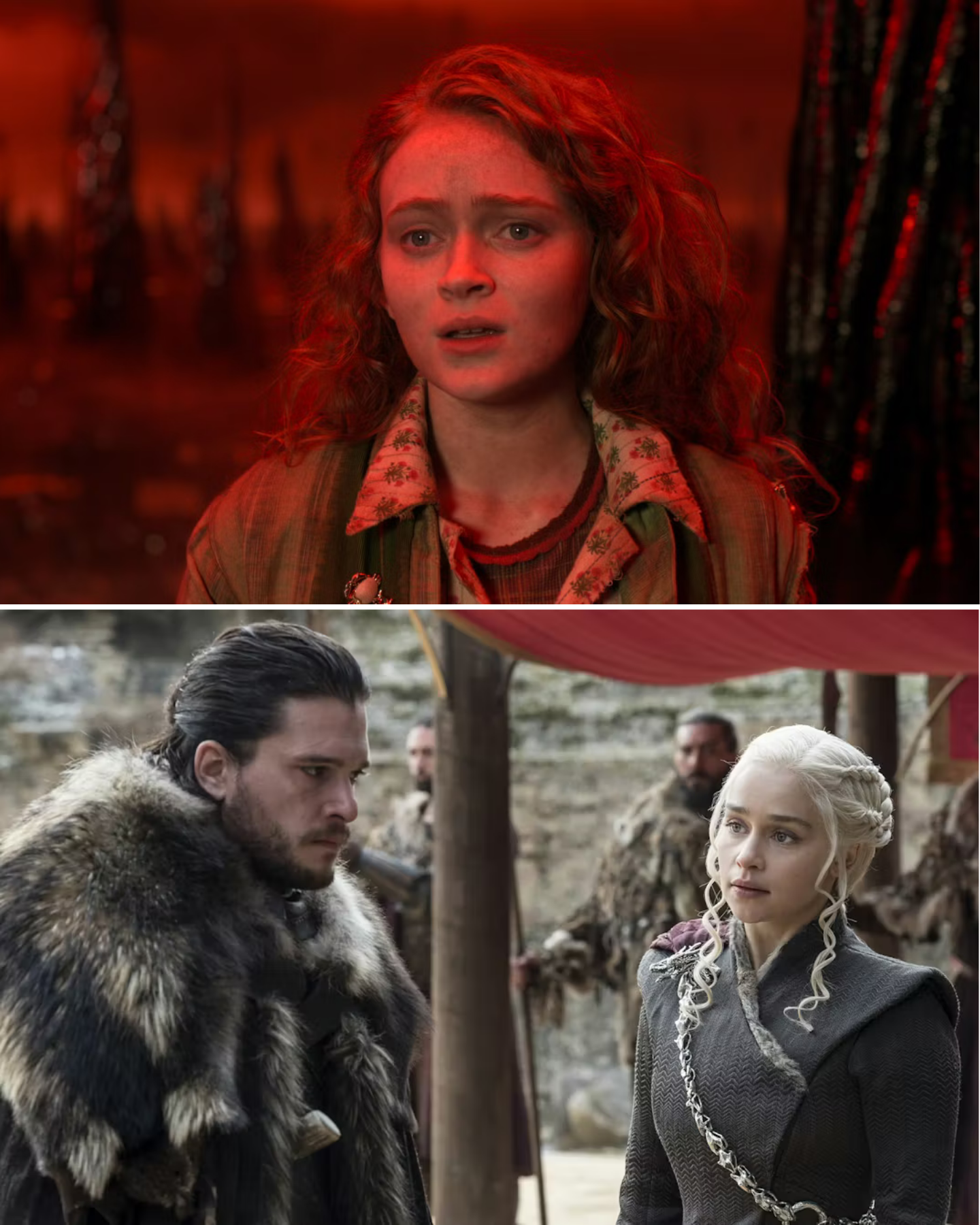
Netflix’s blockbuster series Stranger Things wrapped up its nine-year run on New Year’s Eve with the release of its highly anticipated Season 5 finale, but the celebration quickly turned sour for many fans. The two-hour-plus episode, titled “The Rightside Up,” aimed to deliver closure to the Hawkins gang’s battle against Vecna and the Upside Down, yet it has ignited a firestorm of criticism online, with viewers frequently likening it to the notoriously reviled final season of HBO’s Game of Thrones.
As of early January 2026, audience scores on Rotten Tomatoes for Season 5 have dipped to the series’ lowest ever, hovering around 56% – a stark contrast to previous seasons that often exceeded 80-90%. Critics have been kinder, giving the season an 84% approval rating, but the fan backlash has dominated social media conversations, with hashtags like #StrangerThingsFinale and #GameOfThronesCurse trending globally.
The comparisons to Game of Thrones Season 8 – widely panned for rushed pacing, character assassinations, and an unsatisfying conclusion – are relentless. One X user posted, “Congratulations Game of Thrones finale, you found your soulmate #StrangerThings finale.” Another declared, “Stranger Things managed a rare feat: It is actually worse than Game of Thrones Season 8.” Even some who defended the ending acknowledged the parallels, noting that both shows built massive hype over years, only to deliver finales that felt anticlimactic to segments of their audience.
Central to the discontent is the handling of the final confrontation with Vecna, the season’s big bad portrayed by Jamie Campbell Bower. After seasons of buildup portraying him as an omnipotent force tied to the origins of the Upside Down, many viewers felt his defeat came too swiftly and conventionally – involving guns, fire, and a family-focused strike from Joyce Byers (Winona Ryder). “They teased Vecna as the most powerful and evil villain only for it to be destroyed in 3 minutes by some kids and their parents,” one fan complained on social media. Others echoed, “This buildup for 9 years? They could have done it in Season 1 or 2.”
The episode’s structure also drew fire. The climactic battle and revelations about Vecna’s origins were packed into the first hour, leaving the second hour for an extended epilogue showing the characters’ futures 18 months later. While some praised this as emotional and nostalgic – complete with a final Dungeons & Dragons game among the core group and nods to the show’s 1980s roots – detractors called it “frustratingly long” and lacking stakes. “No major character deaths, predictable outcomes, and too much focus on wrapping every thread neatly,” summarized one review.
Eleven’s (Millie Bobby Brown) fate proved particularly divisive. The finale leaves her status ambiguous: She seemingly sacrifices herself to close the gateway, but Mike (Finn Wolfhard) later narrates a story suggesting she survived and lives elsewhere. Co-creators Matt and Ross Duffer have confirmed this open-ended approach was intentional, emphasizing themes of growing up and letting go of childhood magic. “Eleven represents the magic of childhood,” Ross Duffer explained in a post-finale interview. “For our characters to move on… Eleven had to go away.” However, fans split on whether this felt poetic or evasive, with some accusing it of dodging real consequences.
Production issues compounded perceptions of a rushed product. Delays from the 2023 Hollywood strikes and COVID-era setbacks stretched the gap between Seasons 4 and 5 to over three years, leading to visible aging among the young cast and narrative time jumps that required heavy exposition. Reports of sloppy visual effects – including criticized green screen work and set designs in Upside Down scenes – fueled complaints that the massive budget didn’t translate to polished execution. A modern anachronism in one scene, featuring clothing from the wrong era, even evoked memories of Game of Thrones‘ infamous Starbucks cup gaffe.
Not all reactions were negative. Defenders argued the finale provided satisfying arcs for characters like Will Byers (Noah Schnapp), whose coming-out moment and central role tied back to the series’ origins. The needle drops, including Prince’s “Purple Rain” and David Bowie’s “Heroes,” were hailed as fitting tributes. “It’s about this group of characters saying goodbye to their childhood,” Matt Duffer said, highlighting the emotional core over shock value. The Duffer Brothers had repeatedly vowed to avoid a “Game of Thrones-style bloodbath,” promising no “Red Wedding” equivalent, and many appreciated the restraint in not killing off fan favorites indiscriminately.
Cast members have weighed in amid the uproar. Finn Wolfhard admitted pre-release fears of backlash, telling reporters the team worried about mirroring Game of Thrones‘ divisive reception but felt confident after reading the scripts. Millie Bobby Brown, in interviews, expressed mixed emotions about closing the chapter that launched her career.
Netflix reported massive viewership for the staggered release – Volume 1 in late November, Volume 2 on Christmas, and the finale on December 31 – with the platform briefly crashing under demand. A simultaneous theatrical screening in select U.S. and Canadian cinemas added to the event feel, though international fans relied on streaming.
The controversy extends to broader discussions about ending long-running series. Like Game of Thrones, which saw its legacy tarnished by Season 8 despite earlier acclaim, Stranger Things now faces questions about whether its finale will overshadow its cultural impact. The show remains Netflix’s flagship original, having redefined nostalgia-driven sci-fi horror and launching stars like Brown and Sadie Sink.
The Duffer Brothers have teased future projects in the Stranger Things universe, including an animated spinoff and potential stage expansions, but emphasized Season 5 as the end of the core story. “We knew that it was something special,” Wolfhard reflected on the scripts.
As debates rage on forums like Reddit and X, one thing is clear: Stranger Things has joined the pantheon of shows whose endings spark endless argument. Whether it ultimately “dethrones” Game of Thrones as the most disappointing finale remains subjective, but the parallels have undeniably amplified the discourse.
All five seasons of Stranger Things are available to stream on Netflix.