🚨⚔️ “Game of Thrones Fans Are Losing It… This New Spin-Off Just SHATTERED a 15-Year Sacred Tradition — And It’s Genius!”
For over a DECADE, every single episode of Game of Thrones and House of the Dragon hit us with that jaw-dropping opening credits: dragons roaring, maps exploding, that epic theme blasting… you KNOW the one. 😱
But in the VERY FIRST episode of A Knight of the Seven Kingdoms? NOTHING. No map. No sigils. No 90-second spectacle. Just a quiet title card… and then straight into the action.
Is this the bold refresh Westeros needed… or did they just kill the magic? Fans are divided — some raging, others calling it PERFECT for the grounded vibe.
What do YOU think? Did skipping the credits ruin it… or make it better? 🔥
Read more:
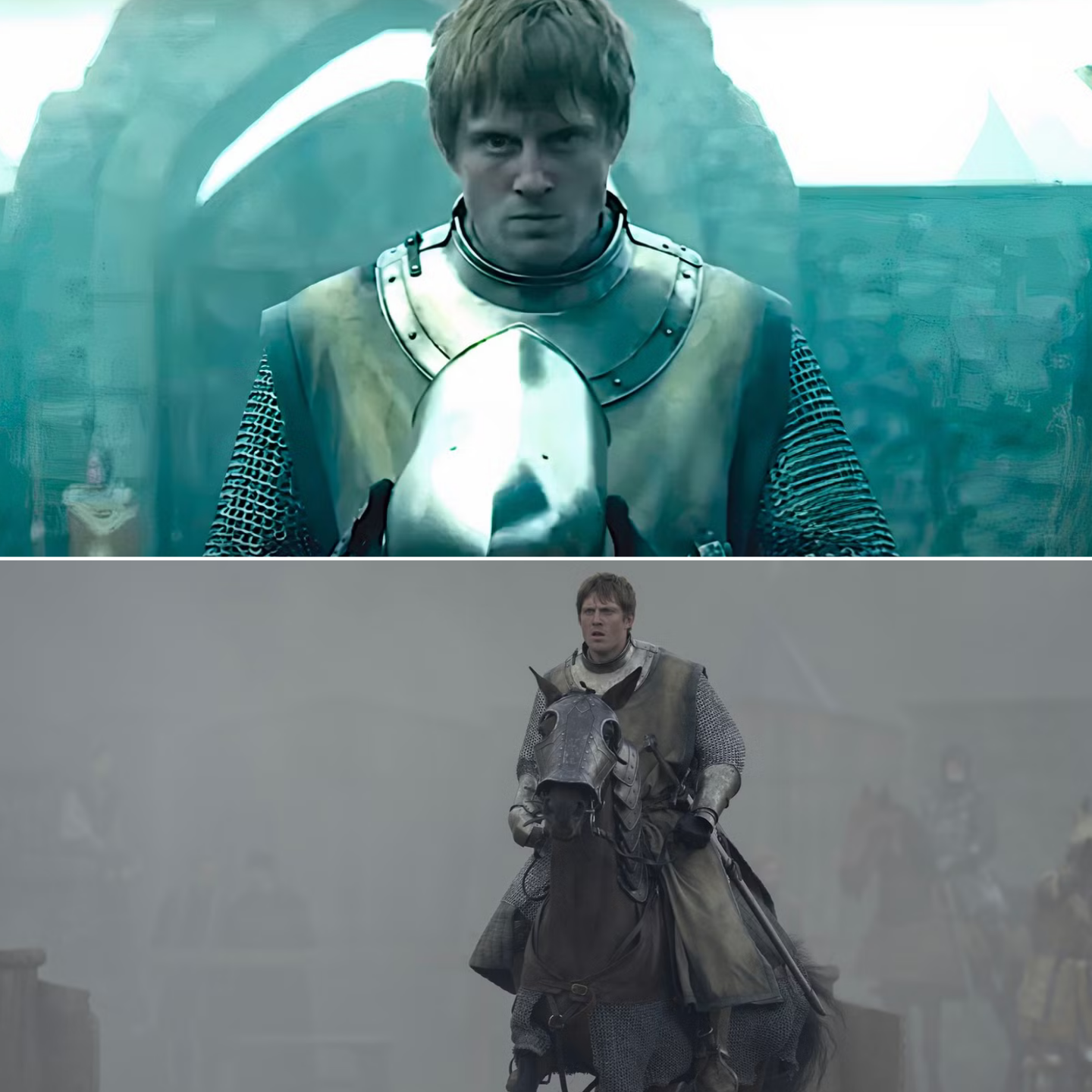
HBO’s latest Westeros expansion, A Knight of the Seven Kingdoms, has arrived with a noticeable departure from one of the most recognizable elements of the Game of Thrones franchise: its elaborate opening title sequence.
Since Game of Thrones debuted in 2011, the cold open has almost always given way to a roughly 90-second spectacle of animated maps, shifting house sigils, and Ramin Djawadi’s instantly identifiable main theme — a sequence that became synonymous with the series’ epic scope and world-building. House of the Dragon, the first major spin-off, carried the tradition forward with its own stylized variations, including dragon motifs and Targaryen family trees, while retaining the core music and structure.
But when A Knight of the Seven Kingdoms premiered its first episode, “The Hedge Knight,” viewers were met with something far simpler: a brief title card displaying the show’s name in medieval-style font, floating briefly over the scene before fading away. No sweeping visuals, no cast credits rolling over intricate animations, and no full orchestral blast of the classic Game of Thrones theme. Instead, the episode transitions directly into the action with subtler scoring.
Showrunner and co-creator Ira Parker, who previously wrote for House of the Dragon, addressed the change in interviews, tying it explicitly to the series’ central character and tone. “All decisions came down to Dunk, trying to channel the type of person he is into every aspect of this show, even the title sequence,” Parker told Entertainment Weekly. Ser Duncan the Tall — or “Dunk,” portrayed by newcomer Peter Claffey — is a humble hedge knight: tall, earnest, lowborn, and far removed from the courts and thrones that defined previous entries. The lack of pomp reflects his grounded perspective and the show’s overall shift toward a more intimate, character-driven story.
Set about 90 years before the events of Game of Thrones (and roughly a century after the Targaryen civil war in House of the Dragon), the series adapts George R.R. Martin’s Tales of Dunk and Egg novellas. It follows Dunk, a wandering knight seeking honor at tournaments, and his young squire Aegon “Egg” Targaryen (Dexter Sol Ansell), who hides his royal identity by shaving his head. Unlike the sprawling political machinations, dragon battles, and multi-continental plots of its predecessors, A Knight of the Seven Kingdoms confines much of its first season to a single event: the grand tournament at Ashford Meadow.
The six-episode run averages around 30 minutes per installment, a deliberate choice for a breezier, more comedic tone that emphasizes chivalry, friendship, and the everyday realities of Westeros’ lower classes. Parker has described the show as “earthy,” “gritty,” and “unpolished,” focusing on moral dilemmas and human moments rather than high fantasy spectacle. The absence of an extended credits sequence saves runtime for storytelling and aligns with that ethos — no need for a grand overture when the hero is a man burying his mentor in the woods and then squatting behind a tree from nerves.
This isn’t the first time the franchise has tweaked its presentation, but it’s the most significant break yet. Game of Thrones occasionally varied its intro (such as showing destroyed locations after major battles), yet the core format remained intact across eight seasons. House of the Dragon maintained the tradition while adapting visuals to its era. By contrast, A Knight of the Seven Kingdoms opts out entirely, signaling a fresh identity within the shared universe.
The decision has sparked mixed reactions. Some longtime fans expressed disappointment online, arguing the opening credits were a ritual that built anticipation and immersion. Others praised it as a smart evolution, noting that shorter episodes and a focused narrative don’t require the same preamble. Critics have largely welcomed the change, with early reviews highlighting how the streamlined start lets the show’s humor and heart shine immediately.
The Game of Thrones theme does appear in the series, but sparingly and contextually. Parker revealed that in one early moment, Dunk hears a heroic call in his head — represented by a snippet of Djawadi’s iconic motif — before the show’s original composer, Dan Romer, takes over with a more fitting, character-specific score. “What he’s hearing in his head is that call to greatness… the most iconic theme that’s ever been laid down,” Parker explained, adding that it serves as a nod to the larger legacy without overshadowing the new direction.
George R.R. Martin, executive producer and source material author, has not directly commented on the credits change but has endorsed the series’ overall approach. The novellas he wrote are lighter and more adventurous than the main A Song of Ice and Fire saga, focusing on Dunk and Egg’s unlikely partnership amid tournaments and minor lords rather than kings and conquerors.
Visually and thematically, the premiere opens with Dunk burying his deceased mentor, Ser Arlan of Pennytree, before heading to Ashford. The grounded realism — including the much-discussed nervous defecation scene set to swelling heroic music — underscores the show’s commitment to portraying Westeros as a lived-in, unglamorous place. Skipping the credits reinforces that: no time for fanfare when a knight’s day starts with grief, bad food, and a long ride ahead.
Whether this break becomes permanent or reverts in future seasons remains to be seen. With House of the Dragon Season 3 still on the horizon and more Westeros projects in development, HBO appears willing to let each series carve its own path. For A Knight of the Seven Kingdoms, ditching the 15-year tradition isn’t rebellion — it’s fidelity to a different kind of story, one told from the ground up rather than the throne down.
As the season unfolds, centering on Dunk’s entry into the tournament, his bond with Egg, and encounters with figures like the Targaryen princes, the choice to forgo spectacle for substance may prove one of its smartest moves yet.
News
CRITICAL BREAKTHROUGH: Why the Kuku Flame-Resistant Armor Is the Single Best Piece of Gear in Crimson Desert
THE “BROKEN” GEAR PIECE THAT CHANGES EVERYTHING! 🛡️🔥😱 Stop wasting your Abyss Gear slots! This one armor piece can max out your Critical Rate and free up your entire build. Meet the Kuku Flame-Resistant Armor! 🚨 The Crimson Desert community…
THE GREAT EXPANSION: Crimson Desert’s 1.02.00 Update Finally Fixes Storage and Enables ‘Infinite’ Artifact Farming
THE 1,000 SLOT REVOLUTION IS HERE! 🛠️📦✨ Crimson Desert Patch 1.02.00 is a total game-changer—Say goodbye to inventory stress forever! 🚨 Greymanes, the update we’ve been begging for has finally arrived! Pearl Abyss just nuked the biggest complaint in the…
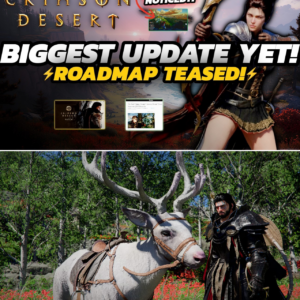
THE GREAT REPAIR: Pearl Abyss ‘Resurrects’ Crimson Desert with Record-Breaking Patch and Stealth Roadmap Teasers
THE UPDATE THAT FIXED EVERYTHING! 🛠️📦✨ Pearl Abyss just dropped a massive “W” with the 1.02 Patch: 1,000 Storage Slots, “Classic” controls, and the legendary Helm-Off toggle are finally HERE! 🚨 The Crimson Desert community is cheering as the devs…
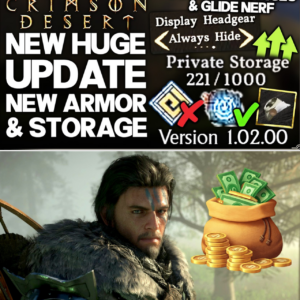
PYWEL REBORN: Massive Crimson Desert Update Unleashes 1,000-Slot Storage and the Long-Awaited ‘Helm Off’ Toggle
THE UPDATE WE’VE ALL BEEN WAITING FOR IS HERE! 🛠️📦🐺 Crimson Desert Patch 1.02 just dropped, and it is NUKING the inventory struggle! 1,000 slots of storage? YES PLEASE! 🚨 The Crimson Desert community is celebrating today as Pearl Abyss…
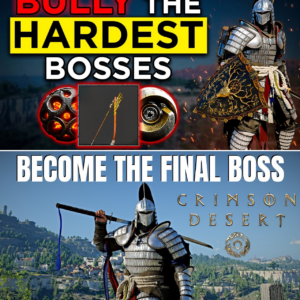
THE TITAN SLAYER: New ‘Infinite Stun’ Meta Reveals How to Bully Crimson Desert’s Most Overwhelming Bosses
STOP GETTING BULLIED BY OVERWHELMING BEINGS! ⚔️🔥👹 Are the Forgotten General or Belellith flattening you like a runaway train? The “Infinite Stun” and “Volcanic Archer” metas are officially here to save your playthrough! 🚨 The Crimson Desert community is reeling…
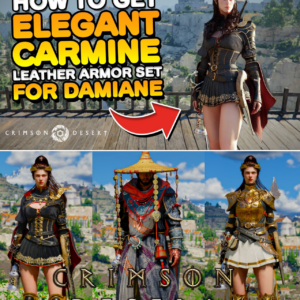
DEADLY ELEGANCE: ‘Elegant Carmine’ Armor Blueprint Discovered for Damiane After High-Stakes Jungle Raid
UNLEASH THE ELEMENTAL PRINCESS: DAMIANE’S CARMINE ARMOR FOUND! 🎭🛡️✨ Stop letting Damiane wear basic gear! The blueprint for the ultra-rare Elegant Carmine Leather set has finally been located—but beware, this treasure is buried deep in a trap-filled cave! 🚨 The…
End of content
No more pages to load