THE KINGSGUARD IS REAL?! 🛡️🔥 THE BLOODY HISTORY HBO DIDN’T TELL YOU!
Think the White Cloaks are just a fantasy? THINK AGAIN. 😱
From betrayal-happy Romans to Viking mercenaries who would die for a foreign King, the REAL-LIFE inspirations for Criston Cole and Arthur Dayne are more terrifying than the show! 🐉⚔️
Did you know there was a legendary guard so powerful they actually SOLD the throne to the highest bidder? Or a group of elite warriors who started as slaves and ended up as Kings? 👑💰
George R.R. Martin didn’t just invent the Kingsguard—he stole their darkest secrets from the history books. We found 10 elite units from our world that make the “Kingslayer” look like an amateur. One of them even involves a “celibacy” vow that was broken in the most scandalous way possible… 🤫🔞
Stop watching the fiction and start reading the FATAL facts. The real “Game of Thrones” was much more brutal.
👇 WHO WERE THEY? Discover the 10 real-life Kingsguards that ruled the ancient world!
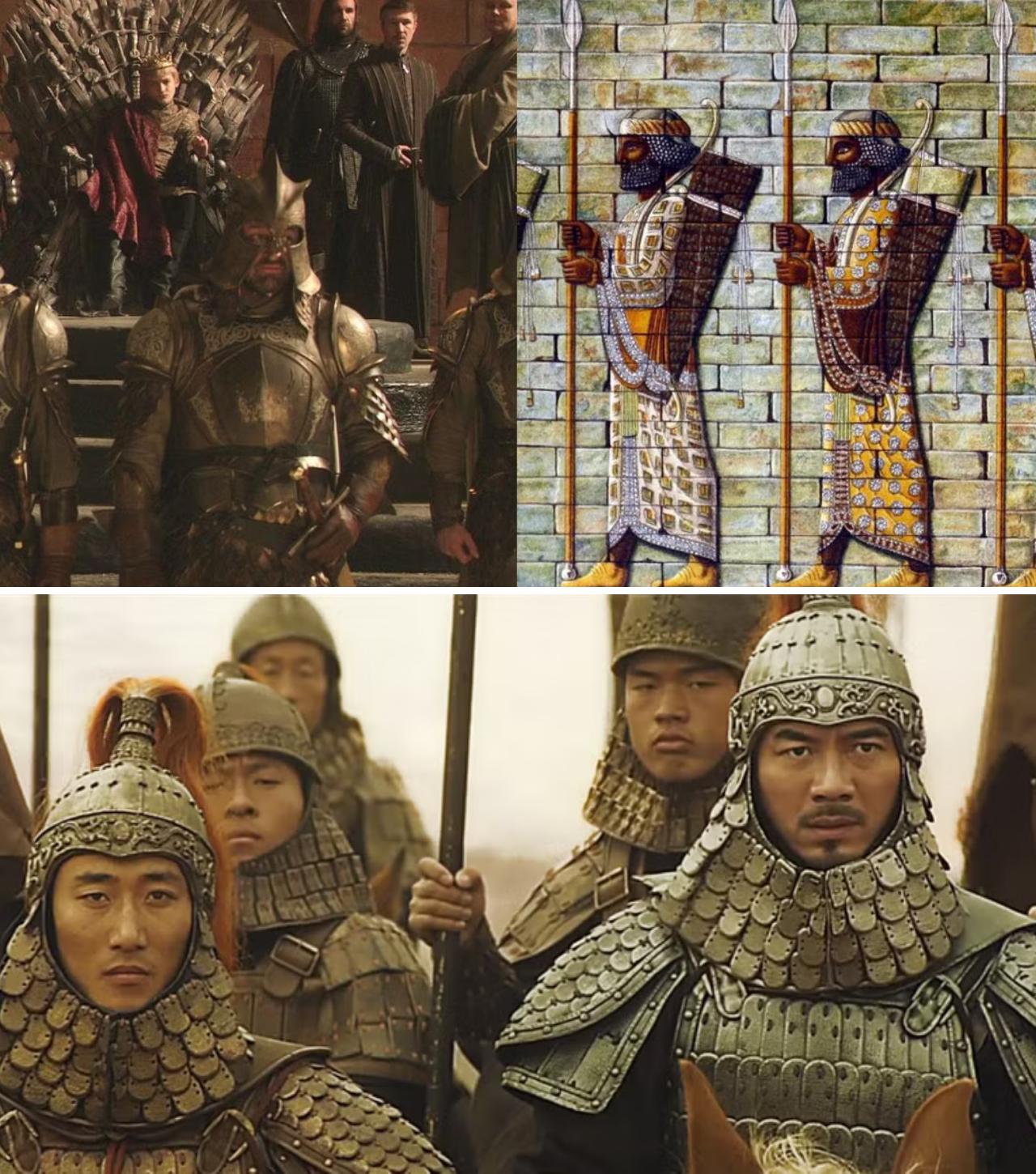
When George R.R. Martin penned the vows of the Kingsguard—”to hold no lands, to father no children”—he wasn’t just crafting high fantasy. He was tapping into a primal, bloody tradition of elite bodyguards that has shaped the rise and fall of empires for millennia. While the “White Cloaks” of Westeros represent an idealized version of chivalry, history tells a much grittier story of men who were often more dangerous to the kings they protected than the enemies they fought.
From the sun-drenched marble of Rome to the icy fjords of the Varangians, here are the ten historical units that prove the Kingsguard was far more than a literary device.
1. The Praetorian Guard: The Original “Kingslayers”
If Jaime Lannister is the quintessential “Kingslayer,” he pales in comparison to the Praetorian Guard of the Roman Empire. Initially formed to protect the Emperor, they quickly realized they held the true power. Over centuries, they assassinated emperors like Caligula and Pertinax, even famously putting the Roman throne up for auction to the highest bidder in 193 AD. Like the Kingsguard during the “Dance of the Dragons,” the Praetorians were the ultimate kingmakers—or king-breakers.
2. The Varangian Guard: The Viking Shield of Byzantium
Imagine a group of towering, axe-wielding Vikings protecting an Eastern Emperor in Constantinople. The Varangian Guard were foreigners, chosen specifically because they had no local political ties—making them “pure” in their loyalty, much like the ideal version of Ser Arthur Dayne. They were the Emperor’s “Life Guards,” feared across the Mediterranean for their berserker rage and unwavering (if highly paid) devotion.
3. The Immortals: Persia’s Unending Shadow
The Persian “Immortals” were a standing army of exactly 10,000 men. The moment one died, another was waiting to take his place, creating the illusion of a supernatural, undying force. While the Kingsguard is limited to seven, the psychological warfare practiced by the Immortals mirrors the “legendary” status the White Cloaks hold in the minds of the smallfolk in Westeros.
4. The Mamluks: From Slaves to Sultans
The Mamluks of Egypt represent one of history’s most fascinating paradoxes. Originally recruited as slave-soldiers to bypass the treacherous politics of noble families, they eventually overthrew their masters and established their own dynasty. This mirrors the trajectory of Ser Criston Cole—a man of low birth who rose to become the most powerful political actor in the realm.
5. The Janissaries: The Sultan’s Celibate Elite
Long before the Kingsguard swore off marriage, the Ottoman Janissaries lived under strict rules of celibacy and total devotion to the Sultan. They were taken as children (the devshirme system) and raised only to fight. However, like the later seasons of Game of Thrones, the Janissaries eventually became a “state within a state,” becoming so powerful that they could depose Sultans at will if their stipends weren’t met.
6. The Swiss Guard: The Last Stand of Loyalty
While today they are seen in colorful uniforms at the Vatican, the Swiss Guard were once the most feared mercenaries in Europe. Their most “Kingsguard-esque” moment occurred during the Sack of Rome in 1527, where they fought to the last man to allow Pope Clement VII to escape. It was a scene straight out of the Tower of Joy—a suicide mission born of an unbreakable oath.
7. The Knights Templar: The Monastic Warrior
The religious undertones of the Kingsguard—living in a “White Sword Tower” and forsaking worldly goods—draw heavily from the Knights Templar. These “Warrior Monks” were the first to combine the sanctity of the priesthood with the lethality of the knightly class. Their eventual destruction by King Philip IV of France serves as a grim reminder of what happens when a “Guard” becomes wealthier and more influential than the Crown itself.
8. The Jomsvikings: The Brotherhood of Iron
Semi-legendary and strictly meritocratic, the Jomsvikings were a Viking order with a code of conduct as rigid as any Westerosi knight. They were forbidden from showing fear or retreating in the face of an equal enemy. Their “all-or-nothing” lifestyle reflects the absolute commitment required to wear the White Cloak.
9. The Samurai’s Hatamoto: To Shield the Shogun
In feudal Japan, the Hatamoto were the “men under the flags”—high-ranking samurai in the direct service of the Tokugawa Shogunate. Their loyalty wasn’t just professional; it was spiritual. The concept of Seppuku (ritual suicide) for failing one’s lord is a level of devotion that even some members of the Kingsguard might find extreme, yet it echoes the “death before dishonor” ethos of Ser Barristan Selmy.
10. The Yeomen of the Guard: The Survivors
Created by Henry VII after the Battle of Bosworth—the real-life conclusion to the “Wars of the Roses” that inspired Game of Thrones—the Yeomen are the oldest continuous military unit in the UK. They represent the aftermath of civil war: a guard created by a new king to ensure that the “old ghosts” of the previous regime never return to the throne room.
Conclusion: The Fragility of the Oath
What these ten groups prove is that the Kingsguard isn’t just a fantasy trope—it’s a recurring human necessity. Every ruler needs a shield, but every shield is a double-edged sword. Whether it’s the Praetorians stabbing an Emperor in the back or the Swiss Guard dying in a pile of rubble for a Pope, history shows that an elite guard is only as honorable as the men who wear the uniform.
In Westeros, the White Cloak is a symbol of purity. In reality, it was often stained with the blood of the very kings it was sworn to protect. As we watch Criston Cole tear the Seven Kingdoms apart, we aren’t just watching a TV show— chúng ta đang xem lại những trang sử đẫm máu nhất của chính nhân loại.
News
THE TITAN SLAYER: New ‘Infinite Stun’ Meta Reveals How to Bully Crimson Desert’s Most Overwhelming Bosses
STOP GETTING BULLIED BY OVERWHELMING BEINGS! ⚔️🔥👹 Are the Forgotten General or Belellith flattening you like a runaway train? The “Infinite Stun” and “Volcanic Archer” metas are officially here to save your playthrough! 🚨 The Crimson Desert community is reeling…
DEADLY ELEGANCE: ‘Elegant Carmine’ Armor Blueprint Discovered for Damiane After High-Stakes Jungle Raid
UNLEASH THE ELEMENTAL PRINCESS: DAMIANE’S CARMINE ARMOR FOUND! 🎭🛡️✨ Stop letting Damiane wear basic gear! The blueprint for the ultra-rare Elegant Carmine Leather set has finally been located—but beware, this treasure is buried deep in a trap-filled cave! 🚨 The…
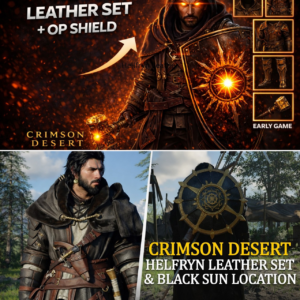
HIDDEN IN THE HIERARCHY: Why Most Players Will Never Find the Insane Hellfryn Armor Set in Crimson Desert
THE RAREST ARMOR IN PYWEL HAS BEEN FOUND! 🛡️🌑🔥 Have you walked through Deinus a dozen times and still missed this “Ghost” set? The secret to the Hellfryn Armor and Black Sun Shield is finally DECODED! 🚨 The Crimson Desert…
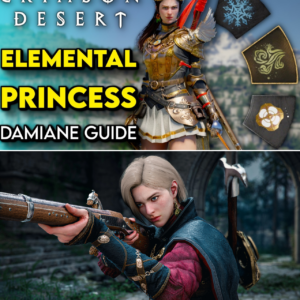
BEYOND THE PROTAGONIST: Damiane’s ‘Elemental Princess’ Build Is Officially Nuking the Crimson Desert Meta
MOVE OVER KLIFF, THE PRINCESS IS HERE! 👑🛡️❄️ Everyone is obsessed with Kliff, but have you seen what a maxed-out Damiane can do? This “Elemental Princess” build is literally breaking the game! 🚨 The Crimson Desert community is losing its…
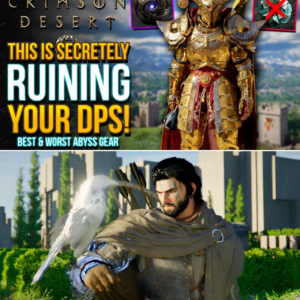
THE POWER PARADOX: Why Overstacking Abyss Gear is Quietly Killing Your Damage in Crimson Desert
DON’T RUIN YOUR CHARACTER! 🌀😱🚫 Warning: Overstacking Abyss Gear might actually NUKKE your DPS and drain your resources in seconds. Do you know which powers are actually TRASH? 🚨 The Crimson Desert community is buzzing after a shocking discovery: The…

KOOPA CRITICAL CONDITION: Critics Slam ‘Super Mario Galaxy’ as ‘Toxic,’ While Fans Power-Up a Record $350M Opening
BOWSER IS “TOXIC”? CRITICS ARE OFFICIALLY LOSING THEIR MINDS! 🐢🍄 The Super Mario Galaxy Movie just hit theaters, but the “expert” reviews are reading like a political manifesto! While fans are driving a massive $350M opening, professional critics are busy…
End of content
No more pages to load