Bridgerton Showrunner just admitted she ‘ALWAYS’ knew Violet and Marcus’ steamy romance was DOOMED… 😱🔥💔
That hot chemistry? The secret nights? The proposal?!
Jess Brownell spilled: It was NEVER going to last.
She planned it this way from the start – Marcus was just a “catalyst” for something bigger in Violet’s life.
But why break them up right when things got passionate? Too soon? Or the perfect heartbreak setup?
Fans are heartbroken AND cheering her independence…
Click below for her full explanation – you’ll see the romance in a whole new light 👇 Who do you think Violet ends up with eventually?
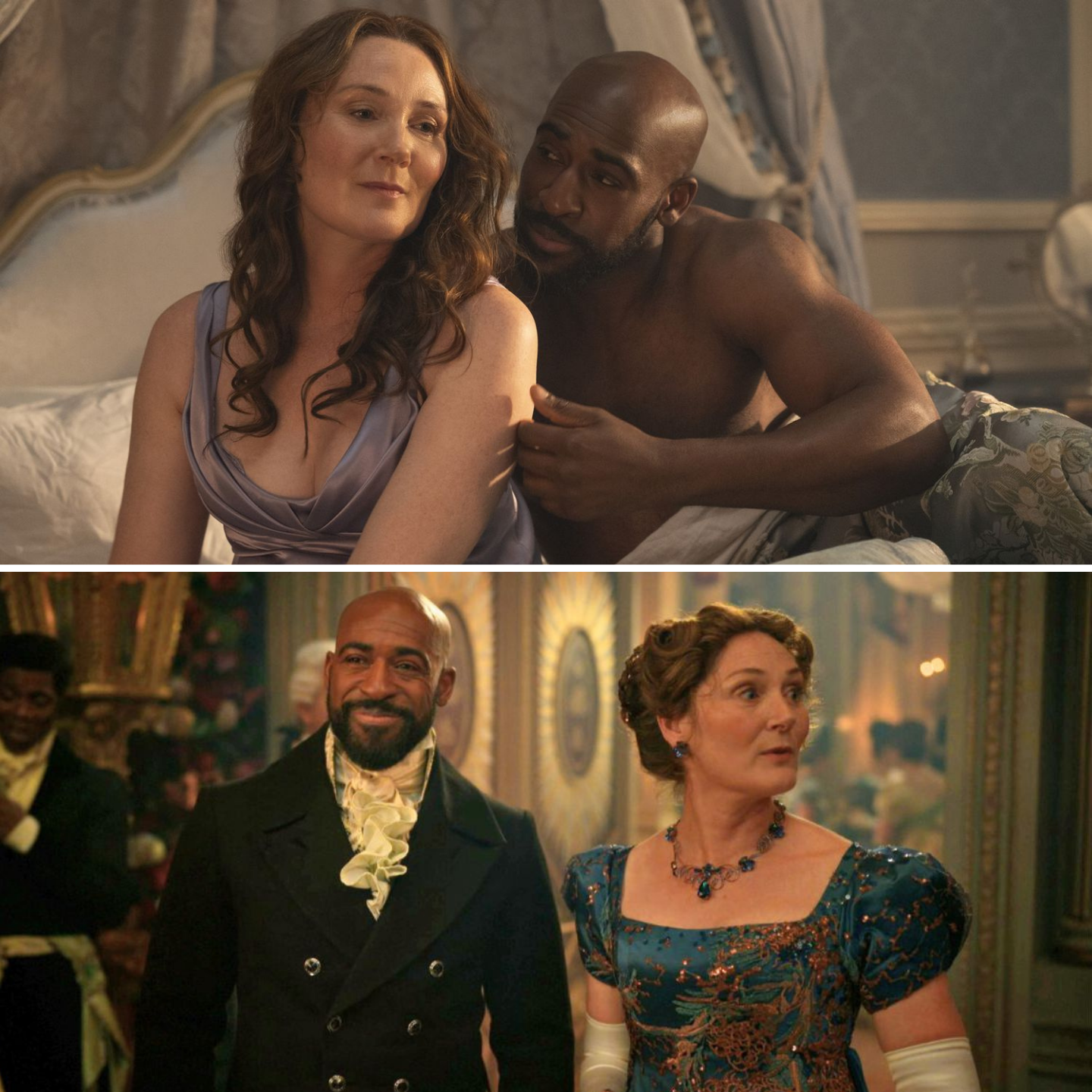
Netflix’s Bridgerton Season 4 introduced a steamy, unexpected subplot for the Bridgerton family matriarch, Violet Bridgerton (Ruth Gemmell), and Lord Marcus Anderson (Daniel Francis), the widowed brother of Lady Danbury (Adjoa Andoh). Their relationship evolved from flirtation to passionate encounters and a secret engagement, only to end in a mutual parting in the finale. Showrunner Jess Brownell has addressed the storyline’s conclusion, revealing she “always” intended for the romance not to culminate in marriage, framing it as a pivotal chapter in Violet’s personal growth rather than a traditional happily-ever-after.
In an exclusive interview with People, Brownell explained the creative reasoning behind the arc. “I always felt like it was going to not end in a marriage,” she said. “I felt like Violet — this is the first person she’s dated since her husband died, and I felt like it was — he’s a catalyst, Marcus, for her to realize that she, in fact, has a lot more self-discovery to do.” Brownell emphasized that Violet, widowed for years and devoted to raising her eight children, had long prioritized family over her own desires. Marcus’s arrival offered her a chance to reclaim passion and independence, but the show positioned the relationship as temporary to highlight her ongoing journey.
The romance, which does not appear in Julia Quinn’s original Bridgerton novels, was a show-original addition to expand Violet’s character beyond her role as the supportive matriarch. Season 4 depicted their chemistry building through stolen moments, including a notable intimate scene where Violet takes initiative, marking a departure from her traditionally reserved demeanor. Marcus proposed in Episode 6, and Violet initially accepted, but doubts surfaced amid family crises, including Francesca’s (Hannah Dodd) widowhood following John Stirling’s (Victor Alli) death. In the finale, Violet expressed a desire to continue their connection without formal marriage, fearing it would limit her newfound sense of self. Marcus, respecting her wishes but seeking a committed partnership, chose to end the engagement, opting to travel while remaining supportive of the Bridgertons.
Brownell told Netflix’s Tudum that the breakup scene represented “Violet choosing herself.” She described Violet as having spent decades as the “emotional anchor” for her family, suppressing aspects of her identity after Edmund Bridgerton’s death. The fear of losing her rediscovered “wild, carefree self” outweighed the pain of parting from Marcus. “Her fear isn’t rooted in scandal, her children, or even her late husband. It’s herself,” Brownell noted. This decision opens a new chapter for Violet, one of uncertainty and potential, rather than immediate resolution.
In a Deadline interview, Brownell reiterated her affection for the pairing: “We really love Anderson and on screen, I love the chemistry between Anderson and Violet.” Yet she maintained the timing felt premature for remarriage. “It’s the first person Violet has dated since her husband died,” she said, adding that settling down again would undercut Violet’s arc of self-exploration. Brownell expressed pride in Marcus asserting his needs, calling the end “a real breakup, at least for now,” which adds emotional weight without villainizing either character.
Actor Daniel Francis, in a Collider interview, confirmed he knew the outcome early. “I knew in advance, before we read the script, that it wasn’t going to go in the direction of marriage,” he said. Francis appreciated the nuance: Violet wants romance without losing her identity, while Marcus prioritizes alignment. Their parting is bittersweet, rooted in mutual respect and love, not conflict. “She chooses her independence and her family,” Francis explained. “She wants to still have a relationship with Marcus, but just not at the level of marriage.”
Ruth Gemmell, speaking to outlets like The Wrap, described Violet’s reaction as one of shock and upset when Marcus walks away. “She’s quite shocked,” Gemmell said, noting Violet’s surprise that her proposal to maintain a casual arrangement wasn’t reciprocated. The actress highlighted the tenderness in their goodbye, underscoring themes of mature love where compatibility doesn’t always mean permanence.
The storyline fits Bridgerton‘s pattern of blending Regency romance with modern themes of empowerment and self-actualization. Violet’s arc parallels other characters’ journeys—Benedict’s class-defying love with Sophie Baek (Yerin Ha), Francesca’s grief and tentative new connections—while adding intergenerational depth. Brownell has hinted that Violet’s story continues beyond Season 4, potentially with a “slightly different relationship” to her social circle, including Queen Charlotte (Golda Rosheuvel).
Fan responses have varied. Some celebrated Violet’s choice as empowering, appreciating a middle-aged woman prioritizing personal growth over societal expectations of remarriage. Others lamented the loss of the pairing’s chemistry, hoping for reconciliation in future seasons. Brownell has remained open about Marcus’s potential return, noting his importance to the ensemble without committing to a reunion.
This subplot also ties into broader narrative shifts. With Seasons 5 and 6 focusing on Eloise and Francesca (order TBD), Violet’s independence allows her to support her children’s stories while pursuing her own fulfillment. The non-marital ending avoids overshadowing the season’s central Benedict-Sophie romance, which concludes with a joyful post-credits wedding.
Brownell’s approach reflects Bridgerton‘s evolution under her leadership: staying true to the spirit of Quinn’s novels while innovating for screen pacing, inclusivity, and emotional realism. By making Violet’s romance a catalyst rather than an endpoint, the show deepens her character, showing that love can spark transformation even when it doesn’t endure in traditional form.
As production advances on future seasons, Violet’s path remains one of the most intriguing threads—proof that in the ton, self-discovery can be as compelling as any courtship.