You won’t believe what Bridgerton just did in Season 4…
Francesca’s “pinnacle” struggle with John has fans screaming — is this the moment the show finally fixes its biggest bedroom blunder? Or is it hiding something even juicier about her future with Michaela? 😏 The drama is heating up, consent is front and center, and it’s flipping the script on every steamy scene we’ve seen before. But wait… some are calling it a quiet revolution, while others whisper it’s tied to that controversial twist.
Read more:
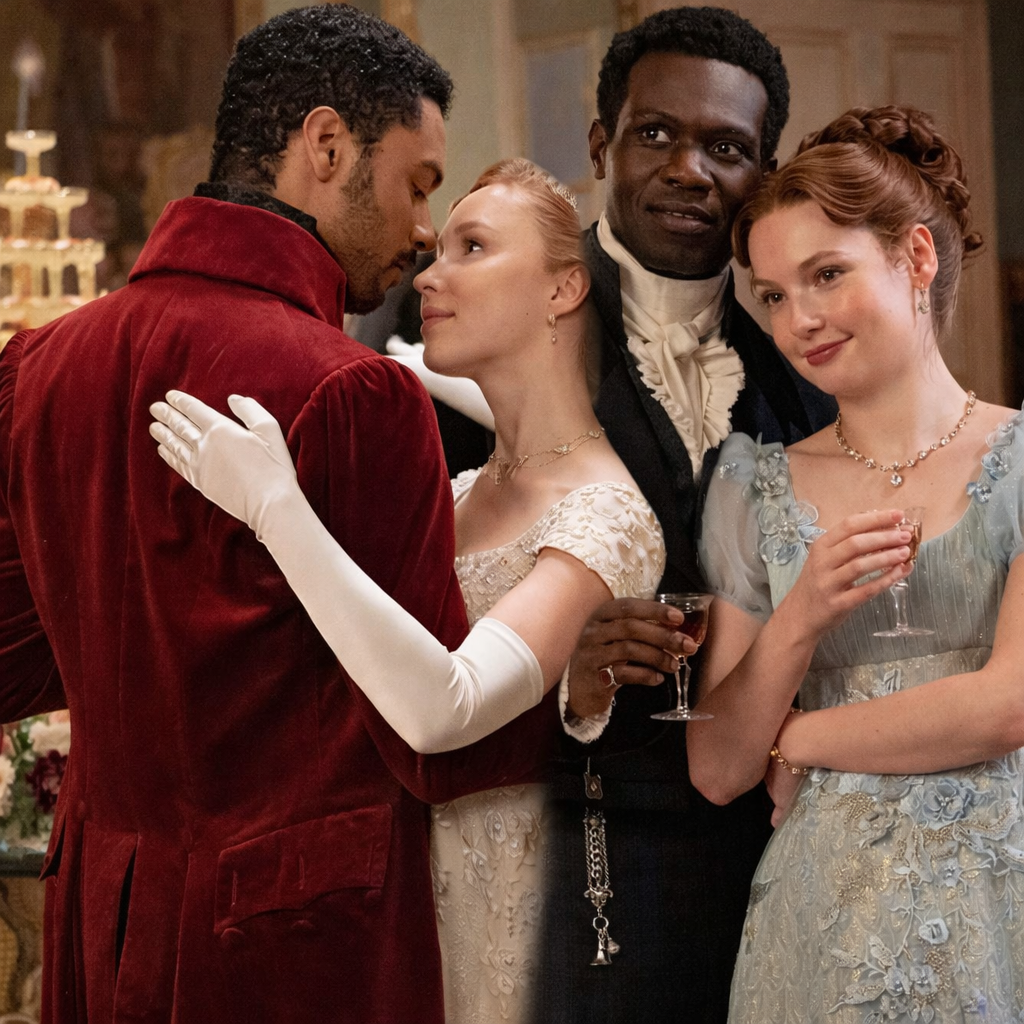
Netflix’s hit series Bridgerton has never shied away from steamy scenes and Regency-era romance, but Season 4 has introduced a storyline for Francesca Bridgerton that has viewers talking — and some praising it as a long-overdue correction to one of the show’s recurring issues.
In the latest episodes of Season 4, Part 1, Francesca (Hannah Dodd) and her husband John Stirling (Victor Alli) face what the show coyly calls a “pinnacle” problem. Despite regular intimacy, Francesca has not conceived, leading to frustration on her part. John, ever attentive, suggests that a woman’s “pinnacle” — a polite stand-in for orgasm — might aid conception. When he asks if she has reached it, Francesca is caught off guard and admits she has not.
This revelation sends Francesca on a quiet but determined quest to understand her own body. She turns to family members like Penelope Featherington (Nicola Coughlan) and her mother Violet Bridgerton (Ruth Gemmell) for guidance, leading to awkward yet honest conversations about pleasure, expectations, and the realities of marital intimacy. John, portrayed as supportive rather than dismissive, agrees to work with her on the issue, emphasizing mutual participation and consent.
Showrunner Jess Brownell has addressed the storyline directly in interviews. In a January 2026 Variety discussion, Brownell explained that the arc was designed to offer a more realistic take on female sexual experience. “On the show, obviously, people are always having magical simultaneous orgasms, and that fantasy is really fun, but also it doesn’t represent accurately most women’s experience,” she said. Brownell stressed the intent was empowerment and relatability, not a commentary on Francesca’s relationship with John or her emerging feelings toward his cousin Michaela Stirling (Masali Baduza).
Actress Hannah Dodd echoed this in her own comments to outlets like E! News. She described the scenes as both humorous and important, noting how Regency-era women were often left unprepared for intimacy. “It’s really important that Bridgerton shows that it’s not perfect on the first time, every single time,” Dodd said. “These women are sent into marriages so unprepared and so innocent.”
The “pinnacle” dilemma stands in contrast to earlier seasons. In Season 1, Daphne Bridgerton (Phoebe Dynevor) was unaware of basic sexual mechanics until informed by her husband Simon (Regé-Jean Page). Their arc involved deception around contraception and conception, with Daphne’s pleasure secondary to plot twists. Critics and viewers have long pointed to this as part of a pattern where female characters’ sexual awakenings were played for shock, humor, or dramatic tension rather than nuance.
Season 4’s approach with Francesca shifts the focus. The storyline treats her lack of climax not as a flaw in her marriage but as a common reality for many women. Consent remains central: John actively wants to help, and the couple communicates openly. There’s light humor in Francesca’s “detective work” and seduction attempts, but the tone avoids mockery. Instead, it highlights agency, self-discovery, and partnership.
This change has drawn positive reactions from some fans and commentators. Screen Rant described it as fixing a “controversial Bridgerton trend” by prioritizing realism and mutual respect over fantasy. Other outlets, including Glamour UK and The Mirror, called it “radical” for addressing the so-called orgasm gap — the well-documented disparity where many women do not climax from penetrative sex alone.
Yet the storyline does not exist in isolation. Francesca’s arc is complicated by hints of attraction to Michaela, introduced in Season 3 as John’s cousin. In the books by Julia Quinn, Francesca’s story (When He Was Wicked) involves widowhood after John’s death and a romance with his cousin Michael. The show gender-swapped the character to Michaela, setting up a queer romance — a decision that sparked significant backlash when revealed in Season 3’s finale.
Some fans expressed disappointment over deviating from the source material, with complaints about “forced inclusion” or altering beloved plots. Others accused the change of undermining Francesca and John’s relationship, especially since Francesca appears tongue-tied and smitten upon meeting Michaela. Author Julia Quinn addressed the reaction in a June 2024 Instagram post, acknowledging fans’ attachment to the books while expressing trust in the show’s vision for diversity and inclusivity.
Brownell has clarified that Francesca’s “pinnacle” issues are unrelated to her sexual identity. “I hope it’s very clear from our storytelling that we’re not trying to indicate that, just because she can’t have an orgasm, that it means there’s something wrong with her relationship with John,” she told Variety. The showrunner emphasized exploring self-connection and bodily awareness as separate from orientation.
The dual layers — the intimate marital struggle and the subtle queer undertones — have fueled online debate. Some viewers see the “pinnacle” plot as empowering representation for women who face similar challenges. Others speculate it foreshadows deeper conflicts, especially with John’s health hinted at through headaches and other signs pointing to his eventual fate as in the books.
Regardless, Season 4’s handling of Francesca’s dilemma has been noted for its maturity. By centering consent, communication, and realism, it moves away from the show’s earlier reliance on dramatic misunderstandings or one-sided revelations. It portrays intimacy as a shared journey rather than a magical fix.
As Bridgerton continues its run, with Benedict’s bisexuality already explored and more stories ahead, Francesca’s arc may prove a turning point. It balances fantasy escapism with grounded moments, appealing to longtime fans while addressing criticisms of past portrayals.
Whether it fully resolves the “controversial trend” remains up for discussion, but one thing is clear: Francesca’s quiet pursuit of her “pinnacle” has sparked louder conversations than many expected.