🚨 Game of Thrones’ EPIC Crash: It Stopped Being Political… And Became the BIGGEST Letdown in TV History! 😱💥
Remember when GOT was the king of ruthless scheming, backstabbing alliances, marriages for power, and betrayals that left you speechless? Seasons 1-4 were pure political masterpiece — characters played the game smarter than anyone, every move mattered, and no one was safe…
Read more:
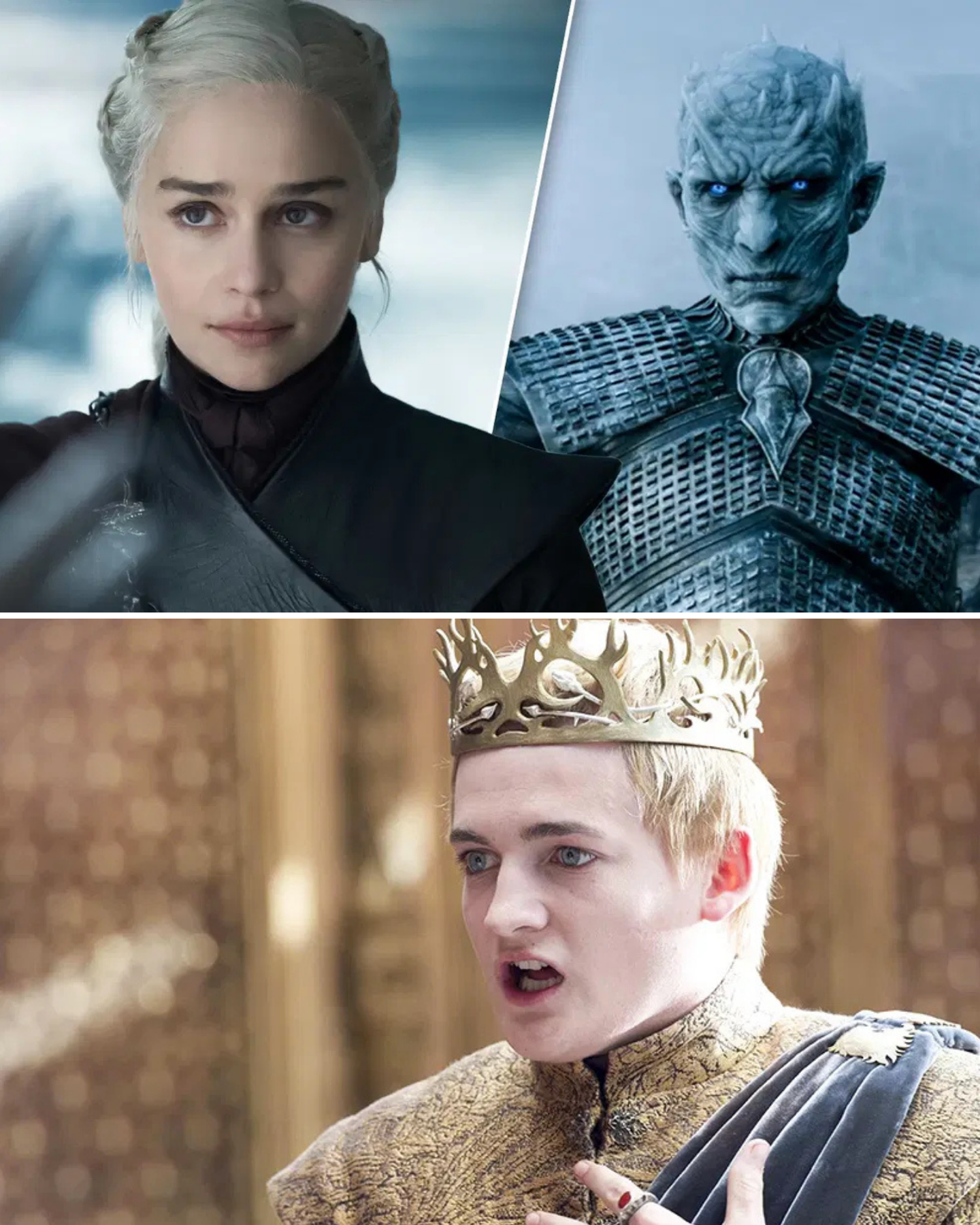
Few television series have captured global attention like “Game of Thrones.” For its first four seasons, HBO’s adaptation of George R.R. Martin’s “A Song of Ice and Fire” novels redefined prestige TV with its blend of brutal violence, complex characters, and razor-sharp political intrigue. Viewers tuned in not just for dragons and battles, but for the endless scheming in King’s Landing, the shifting alliances, and the cold calculus of power that made every episode feel like a high-stakes chess match.
Yet by Seasons 7 and 8, the show underwent a dramatic shift. The intricate web of politics that defined its early success largely vanished, replaced by large-scale spectacle, rushed resolutions, and a more straightforward good-vs-evil fantasy narrative. Critics and fans alike have labeled the final seasons as one of the most precipitous declines in television history, with the series finale drawing widespread disappointment and even a petition for a remake that garnered over a million signatures.
The core issue, according to many analysts, boils down to this: “Game of Thrones” stopped being political. Early seasons thrived on moral ambiguity, where no character was purely heroic or villainous, and power was won through marriages, betrayals, espionage, and calculated risks rather than sheer military might. The War of the Five Kings showcased how feudal lords maneuvered for the Iron Throne, with figures like Littlefinger, Varys, and Tywin Lannister pulling strings from the shadows.
As the show outpaced Martin’s published books after Season 4, showrunners David Benioff and D.B. Weiss relied on broad story outlines from the author while charting their own course. The result was a pivot toward epic fantasy elements — dragons, White Walkers, massive battles — at the expense of nuanced political drama. The White Walker threat, built up over seasons as an existential danger, culminated in a single night-long battle in Season 8’s “The Long Night,” after which the undead army was abruptly defeated. Cersei’s rule in King’s Landing, once a masterclass in tyranny and manipulation, devolved into cartoonish villainy with scant exploration of court intrigue.
This shift drew criticism for undermining the show’s original strengths. In its heyday, “Game of Thrones” mirrored real-world politics: power vacuums leading to chaos, the dangers of unchecked ambition, and the fragility of alliances. Daenerys Targaryen’s arc, for instance, began as a liberator freeing slaves in Essos, but her Westerosi campaign highlighted the challenges of imposing ideals on a resistant feudal society. By Season 8, her descent into madness felt abrupt to many, lacking the gradual political erosion that could have made it believable.
Jon Snow’s leadership similarly suffered. As King in the North and later a key figure against the dead, his decisions often ignored political realities — from trusting unreliable allies to failing to leverage his heritage effectively. The finale’s election of Bran Stark as king, proposed by Tyrion Lannister and accepted by a handful of lords, struck many as a contrived resolution that ignored centuries of Westerosi tradition and the hard-won lessons about legitimacy and power.
Analysts point to structural issues as well. Seasons 7 and 8 were shortened to six and seven episodes respectively, down from the standard 10, leading to compressed storytelling. Travel times shrank dramatically — characters crossed vast distances in moments — and armies moved with improbable speed, eroding the realism that grounded the political maneuvering. Battles became spectacles rather than strategic events, with tactics that defied military logic, such as charging cavalry into darkness or leaving key assets undefended.
The political vacuum left room for spectacle to dominate. The destruction of King’s Landing by dragonfire in Season 8’s penultimate episode was visually stunning but politically simplistic: Daenerys’ turn from savior to destroyer happened with little buildup in terms of court dynamics or popular support. Jon’s subsequent killing of her, followed by his exile, resolved nothing in terms of governance or succession, leaving viewers with a sense of unfinished business.
Some observers argue the finale’s election scene — where lords and ladies casually select Bran — mocked the very idea of political process. Suggestions of democracy from Samwell Tarly were laughed off, and the choice of an all-seeing, detached figure as ruler felt like an abdication of the series’ earlier themes about human ambition and fallibility. Tyrion’s role as Hand of the King, despite his repeated failures, underscored a sense that logic had given way to convenience.
The decline has been dissected in outlets from The Atlantic, which noted the show’s turn to heavy-handed historical analogies over character development, to fan communities on Reddit where threads lament the loss of “the game” in favor of “action fantasy.” One analysis suggested the pivot contradicted Martin’s intent: the books emphasize that power resides in institutions and narratives, not just in swords or dragons.
Despite the backlash, “Game of Thrones” remains a cultural phenomenon. Its early seasons set benchmarks for production values, ensemble acting, and adult-oriented fantasy. The spinoff “House of the Dragon” has returned to political intrigue with the Targaryen civil war, earning praise for recapturing some of the original’s edge. Yet the shadow of Seasons 7 and 8 lingers, serving as a cautionary tale about balancing spectacle with substance.
In the end, “Game of Thrones” didn’t fail because it ran out of source material — it failed when it abandoned the political heart that made it revolutionary. What began as a gritty examination of power ended as a blockbuster fantasy that prioritized fireworks over foresight. For many fans, that’s the real tragedy: a kingdom won through cunning, lost to haste.
News
THE TITAN SLAYER: New ‘Infinite Stun’ Meta Reveals How to Bully Crimson Desert’s Most Overwhelming Bosses
STOP GETTING BULLIED BY OVERWHELMING BEINGS! ⚔️🔥👹 Are the Forgotten General or Belellith flattening you like a runaway train? The “Infinite Stun” and “Volcanic Archer” metas are officially here to save your playthrough! 🚨 The Crimson Desert community is reeling…
DEADLY ELEGANCE: ‘Elegant Carmine’ Armor Blueprint Discovered for Damiane After High-Stakes Jungle Raid
UNLEASH THE ELEMENTAL PRINCESS: DAMIANE’S CARMINE ARMOR FOUND! 🎭🛡️✨ Stop letting Damiane wear basic gear! The blueprint for the ultra-rare Elegant Carmine Leather set has finally been located—but beware, this treasure is buried deep in a trap-filled cave! 🚨 The…
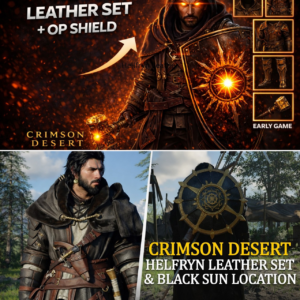
HIDDEN IN THE HIERARCHY: Why Most Players Will Never Find the Insane Hellfryn Armor Set in Crimson Desert
THE RAREST ARMOR IN PYWEL HAS BEEN FOUND! 🛡️🌑🔥 Have you walked through Deinus a dozen times and still missed this “Ghost” set? The secret to the Hellfryn Armor and Black Sun Shield is finally DECODED! 🚨 The Crimson Desert…
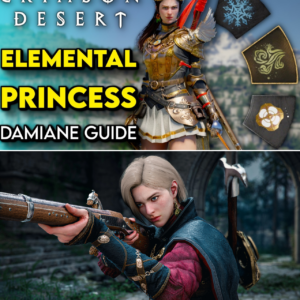
BEYOND THE PROTAGONIST: Damiane’s ‘Elemental Princess’ Build Is Officially Nuking the Crimson Desert Meta
MOVE OVER KLIFF, THE PRINCESS IS HERE! 👑🛡️❄️ Everyone is obsessed with Kliff, but have you seen what a maxed-out Damiane can do? This “Elemental Princess” build is literally breaking the game! 🚨 The Crimson Desert community is losing its…
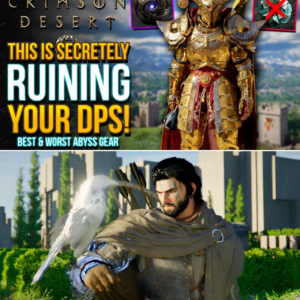
THE POWER PARADOX: Why Overstacking Abyss Gear is Quietly Killing Your Damage in Crimson Desert
DON’T RUIN YOUR CHARACTER! 🌀😱🚫 Warning: Overstacking Abyss Gear might actually NUKKE your DPS and drain your resources in seconds. Do you know which powers are actually TRASH? 🚨 The Crimson Desert community is buzzing after a shocking discovery: The…
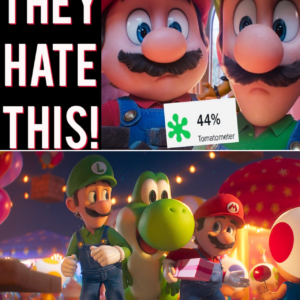
KOOPA CRITICAL CONDITION: Critics Slam ‘Super Mario Galaxy’ as ‘Toxic,’ While Fans Power-Up a Record $350M Opening
BOWSER IS “TOXIC”? CRITICS ARE OFFICIALLY LOSING THEIR MINDS! 🐢🍄 The Super Mario Galaxy Movie just hit theaters, but the “expert” reviews are reading like a political manifesto! While fans are driving a massive $350M opening, professional critics are busy…
End of content
No more pages to load