🚨 Dunk just survived the Trial of Seven… but at what cost? That look on his face after Baelor died says it all 😔🐉
The prince who should’ve been king—gone. In Dunk’s arms. Because he stepped up for a random hedge knight.
Now Dunk’s carrying something heavier than any sword: the guilt that a better man died so he could live. Whispers everywhere: “The hedge knight killed the future king.” And deep down… Dunk believes it.
What happens when a knight questions if his own life was worth the price? Does he break? Or does he become something even stronger—something the realm desperately needs?
Book fans know this moment changes Dunk forever… but the show just made the pain hit different. That final scene with the ghost? Chills.👇
FULL breakdown of how Baelor’s death reshapes the kind of knight Dunk becomes… (trust me, it explains why he’s one of the only good ones left in Westeros 😤)
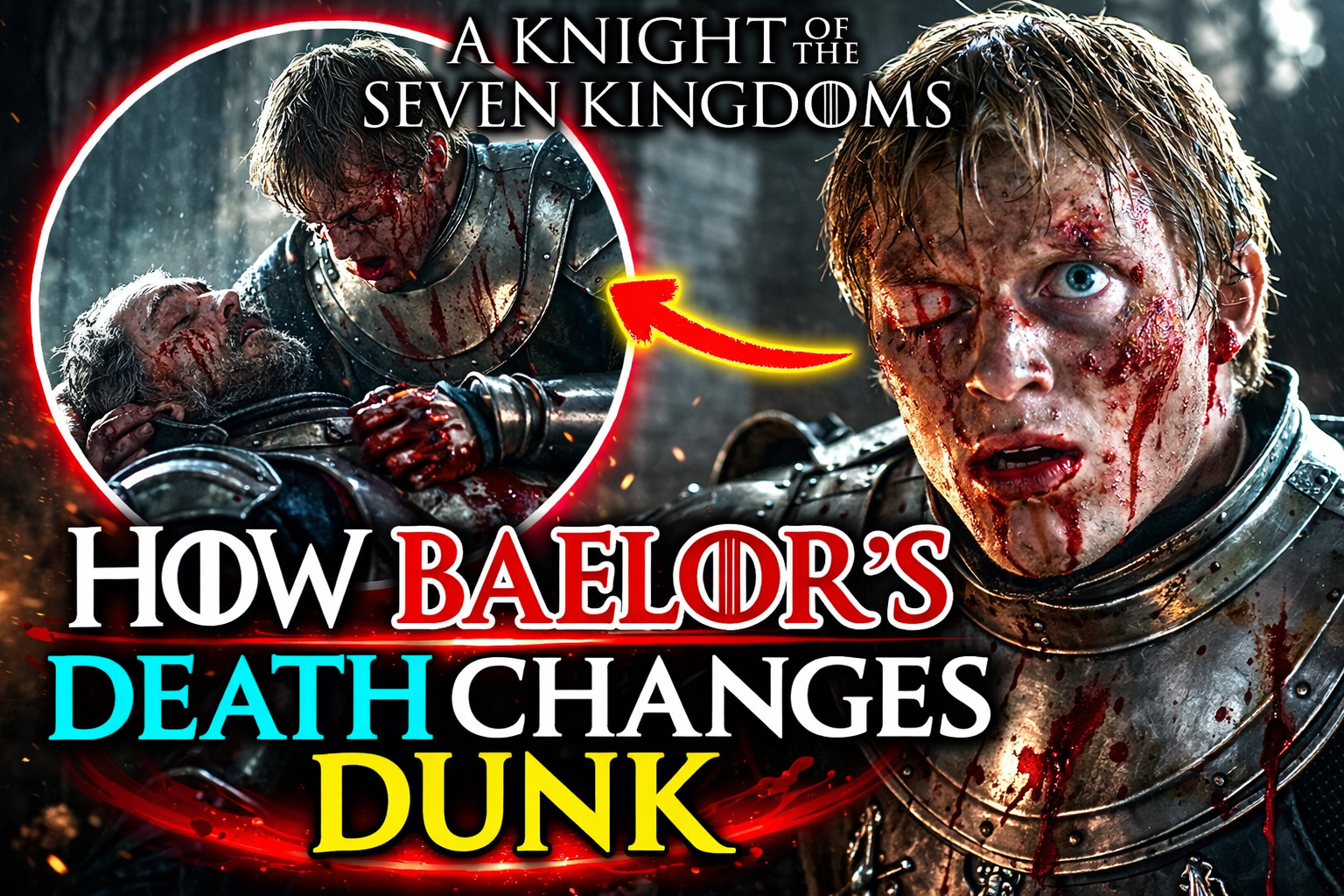
In the Season 1 finale of HBO’s A Knight of the Seven Kingdoms, Ser Duncan the Tall (Dunk) grapples with profound survivor’s guilt after Prince Baelor Breakspear dies defending him in the Trial of Seven. Baelor, the realm’s beloved heir and a model of chivalric virtue, perishes from wounds sustained in the melee—ultimately struck fatally by his brother Maekar—while Dunk survives. This moment, faithful to George R.R. Martin’s The Hedge Knight but amplified with emotional weight in the adaptation, becomes a pivotal turning point for Dunk’s character.
In the novella and show, Dunk repeatedly questions why a “great man” like Baelor—poised to become a just king who could have ushered in a golden age—died for a lowly hedge knight accused of assaulting a prince. Dunk tells Maekar, “It was for me Prince Baelor died,” and wonders aloud if his own life (or even just his foot/hand) was worth the price. Actor Peter Claffey, who plays Dunk, described this guilt as heavier than the loss of his mentor Ser Arlan: no blame attaches to Arlan’s natural death, but Baelor’s feels like Dunk’s direct responsibility. The smallfolk and lords whisper that the hedge knight “killed” the future king, poisoning Dunk’s victory and fueling impostor syndrome—he already doubts his knighthood (a show-expanded thread suggesting Ser Arlan may never have formally dubbed him).
This burden reshapes Dunk from a naive, earnest hedge knight into a more introspective, duty-bound figure. In the books, Dunk’s arc across The Sworn Sword and The Mystery Knight shows him growing humbler, more protective of the innocent, and wary of power. The guilt instills a lifelong sense of debt: he becomes hyper-aware that true knighthood demands sacrifice, often at great personal cost. Dunk’s decisions prioritize protecting the weak over personal glory—he refuses royal service repeatedly, choosing the road to avoid entanglements that could lead to more tragedy. His bond with Egg deepens into mentorship, where Dunk imparts lessons of honor tempered by realism: doing right isn’t always rewarded, and the gods’ will (or fate) can be cruel.
The show leans into this transformation visually and thematically. Dunk’s conversations with Maekar and Valarr (Baelor’s son) highlight shared grief, while Lyonel Baratheon’s blunt realism (“good is a point of view”) challenges Dunk’s idealism without erasing it. Dunk’s ghostly vision of Ser Arlan in the finale symbolizes acceptance—not just of Arlan’s flaws, but of his own survival. Showrunner Ira Parker noted this moment propels Dunk forward, suggesting fate spared him for greater purpose (echoing fan theories that Dunk’s life enables Egg’s kingship and, ultimately, events in Game of Thrones like saving Rhaegar Targaryen, which ties into the defeat of greater threats).
Critics and fans praise how the guilt humanizes Dunk without breaking him. It hardens his moral core: he becomes the “truest knight” Martin has written—humble, loyal, protective—precisely because he carries the weight of Baelor’s death. Unlike flawed knights who seek redemption through conquest or cynicism, Dunk channels guilt into quiet service. He avoids ambition, fearing it corrupts (as seen in Targaryen family fractures), and focuses on guiding Egg away from court toxicity.
In broader Westerosi history, Baelor’s absence alters the realm—Maekar’s harsher reign follows, Blackfyre tensions simmer—but Dunk’s path remains grounded. His guilt ensures he never forgets: knighthood isn’t about glory or titles; it’s about standing for the innocent, even when the cost is unbearable. This makes Dunk evolve into a knight who values mercy, humility, and protection above all—qualities that define him as Lord Commander of the Kingsguard under Aegon V and cement his legacy as one of Westeros’ rare genuinely honorable figures.