BREAKING: The steamiest moments in Bridgerton Season 4 hide an ironic secret nobody saw coming… 😈🔥
Luke Thompson just confessed the truth that flips everything upside down: “To be honest…
Read more:
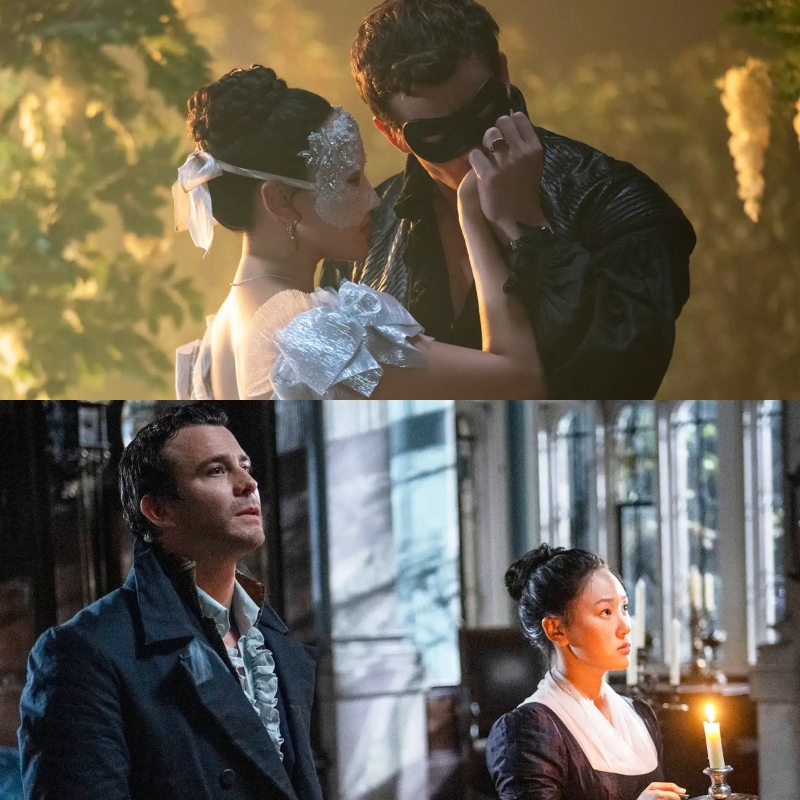
As Bridgerton Season 4 continues to dominate Netflix charts following its January 2026 premiere, attention has turned not only to the romance between Benedict Bridgerton (Luke Thompson) and Sophie Baek (Yerin Ha) but also to the behind-the-scenes process that brought their passionate scenes to life. In recent promotional interviews, Thompson has emerged as one of the show’s most vocal advocates for intimacy coordinators, addressing a topic that has divided opinions in Hollywood.
Intimacy coordinators—specialized professionals who choreograph, rehearse, and oversee scenes involving nudity, simulated sex, or other intimate content—have become standard on many sets since the #MeToo movement heightened awareness around consent and actor safety. They establish boundaries, ensure ongoing communication, and help translate emotional beats into visually compelling moments. On Bridgerton, which is known for its steamy, Regency-era romance sequences, coordinators have been part of the production since Season 1.
In a January 2026 interview with Entertainment Tonight, conducted during press for Season 4, Thompson spoke candidly about his experience. He described the intimacy coordinator—specifically Lizzie Talbot—as “the best” and “incredible,” emphasizing her role in creating a safe, collaborative environment. Thompson directly countered criticisms that coordinators impose rigid “paint-by-numbers” approaches that stifle natural chemistry. “To be honest,” he said, “I don’t understand the argument that intimacy coordinators ruin spontaneity. I think they facilitate it. It’s really important to have the option.”
He elaborated that having an external facilitator allows actors to focus on performance rather than logistics or discomfort. “It’s a security blanket,” Thompson noted. “It’s nice having someone to monitor it, so you’re not just stuck, just you two, or you and the director—who sometimes, in my previous experience, directors are often quite embarrassed about those scenes.” He stressed the need for choreography: actors experience scenes “from the inside out,” but an outside perspective ensures the story reads correctly on camera. “What feels good doesn’t necessarily look good,” he added.
Co-star Yerin Ha, making her debut as Sophie, supported Thompson’s view. In the same interview and others (including with Shondaland and People), Ha described the process as “quite seamless,” crediting Talbot for building trust during rehearsals. For the much-discussed staircase scene—a pivotal, passionate encounter between Benedict and Sophie—Ha said the coordination helped maintain intensity while prioritizing comfort. The scene, which captures raw desire turning into emotional complexity, required careful blocking to balance sensuality with character development.
The comments arrive against a backdrop of mixed industry opinions. Some performers have expressed reservations, arguing that over-reliance on coordinators can make scenes feel mechanical or less organic. Others, including many from the Bridgerton cast across seasons, have praised the role as essential for professionalism and actor well-being. Past stars like Nicola Coughlan and Luke Newton (Season 3) highlighted how coordinators enabled bold, character-driven moments without compromising safety.
Season 4’s intimate content aligns with the source material—Julia Quinn’s An Offer from a Gentleman—which features Benedict’s more bohemian, exploratory approach to love compared to his siblings’ structured courtships. The staircase sequence serves as a turning point: Benedict offers Sophie a position as his mistress, a “slap in the face” moment (as Ha described it) that reveals his internal conflict and societal blind spots. Filming such emotionally charged physicality demanded precision to convey both passion and tension.
Showrunner Jess Brownell and the production team have maintained a consistent approach to intimacy work, building on protocols established in earlier seasons. The emphasis on consent and rehearsal reflects broader industry shifts, where coordinators are now credited in many projects as key crew members.
Thompson’s perspective adds nuance to the conversation. As an actor with theater roots and prior screen experience, he appreciates the structure coordinators provide. In interviews, he drew parallels to dance choreography: intimacy scenes, like dances, benefit from guidance to ensure emotional truth translates visually. This mindset helped him and Ha develop chemistry off-set—through green-room conversations and shared vulnerability—mirroring Benedict and Sophie’s growing bond.
Fan reactions have been largely positive toward Thompson’s stance, with many applauding the transparency. Social media discussions praise Bridgerton for normalizing these professionals, especially in a genre often criticized for unrealistic portrayals of romance. Some viewers contrast it with other period dramas where intimacy feels less rehearsed or consensual.
The debate underscores evolving standards in entertainment. Post-#MeToo, intimacy coordination has moved from optional to expected on major productions. Bridgerton‘s success—billions of viewing minutes and cultural impact—owes partly to its handling of romance: steamy yet character-focused, sensual yet safe.
Thompson and Ha’s comments reinforce that coordinators enhance rather than hinder performance. By creating space for trust and creativity, they allow actors to fully inhabit roles without distraction. As Season 4 progresses toward its conclusion, Benedict and Sophie’s story continues to captivate, with behind-the-scenes insights like these reminding audiences that great on-screen chemistry often starts with off-screen professionalism.
Whether Thompson’s defense sways skeptics remains to be seen, but it highlights Bridgerton‘s commitment to modern filmmaking practices in a historically inspired world. The series balances escapist fantasy with real-world considerations, ensuring its romantic highs feel earned—and safe—for everyone involved.