🚨 THIS NEW MEDIEVAL RPG JUST DROPPED A TRAILER… AND IT LOOKS WAY TOO REAL 😱🩸
No glowing swords, no magic spells flying everywhere.
Just…
Heavy chainmail clinking with every step
Rain soaking through cloaks, mud clinging to boots
Wind howling through ancient forests, villagers staring like they actually see you
Gamers are straight-up disturbed. One half is screaming “This is the most immersive thing I’ve ever seen.” The other half is saying “This is too brutal… I had to look away.”
A brand-new brutal medieval open-world game just dropped footage so lifelike that the entire internet is arguing whether it’s still a game… or something darker.
No fantasy fluff. No cartoon violence. Just raw, terrifying medieval reality.
Want to watch the full trailer that’s breaking the internet and see exactly why everyone is losing their minds? 👇
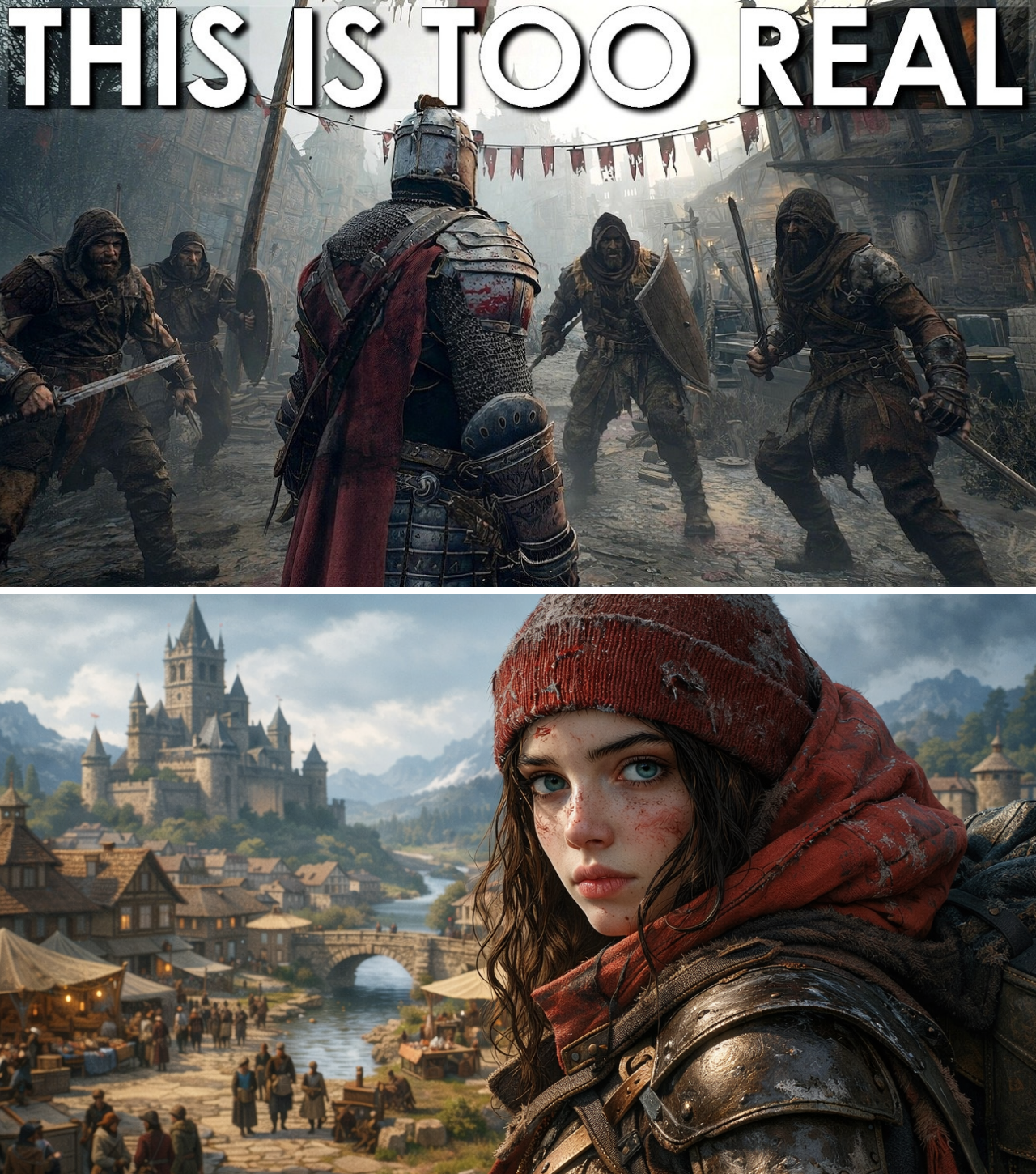
A new third-person open-world RPG from Polish indie studio INTERSTUDIO has taken the gaming community by storm with its latest trailer, which showcases a level of historical and atmospheric realism that has left many players questioning the boundaries of immersion in video games.
Titled The Vernyhorn, the title is set in the myth-haunted landscapes of 9th–10th century Slavic societies, drawing heavily from authentic historical records, folklore, and everyday life of the era rather than conventional high-fantasy tropes. The recently released six-minute gameplay trailer, combined with a dedicated Ray Tracing & DLSS 4.5 technical showcase, demonstrates visuals and systems so grounded that reactions range from awe to genuine unease.
The game’s world feels tangible in ways few modern titles achieve. Developers scanned real architectural elements from Polish historical sites and consulted with reenactors to recreate villages, wooden fortifications, dense forests, and muddy trails with documentary-level detail. Rain visibly soaks clothing, mud affects movement and leaves tracks, torchlight flickers realistically against wet stone, and distant smoke rises from thatched roofs on cold mornings. Environmental audio — wind through trees, distant livestock, creaking wood — adds to the lived-in atmosphere.
Combat, developed in partnership with Polish world-champion swordsman Antoni Olbrychski, emphasizes physicality over spectacle. Motion-captured swordplay features believable weight, momentum, and fatigue; armor clanks and dents under impact, clothing tears naturally, and footing on uneven or slippery ground influences every exchange. Powered by Unreal Engine 5’s Nanite for dense geometry, Lumen for dynamic global illumination, and full NVIDIA DLSS 4.5 + ray-tracing support (as highlighted in Nvidia’s collaboration video), the game maintains high visual fidelity at 4K while delivering smooth performance even in dense, weather-affected scenes.
IGN’s coverage of the ray-tracing trailer praised it as “one of the most convincing medieval environments seen in recent years,” noting how the combination of scanned assets, realistic physics, and subtle NPC behavior creates a sense of presence rarely matched outside of simulation titles. A separate 12-minute gameplay deep-dive uploaded this week has already garnered significant views, with commenters frequently describing the footage as “almost like stepping into a historical reenactment film.”
Community response has been sharply divided. On Reddit’s r/gaming, r/RPG, and r/IndieGaming, threads discussing the trailer have exploded with comments such as “This doesn’t feel like a fantasy game — it feels like actual history” and “The level of detail is insane, but it’s so grounded it’s almost eerie.” Many players celebrate the authenticity, comparing it favorably to the atmospheric depth of The Witcher 3’s early zones or the psychological weight of Hellblade: Senua’s Sacrifice. Others express discomfort, with posts like “I love realistic games, but watching villagers move and react this naturally gave me chills — it’s almost too lifelike.”
X (formerly Twitter) saw similar polarization, with clips of rain-drenched villages and torch-lit night scenes spreading quickly. The game’s Steam page, which launched recently and has already accumulated hundreds of thousands of wishlists, experienced a noticeable surge in traffic following the trailers. YouTube comment sections under the official uploads reflect the same split: excitement over the historical accuracy, meaningful choice-driven narrative, and reactive world systems versus concern that the unrelenting realism might feel oppressive or alienating to some audiences.
INTERSTUDIO’s design philosophy sets The Vernyhorn apart from typical medieval RPGs. There are no dragons, elemental magic, or heroic chosen-one arcs. Instead, the focus is on survival, faith, fear, community, and the moral complexities of early medieval life. Players follow a protagonist shaped by a haunting past, making decisions that ripple through villages and factions in nonlinear ways. Reputation, resource scarcity, seasonal changes, and NPC schedules all influence the world dynamically. The studio has emphasized in interviews that the goal was never spectacle but authenticity: “We wanted players to feel the cold, the weight, the uncertainty of that time — not escape into fantasy, but confront a believable past.”
This approach has drawn comparisons to choice-heavy classics like Baldur’s Gate and Icewind Dale for its deep role-playing systems, while modern influences from The Witcher series (grounded storytelling) and Hellblade (psychological atmosphere) are evident. The technical showcase positions The Vernyhorn as a visual benchmark for current-gen hardware, proving that a small team can compete with larger studios when prioritizing focused, believable worlds over open-world bloat.
The timing aligns perfectly with current trends. Single-player RPGs emphasizing consequence, immersion, and historical grounding are experiencing renewed interest amid live-service fatigue. Early Access is slated for later in 2026 on PC via Steam, with a full release planned for mid-2027 across additional platforms.
Analysts and community voices note that the extreme realism could become the game’s defining strength — carving out a unique niche — or its greatest challenge. While the authenticity and technical polish are winning over dedicated RPG fans, the absence of escapist fantasy elements and the unflinching portrayal of medieval hardship have sparked broader conversations about player comfort and content expectations in 2026. Some have drawn parallels to titles like Kingdom Come: Deliverance, which faced similar debates over its commitment to historical realism, but stress that The Vernyhorn’s Slavic cultural focus and folklore integration set it apart.
Positive momentum is clear: Steam wishlists continue to climb, content creators are producing reaction videos praising the swordplay and world-building, and early previews suggest strong potential for a cult-favorite experience. INTERSTUDIO has teased more deep-dive content in the coming months, including extended looks at narrative branching, survival mechanics, and the reactive NPC ecosystem.
Whether The Vernyhorn ultimately delivers on its promise of unparalleled immersion will be determined when Early Access arrives. For now, the trailers have achieved something rare in today’s crowded market: they’ve stopped the scroll. By making a medieval world feel disturbingly authentic — from the chill of rain on skin to the weight of iron on shoulders — the game has forced players to confront a simple, unsettling question: how real do we actually want our games to feel?
News

KOOPA CRITICAL CONDITION: Critics Slam ‘Super Mario Galaxy’ as ‘Toxic,’ While Fans Power-Up a Record $350M Opening
BOWSER IS “TOXIC”? CRITICS ARE OFFICIALLY LOSING THEIR MINDS! 🐢🍄 The Super Mario Galaxy Movie just hit theaters, but the “expert” reviews are reading like a political manifesto! While fans are driving a massive $350M opening, professional critics are busy…

‘RACHEL ZEGLER ENERGY’: Drama Erupts as ‘Supergirl’ Star Milly Alcock Pre-emptively Blasts ‘Sexist’ Fans Ahead of DCU Debut
⚠️ TRIGGER WARNING: WE’VE OFFICIALLY REACHED “RACHEL ZEGLER” LEVELS OF DRAMA! 💀🔥 Is the DCU DOA? Milly Alcock just went “full Zegler” in a bombshell interview, and the fandom is in a state of absolute NUCLEAR meltdown! Instead of talking…
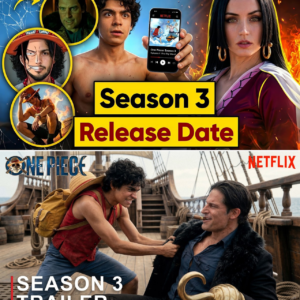
SAILING TO S3: Netflix Secretly Greenlights ‘One Piece’ Season 3 as Leaks Reveal Casting for ‘Pirate Empress’ Boa Hancock
SEASON 3 CONFIRMED ALREADY?! THE STRAW HATS AREN’T STOPPING ANYTIME SOON! 🏴☠️🌊 Netflix just dropped a massive Gomu Gomu no Gatling on the industry! While we’re all still reeling from the Season 2 premiere, secret leaks from Cape Town confirm…

‘HE KNEW THIS WOULD HAPPEN’: Paapa Essiedu Under 24/7 Security After Receiving Death Threats Over Black Snape Casting
“I KNEW THEY WERE COMING FOR ME” – PAAPA ESSIEDU BREAKS SILENCE ON SNAPE DEATH THREATS! 🚨💀 The Wizarding World has turned into a literal nightmare. After being cast as the first Black Severus Snape, Paapa Essiedu has revealed he…

‘THE SHOW IS COOKED’: Why the Casting of a Black Snape is Threatening to Sink HBO’s Harry Potter Reboot Before Premiere
“THE SHOW IS COOKED” – IS THIS THE END OF THE WIZARDING WORLD BEFORE IT EVEN STARTS? 🪄💀 The first teaser for the HBO Harry Potter reboot just dropped, and the internet is in a state of ABSOLUTE MELTDOWN! The…

STREAMING EXODUS: Netflix Hits Subscribers with Second Price Hike of 2026 as ‘Cancellation Horde’ Swells Online
$27 A MONTH FOR NETFLIX? THE STREAMING GIANT JUST WENT TOO FAR! 💸😡 Is this the death of streaming as we know it? Netflix just pulled the trigger on its second price hike in a year, and the internet is…
End of content
No more pages to load