🚨 WITCHER 1 REMAKE BOMBSHELL: Combat REVAMPED BETTER THAN WITCHER 3 – Cut Content RESTORED for PS5 GLORY?! 🗡️🔥😱
Read more:
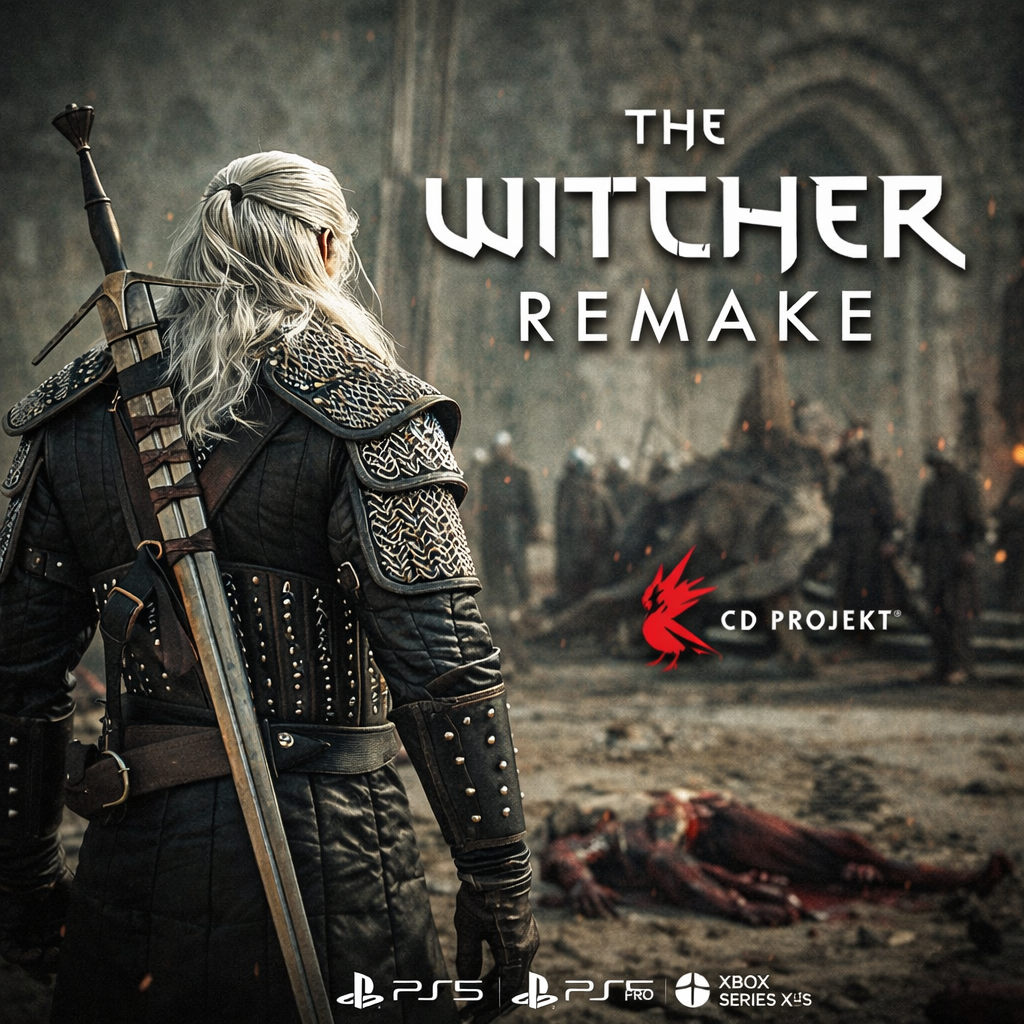
A fresh update from CD Projekt Red (CDPR) on the long-awaited remake of The Witcher (2007) has reignited fan excitement, confirming active – albeit slowed – development while outlining ambitious changes to combat, world design, and outdated elements. Handled by external studio Fool’s Theory under CDPR supervision, the project – built from scratch in Unreal Engine 5 – promises a modern open-world RPG that ditches the original’s clunky hubs for seamless exploration, with a revamped combat system drawing inspiration from The Witcher 3: Wild Hunt but refined for fluidity.
The news stems from CDPR’s Q3 2025 financial report and recent shareholder discussions, where executives detailed a strategic deprioritization: a small team at Fool’s Theory is maintaining progress on foundational systems, tools, and planning, while the bulk of resources funnels into The Witcher 4: Polaris and other unannounced titles. This “keep it warm” approach avoids franchise cannibalization – no clashing releases with the new trilogy – and positions the remake as a post-Polaris bridge, likely landing after 2028. Insiders estimate 3-4 years of full production once ramped up, capitalizing on renewed hype from Witcher 4 (slated for late 2027 or early 2028).
Announced in October 2022, The Witcher Remake (codenamed Canis Majoris) marks CDPR’s effort to revive Geralt’s debut adventure for new-gen audiences. The original, powered by BioWare’s Aurora engine, sold over 2 million copies despite polarizing isometric combat – a rhythm-based system requiring precise timed clicks during sword swings – and hub-structured chapters with frequent loading screens. Critics praised its mature narrative of moral ambiguity, political intrigue, and choice-driven endings in war-torn Temeria, but gameplay aged poorly: slow movement, small locales, and controversial mechanics like collectible “romance cards” (pornographic souvenirs).
Fool’s Theory – comprising Witcher veterans from CDPR’s early days – is overhauling these flaws. CEO Jakub Rokosz has vowed to “remake what’s bad, outdated, or unnecessarily convoluted,” targeting elements that “don’t hold up.” The shift to UE5 enables asset sharing with Polaris, photorealistic visuals, and dynamic weather, while transforming the linear chapter progression into a semi-open world: players can backtrack, explore freely, and tackle quests nonlinearly, resolving original time-flow bottlenecks in Vizima.
Combat represents the boldest evolution. Ditching the divisive rhythm mechanics, the remake adopts Witcher 3-style third-person action – fluid combos, signs (magic), dodges, and swordplay – but with tweaks for tighter responsiveness and modern polish. Leaks suggest enhanced animations, enemy variety, and integration with alchemy/potions, potentially surpassing Witcher 3‘s system (often critiqued for button-mashing) by emphasizing tactical depth and environmental interactions. Fool’s Theory’s experience with Seven Days to Die ports informs console optimizations, targeting PS5, PS5 Pro, PS6, Xbox Series X/S, and PC at 4K/60fps with ray tracing.
Cut content and restorations are a focal point. The original shipped incomplete – axed quests, side stories, and expanded lore from Andrzej Sapkowski’s books – due to crunch and engine limits. The remake restores narrative fidelity via open-world freedom: revisit areas for missed opportunities, deepen faction politics (Scoia’tael elves, Order of the Flaming Rose), and canonize branching paths leading into Witcher 2. Outdated tropes get the boot: romance cards, gratuitous portrayals of women, and fetch-heavy padding are excised or reimagined for sensitivity and pacing. Core arcs – Geralt’s amnesia, the Salmadora conspiracy – remain untouched, with potential new dialogue and epilogues bridging to the saga.
This update arrives amid CDPR’s resurgence. Post-Cyberpunk 2077 launch woes (buggy 2020 debut, $200M+ losses), Phantom Liberty (2023) sold 25 million, and Witcher 3 hit 50 million units. The studio’s 1,200-strong workforce juggles Polaris (UE5, Ciri protagonist), Sirius (multiplayer), Canis Majoris, and Witcher 1 Remake. Q4 2025 earnings loom February 26, with teases possible at Summer Game Fest. Fool’s Theory’s dual role – remake lead plus Polaris support (assets, tech) – tests their mettle for bigger gigs, like rumored Witcher 3 DLC.
Fan reactions split: X buzz praises the “justice” for an underrated gem (Metacritic 81 PC), but gripes over delays echo Cyberpunk trauma. Reddit threads debate combat: “Make it Witcher 3 but deeper – no more QTE slop.” Optimists see low-risk revenue: remake proven IP, no new story costs, hooks newcomers via Netflix’s Geralt (Henry Cavill era nostalgia).
Risks linger. UE5 growing pains (Polaris first UE5 Witcher), scope creep from open-world ambitions, and competition (Dragon Age: The Veilguard echoes, GTA VI). If combat falters – too Witcher 3-lite or Souls-hard – backlash could sting. Yet successes like Resident Evil 4 Remake prove overhauls thrive on respect for roots.
Platforms emphasize consoles: PS5 Pro haptics for sword clashes, adaptive triggers for signs. No microtransactions confirmed; premium model like Witcher 3 ($60-70). Art direction retains gritty Eastern European fairytale vibe – darker palettes, folklore horrors – but vibrant UE5 flair.
As CDPR eyes €1B+ from Polaris, the remake’s “do-or-die” status grows: validate Fool’s Theory, complete Geralt’s canon pre-Ciri, sustain 200M+ players. Recent YouTube breakdowns (millions views) hype it as 2026’s stealth giant, reveal pending. Geralt’s return? Fashionably late, but poised to slay.