Welcome to Derry: Decoding Rose’s Ominous Warning “Others Will Come” and Its Implications for the IT Universe
🚨 IT PREQUEL BOMBSHELL: “Others Will Come” – The Chilling Warning From Rose That Just Changed EVERYTHING About Pennywise’s Origin… And It’s WAY Worse Than We Thought 😱
You think Pennywise is the ultimate evil? Wait until you hear what Rose knows…
In the latest episodes of Welcome to Derry, a blood-soaked survivor named Rose delivers a gut-wrenching warning right before her horrific death: “Others Will Come.”
Fans are spiraling – is this hinting that Pennywise isn’t alone? That he’s just the FIRST of something ancient and unstoppable heading to Derry… or maybe even beyond?
The line hits like a nightmare, tying into Derry’s cursed history and raising massive questions: Are there more entities like It out there? Will defeating Pennywise in the movies just unleash something worse? Or is this the setup for Seasons 2 and 3 that Andy Muschietti has been teasing?
With the finale dropping soon and Bill Skarsgård’s Pennywise more terrifying than ever, this cryptic message has everyone screaming that the IT universe is about to get infinitely darker.
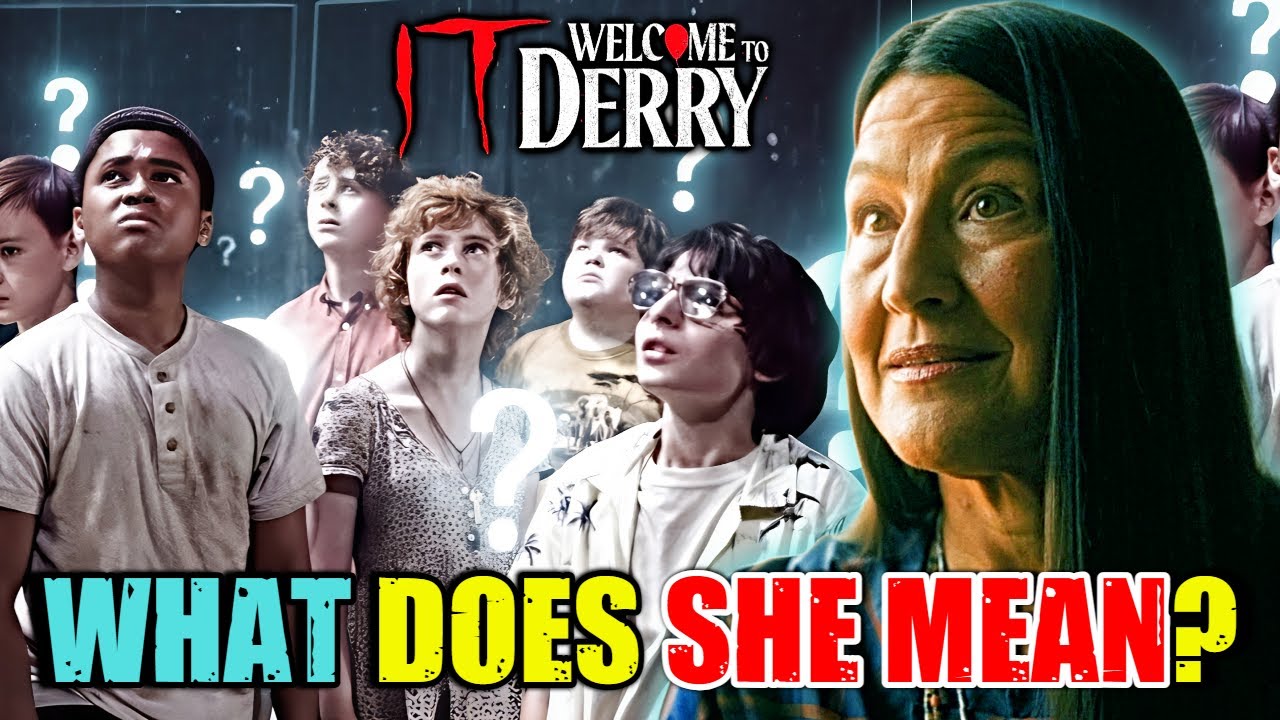
HBO’s highly anticipated prequel series It: Welcome to Derry has kept viewers on edge since its premiere on October 26, 2025, delving deep into the cursed history of Derry, Maine, in the early 1960s. As the nine-episode first season nears its conclusion—with the finale slated for mid-December— one moment in recent episodes has ignited fierce online debate: a dying character named Rose uttering the haunting words, “Others Will Come.”
The scene unfolds amid escalating terror as Pennywise the Dancing Clown (Bill Skarsgård, reprising his iconic role) tightens his grip on the town. Rose, a local resident caught in the crossfire of disappearances and supernatural horrors, confronts the entity in a desperate stand. Bloodied and facing certain death, she issues the cryptic warning directly to Pennywise—or perhaps to the survivors listening—before meeting a gruesome end typical of Stephen King’s visceral style.
Showrunners and director Andy Muschietti have remained tight-lipped, but the line appears to expand on the broader mythology of It. In King’s original 1986 novel, the ancient entity known as It (or Pennywise in its preferred clown form) is described as an extraterrestrial predator that crash-landed on Earth eons ago, hibernating in cycles of roughly 27 years to feed on fear, particularly that of children. The creature is portrayed as singular, a lone cosmic horror drawn to Derry due to the town’s inherent darkness and history of violence.
However, Welcome to Derry—developed by Muschietti, his sister Barbara, and Jason Fuchs—takes liberties to flesh out the prequel era, focusing on the cycle preceding the Losers’ Club battles in the 1980s and 2010s. Set primarily in 1962, the series follows a new group of characters, including a Black family relocating to Derry and a band of local kids uncovering the town’s secrets. Disappearances mount, red balloons appear, and Pennywise emerges from hibernation, manipulating fears with deadly precision.
Rose’s warning suggests that Pennywise may not be entirely unique. Theories circulating among fans and critics posit several interpretations. One popular reading ties it to the entity’s origins: perhaps echoing the meteor impact that brought It to Earth, implying fragments or related beings could arrive in the future. Another views it as psychological warfare—Rose, in her final moments, taunting Pennywise with the idea that humanity (or other forces) will eventually come for him, breaking the cycle.
More chilling speculations point to multiversal or extended lore implications. Muschietti has confirmed plans for multiple seasons, with Season 1 merely “opening a window” into Derry’s curse. In interviews, he’s hinted at exploring why Pennywise remains tethered to the town when it could terrorize elsewhere, and how the entity exploits generational trauma. “Others Will Come” could foreshadow additional ancient evils awakening, aligning with King’s interconnected universe where entities like those in The Dark Tower or other novels overlap.
The character of Rose herself adds layers. Portrayed as a tough, insightful Derry native who senses the town’s rot early on, she serves as a tragic voice of foresight—much like adult characters in King’s works who glimpse the truth but can’t escape it. Her death amplifies the hopelessness that defines Derry, where adults often ignore or enable the horror.
Critics have praised the series for its atmospheric dread and Skarsgård’s chilling performance, with early episodes earning strong reviews for balancing gore, character development, and nods to the 2017-2019 films. The 1960s setting incorporates period-specific tensions—racial dynamics, Cold War paranoia—mirroring how fear manifests differently across eras.
As episodes roll out weekly on HBO and Max, viewership has surged, fueled by viral moments like this one. Online breakdowns and fan forums dissect every frame, with some linking Rose’s line to subtle Easter eggs: flickering lights resembling deadlights, or distant storm imagery evoking It’s arrival.
Whether “Others Will Come” proves literal—hinting at more clowns or entities in future seasons—or metaphorical, underscoring inevitable cycles of violence, it underscores a core King theme: evil persists, adapting and returning. With the season finale approaching and renewals likely given the buzz, Welcome to Derry positions itself as more than a mere origin story—it’s a gateway to an expanded nightmare.
For now, Derry residents—and viewers—can only wonder who or what those “others” might be. One thing remains certain: in Stephen King’s world, the horror rarely ends with one monster.