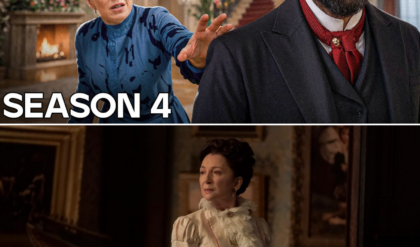
🚨 IT Fans Are LOSING IT Over Welcome to Derry’s Finale Twist – Pennywise just dropped a bombshell that quietly DESTROYS the entire timeline we’ve known for years… and NO ONE saw it coming! 😱🤡
The prequel series was supposed to explain Pennywise’s origins… but instead, it snuck in a massive reveal that’s got everyone screaming “PLOT HOLE!”
Why does the clown suddenly know the future? How does this change EVERYTHING about the Losers’ Club defeat? And is the whole IT saga now broken forever?
The implications are terrifying – and once you spot it, the entire franchise hits different…
Read more:
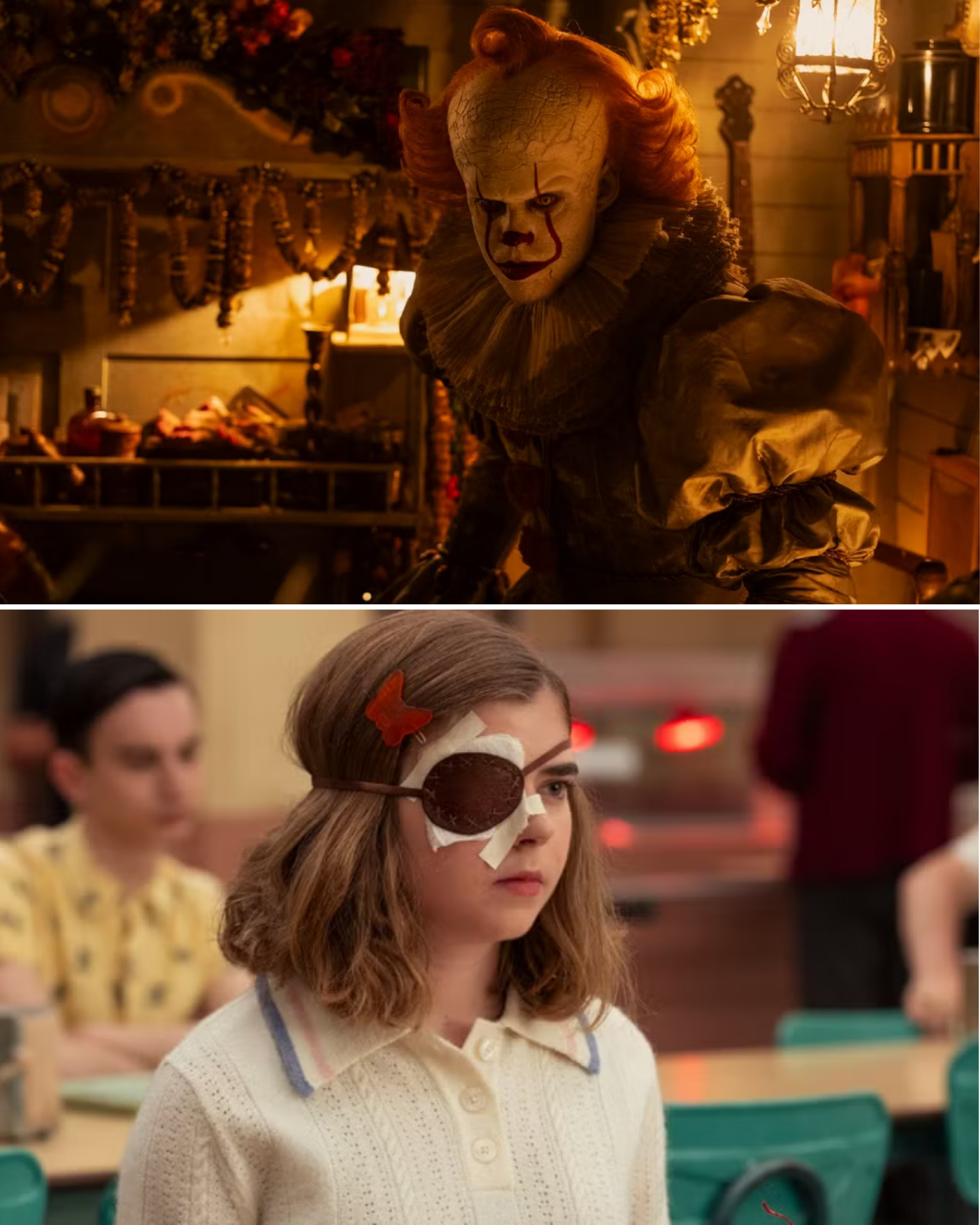
HBO’s highly anticipated prequel series It: Welcome to Derry wrapped its first season on December 14, 2025, with a finale that delivered chills, emotional payoffs, and a controversial reveal about Pennywise that has fans and critics divided. The episode, titled “Winter Fire,” featured Bill Skarsgård reprising his iconic role as the shapeshifting entity, confronting a young Marge Truman (Matilda Lawler) in a tense showdown that exposed new layers to the creature’s perception of time.
Set in 1962 Derry, Maine – 27 years before the events of 2017’s It – the series followed a new group of kids uncovering the town’s dark secrets amid Pennywise’s awakening. The season built to revelations about the clown’s origins, including its adoption of the Pennywise persona from a real human circus performer named Bob Gray in 1908, and its confinement by ancient artifacts. But the finale’s big swing came when Pennywise taunted Marge by showing her a “missing” poster of her future son, Richie Tozier – one of the Losers’ Club members who ultimately helps defeat the entity in It Chapter Two (2019).
In the scene, Pennywise implies it experiences time non-linearly, aware of events across cycles, including its own demise. “It’s not always easy being caged up in one place, one time,” the clown snarls, hinting that a melted artifact has loosened restrictions, allowing greater awareness or influence over timelines. This sets up potential future seasons moving backward to 1935 and 1908, where Pennywise could target ancestors of the Losers’ Club to alter history.
The twist thrilled many viewers for expanding Stephen King’s cosmic horror elements, where the entity (known as “It”) exists outside human constraints in the Macroverse. Showrunners Andy and Barbara Muschietti, along with Jason Fuchs, have teased a three-season arc unpacking Derry’s history while tying into the films. Early reviews praised the season’s atmosphere, social commentary on 1960s issues, and standout performances from young cast members like Lawler, Blake Cameron James as Will Hanlon (future father of Mike), and Arian Cartaya as Rich Santos.
Viewership numbers were strong, with HBO reporting the premiere as one of its top horror launches, boosted by Skarsgård’s return and connections to King’s broader universe, including a younger Dick Hallorann (Chris Chalk) from The Shining. The series also delved into military experiments attempting to weaponize the creature during the Cold War era, adding layers of government conspiracy.
However, the non-linear time revelation has ignited backlash online, with fans accusing it of creating inconsistencies in the established It timeline. In the original novel and films, Pennywise operates on a 27-year cycle, hibernating between feedings without apparent foreknowledge of specific future defeats. Critics argue that if the entity knows the Losers’ Club will kill it, why not eliminate threats more efficiently earlier? For instance, why target Marge dramatically instead of preventing Richie Tozier’s birth outright? Similar questions arise about other ancestors, like Will Hanlon or even Alvin Marsh (Beverly’s future father), glimpsed in earlier episodes.
Forums like Reddit exploded with theories and complaints. One popular thread posited time loops where Pennywise relives cycles post-defeat, attempting changes that ultimately fail to preserve the canon events. Others called it a “paradox mess,” noting that successful alterations would erase the motivation for interference – a classic bootstrap paradox. “If Pennywise prevents the Losers from existing, then it never gets defeated, so why bother going back?” one user summed up.
Defenders counter that the entity isn’t truly time-traveling but perceiving all timelines simultaneously, limited by its “cage” in Derry and sequential manifestations. The melted pillar in the finale frees aspects of this perception, explaining complaints about being trapped in “one time.” This aligns with King’s lore of It as an eternal being opposing the Turtle (Maturin), existing beyond linear time. Andy Muschietti has hinted in interviews that future seasons will explore whether Pennywise is “omnipresent” or moving backward linearly, without retconning the films.
The debate echoes past franchise controversies, like shifts from King’s book timeline (1958 kids’ events) to the movies’ 1989. Welcome to Derry canonizes to the films, not the novel, allowing creative liberties. Still, some worry it narrows storytelling by tying everything to preventing the 2016 defeat, potentially making earlier cycles feel predetermined.
Production wrapped amid strikes, with Skarsgård initially hesitant to return due to the role’s intensity but drawn to exploring Bob Gray’s backstory. Madeleine Stowe’s Ingrid Kersh added intrigue, revealed as the daughter of the human Pennywise, tying into Mrs. Kersh from It Chapter Two.
Ratings sit solid – Rotten Tomatoes at 82% critic approval, audience slightly lower amid finale polarization. HBO has not renewed for Season 2 yet, but Muschietti’s three-season vision and strong buzz suggest it’s likely. The backward structure promises anthological horrors in past eras, like the Bradley Gang massacre in 1935.
Whether the twist elevates Pennywise to a more cosmic threat or burdens the mythos with holes, it’s undeniably sparked conversation. As one viral post put it, the finale didn’t just end a season – it reopened wounds in the It universe. Fans await clarification, hoping future installments resolve paradoxes without unraveling the terror that made Derry iconic.
In a streaming landscape crowded with horror revivals, Welcome to Derry stands out for daring expansions. Flawed or brilliant, it’s keeping Stephen King’s clown dancing in the spotlight.
News

CAKE DECORATING OR HEARTBREAKING? ‘Red, White & Royal Wedding’ Wraps Filming Amid Plot Twist Controversy
STOP EVERYTHING: THE FIRST FOOTAGE OF ALEX & HENRY’S RETURN IS HERE! 👑🇺🇸💍 Shut the front door and throw away the key! Prime Video just dropped the “Royal Wedding” Sneak Peek and our favorite First Son and Prince are officially…

FRASER RIDGE IN MOURNING? ‘Outlander’ Season 8, Episode 7 Sparks Global Panic Over Fergus’ Fate
THE HIGHLANDER’S HEARTBREAK: IS THIS THE END FOR FERGUS FRASER?! 🗡️🩸 Grab your tissues and hold your breath, Sassenachs. Episode 7 of Outlander Season 8 just leaked a teaser that has the entire fandom in a state of absolute MELTDOWN….
GILDED GLOVES ARE OFF: HBO Greenlights ‘The Gilded Age’ Season 4 as Russell-Van Rhijn Rivalry Reaches Fever Pitch
FORGET THE CORSETS, LOCK THE GATES: THE RITZY REBELLION HAS BEGUN! 👗💎 The ink on the Season 3 finale is barely dry, but HBO just dropped the bomb we’ve all been waiting for. Bertha Russell didn’t just break society; she’s…

“FRIENDS WITH BENEFITS”: CRIMSON DESERT PLAYERS DISCOVER ELABORATE GIFTING ECONOMY TO UNLOCK LEGENDARY MOUNTS AND ABYSS GEAR
THE ULTIMATE TRUST GUIDE: TURN EVERY NPC INTO YOUR PERSONAL LOOT BOX! 🤝🎁 Stop treating NPCs like background scenery! In Crimson Desert, the “Trust” meter is the secret to unlocking the most broken items in the game—from Volume 4 crafting…
“A RECKONING HAS COME”: CRIMSON DESERT PLAYERS DISCOVER HIDDEN ‘GOD-TIER’ LIGHTNING SPEAR AFTER GRUELING 30-QUEST MARATHON
THE GOD-SLAYER SPEAR IS REAL: CRIMSON DESERT’S BEST KEPT SECRET! ⚡🔱 I’ve just found a weapon that makes the Hwando look like a kitchen knife. It’s called The Reckoning, and it literally turns you into a God of Thunder. Every…

“A FOUNDATION OF LIES”: NEW CRIMSON DESERT MAP EXPLOIT ALLOWS PLAYERS TO ‘GASLIGHT’ EVERY VENDOR INTO MAXIMUM TRUST
THEY’RE GOING TO PATCH THIS IN HOURS! STOP WASTING YOUR GOLD BARS! 🚨💸 If you are still gifting expensive Silver Pouches or precious books to vendors just to unlock their “Secret Stock,” you are literally playing yourself. I just found…
End of content
No more pages to load