🚨 BREAKING: Winterfell is SILENT… but why are the Starks completely GHOSTING Westeros right now? 😱
Everyone’s hyped for the new HBO hit A Knight of the Seven Kingdoms — Dunk and Egg are out here fighting for honor at the Ashford tourney, Targaryens are scheming, Baratheons are laughing their way through battles… but where the hell are the DIREWOLVES? Where is House Stark?!
No Stark banners. No Northern knights charging in. No whispers of Winterfell in the entire premiere. Fans are losing it: “Is the North asleep? Did they forget about the show?!”
The truth is colder than you think… and it might shatter everything you love about the Starks.
Click to find out why they’re missing — and what it REALLY means for the future of Westeros. ❄️🐺 (You won’t believe the canon reason…)
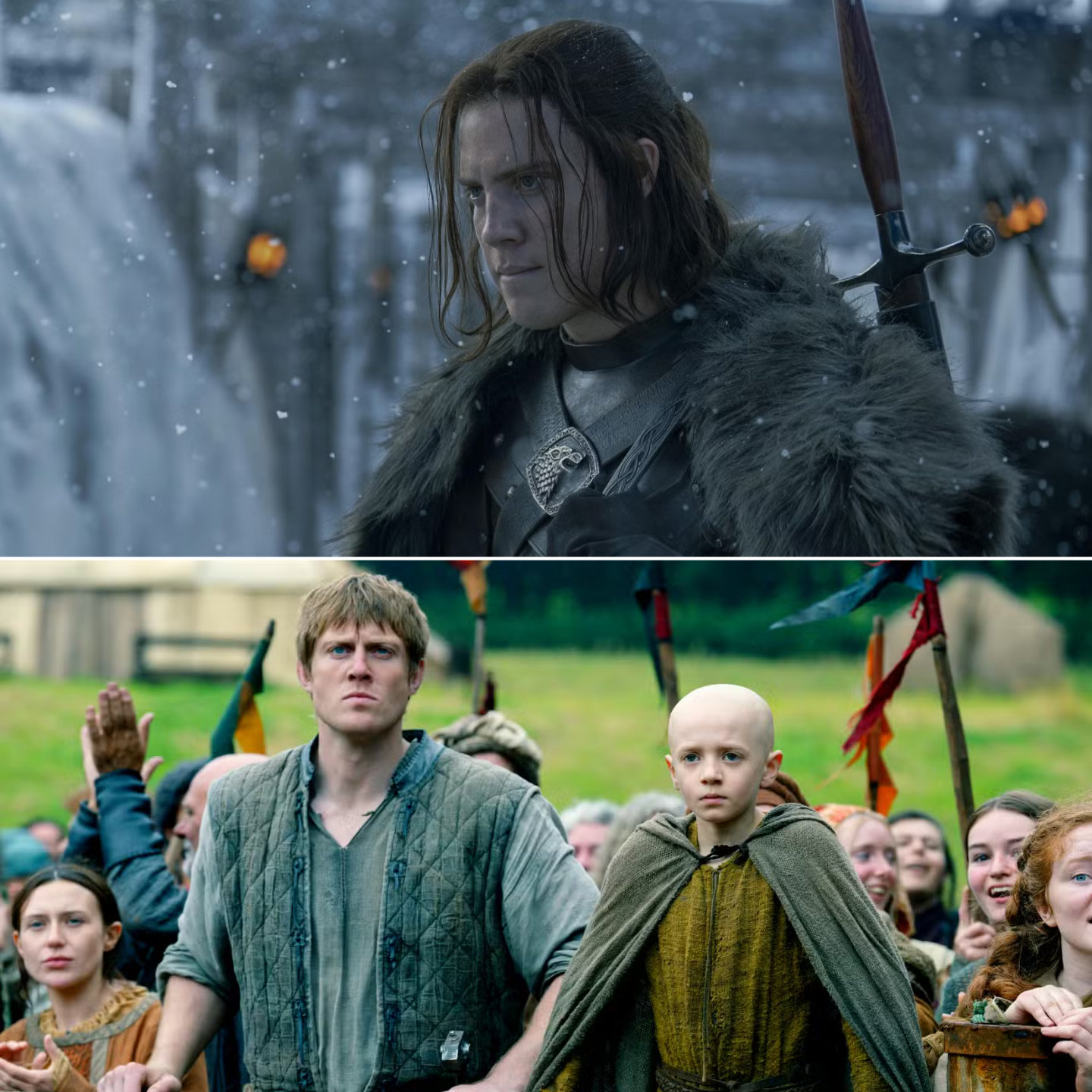
HBO’s latest plunge into the world of Westeros, A Knight of the Seven Kingdoms, premiered on January 18, 2026, to strong reviews and eager fan discussions. The six-episode first season adapts George R.R. Martin’s novella The Hedge Knight, the opening chapter in the beloved Tales of Dunk and Egg series. Set in 209 AC—roughly 90 years before the events of Game of Thrones and several decades after the Targaryen civil war depicted in House of the Dragon—the show follows the adventures of hedge knight Ser Duncan the Tall (played by Peter Claffey) and his enigmatic young squire, Egg (Dexter Sol Ansell), who is secretly Prince Aegon Targaryen.
The premiere episode, “The Hedge Knight,” introduces viewers to a more grounded, character-driven Westeros. Dragons are long extinct, the realm enjoys a period of relative peace under King Daeron II Targaryen, and the story revolves around a grand tournament at Ashford Meadow in the Reach. Knights from prominent southern houses clash for glory, coin, and favor, while Dunk—fresh from burying his late master Ser Arlan of Pennytree—enters the lists hoping to prove his worth.
Yet amid the pageantry of jousts, colorful heraldry, and Targaryen family tensions, one major element is conspicuously missing: House Stark of Winterfell. No direwolf sigils flutter in the wind. No gruff Northern lords or fur-clad warriors make an appearance. No mention of the ancient seat beyond the Neck. For fans accustomed to the Starks’ central role in Game of Thrones, the absence feels almost jarring.
According to multiple reports and analyses from outlets including Screen Rant and ComicBook.com, House Stark does not appear in Season 1—and the reason is rooted firmly in the source material. In Martin’s The Hedge Knight, the Starks play no part in the events at Ashford. The tournament draws participants primarily from the Reach, the Crownlands, the Stormlands, and Dorne, with key figures including princes of House Targaryen (such as Aerion “Brightflame,” Baelor “Breakspear,” and Maekar), Lyonel “the Laughing Storm” Baratheon, and various lesser knights.
The geographical distance plays a significant role. The North is vast and remote, separated from the Reach by hundreds of leagues of rugged terrain. Travel to a southern tourney would be arduous, expensive, and uncommon for Northern houses, especially during peacetime. Moreover, the North adheres to the Old Gods rather than the Faith of the Seven, which dominates southern knighthood traditions. Knighthood requires anointing by a septon, a practice rare among Northerners, who favor their own customs of honor and warfare.
Historical context further explains the isolation. The era follows the quelling of the First Blackfyre Rebellion in 196 AC, a conflict that had ripple effects but left the North largely untouched. Lord Beron Stark, the Warden of the North during this period, dealt with his own regional challenges, including reported Ironborn raids—issues that kept House Stark focused northward rather than meddling in southern affairs.
Fan discussions on platforms like Reddit’s r/asoiaf and social media posts circulating since the premiere highlight the disappointment among some viewers. Comments range from humorous (“No wolves? What’s the point?”) to analytical (“It’s refreshing—no more Stark drama for once”). Others point out that the show’s fidelity to the books is a strength: unlike expansions in House of the Dragon, A Knight of the Seven Kingdoms sticks closely to Martin’s novellas, avoiding unnecessary cameos or crossovers that could dilute the story’s intimate scale.
The premiere establishes Dunk and Egg’s unlikely partnership amid themes of true knighthood, social class, and personal honor. Dunk, a Flea Bottom orphan claiming knighthood without formal proof, embodies the “hedge knight” archetype—poor, wandering, and morally driven. Egg, bald-headed and sharp-tongued, hides his royal identity while learning the ways of the common folk. Their journey to Ashford introduces familiar houses like Baratheon (through the boisterous Lyonel) and Dondarrion, but the narrative remains tightly focused on these two wanderers.
Reports from Forbes, Esquire, and Collider emphasize that the timeline places the series in a post-dragon Westeros still recovering from the Dance of the Dragons. King Daeron II’s rule brings stability, but underlying tensions—particularly within the Targaryen family—simmer beneath the surface. The Starks, by contrast, remain peripheral. Some historical accounts suggest Cregan Stark, the “Old Man of the North” from the Dance era, may have still been alive in his later years around 209 AC, but no records tie him or his descendants to Ashford.
Looking ahead, future seasons could shift the dynamic. Later Dunk and Egg novellas, such as The Sworn Sword and The Mystery Knight, continue the duo’s travels without major Stark involvement. However, the unpublished The She-Wolves of Winterfell—the fifth tale in the series—promises a Northern setting, with Dunk and Egg heading to Winterfell amid intrigue involving Stark women. If HBO renews the show beyond Season 1, fans might finally see direwolves and weirwood trees on screen.
For now, though, A Knight of the Seven Kingdoms delivers a refreshing change of pace from the high-stakes politics and betrayals that defined its predecessors. The premiere has drawn praise for its lighter tone, strong performances (particularly Claffey’s earnest Dunk and Ansell’s precocious Egg), and faithful adaptation. Episodes air Sundays at 10 p.m. ET/PT on HBO and Max, with the season finale scheduled for February 22, 2026.
The absence of House Stark isn’t a snub—it’s a deliberate choice that honors Martin’s vision. In a franchise often criticized for sprawling casts and convoluted plots, this focused tale of two outsiders reminds viewers that Westeros is vast, and not every great house needs to dominate every story.
Whether the Starks stay in the shadows for the full season remains to be seen, but early episodes suggest the North will remain quiet—at least until Dunk and Egg’s road inevitably turns colder. For fans missing the familiar fur and ice, patience may be the key. Winter is always coming… just not this season.
News
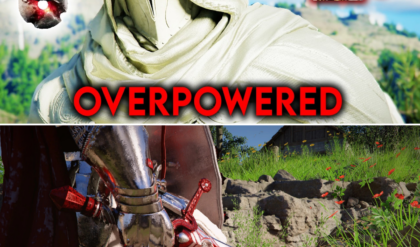
CRITICAL BREAKTHROUGH: Why the Kuku Flame-Resistant Armor Is the Single Best Piece of Gear in Crimson Desert
THE “BROKEN” GEAR PIECE THAT CHANGES EVERYTHING! 🛡️🔥😱 Stop wasting your Abyss Gear slots! This one armor piece can max out your Critical Rate and free up your entire build. Meet the Kuku Flame-Resistant Armor! 🚨 The Crimson Desert community…
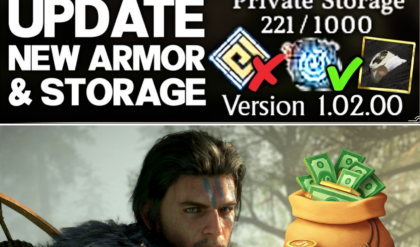
THE GREAT EXPANSION: Crimson Desert’s 1.02.00 Update Finally Fixes Storage and Enables ‘Infinite’ Artifact Farming
THE 1,000 SLOT REVOLUTION IS HERE! 🛠️📦✨ Crimson Desert Patch 1.02.00 is a total game-changer—Say goodbye to inventory stress forever! 🚨 Greymanes, the update we’ve been begging for has finally arrived! Pearl Abyss just nuked the biggest complaint in the…
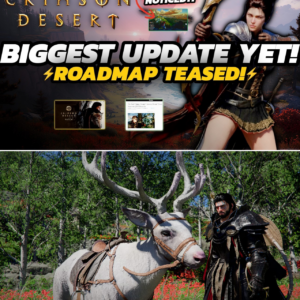
THE GREAT REPAIR: Pearl Abyss ‘Resurrects’ Crimson Desert with Record-Breaking Patch and Stealth Roadmap Teasers
THE UPDATE THAT FIXED EVERYTHING! 🛠️📦✨ Pearl Abyss just dropped a massive “W” with the 1.02 Patch: 1,000 Storage Slots, “Classic” controls, and the legendary Helm-Off toggle are finally HERE! 🚨 The Crimson Desert community is cheering as the devs…
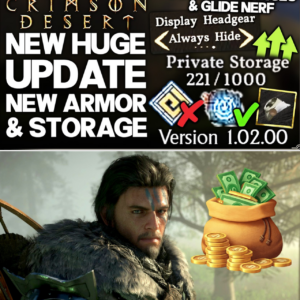
PYWEL REBORN: Massive Crimson Desert Update Unleashes 1,000-Slot Storage and the Long-Awaited ‘Helm Off’ Toggle
THE UPDATE WE’VE ALL BEEN WAITING FOR IS HERE! 🛠️📦🐺 Crimson Desert Patch 1.02 just dropped, and it is NUKING the inventory struggle! 1,000 slots of storage? YES PLEASE! 🚨 The Crimson Desert community is celebrating today as Pearl Abyss…
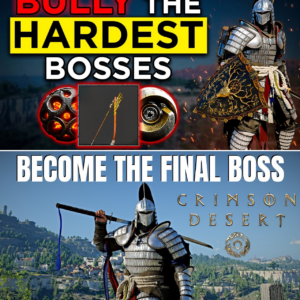
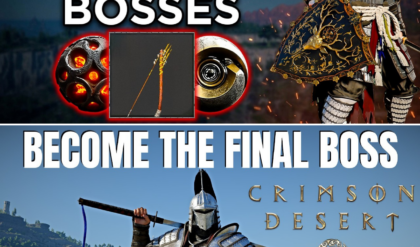
THE TITAN SLAYER: New ‘Infinite Stun’ Meta Reveals How to Bully Crimson Desert’s Most Overwhelming Bosses
STOP GETTING BULLIED BY OVERWHELMING BEINGS! ⚔️🔥👹 Are the Forgotten General or Belellith flattening you like a runaway train? The “Infinite Stun” and “Volcanic Archer” metas are officially here to save your playthrough! 🚨 The Crimson Desert community is reeling…
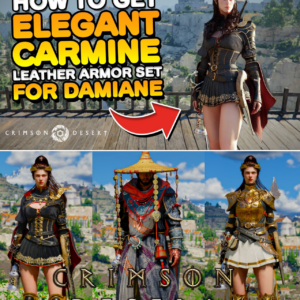
DEADLY ELEGANCE: ‘Elegant Carmine’ Armor Blueprint Discovered for Damiane After High-Stakes Jungle Raid
UNLEASH THE ELEMENTAL PRINCESS: DAMIANE’S CARMINE ARMOR FOUND! 🎭🛡️✨ Stop letting Damiane wear basic gear! The blueprint for the ultra-rare Elegant Carmine Leather set has finally been located—but beware, this treasure is buried deep in a trap-filled cave! 🚨 The…
End of content
No more pages to load