🚨 “IT’S OVER FOR US!” Hollywood writers are PANICKING after that insane Chinese AI clip of Tom Cruise vs Brad Pitt fighting — and it’s going VIRAL like wildfire! 😱🥊
15 seconds… TWO simple prompts… and BOOM: hyper-realistic rooftop brawl, punches flying, voices spot-on, camera sweeps like a $200M blockbuster. No actors, no sets, no crew — just ByteDance’s Seedance 2.0 spitting out cinema-quality deepfakes from China!
Read more:
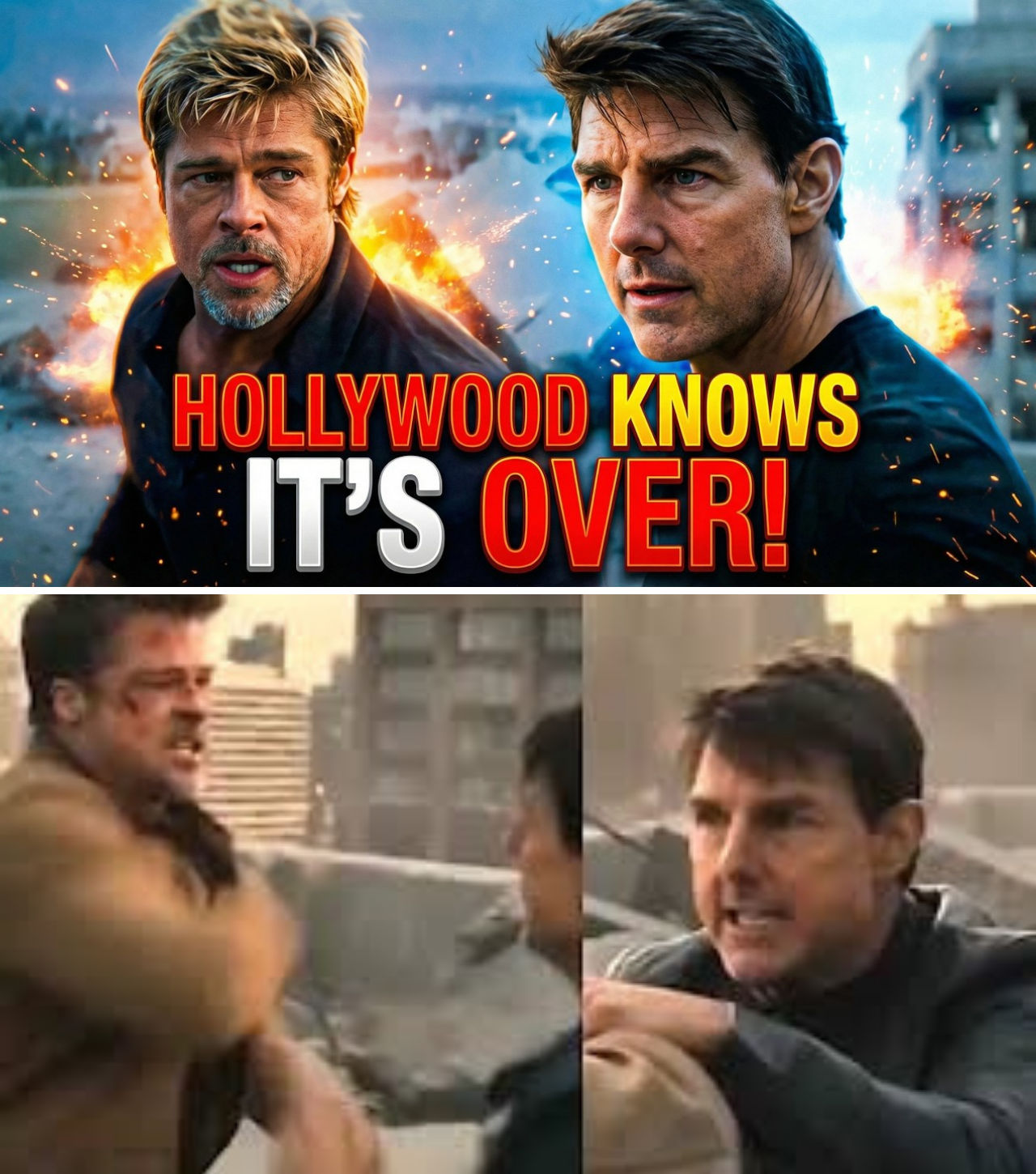
A hyper-realistic 15-second AI-generated video depicting Tom Cruise and Brad Pitt trading blows in a cinematic rooftop fight has ignited panic across Hollywood, with one prominent screenwriter declaring the technology signals the potential end for traditional creators.
The clip, created using Seedance 2.0 — a new AI video generation tool from ByteDance, the Chinese parent company of TikTok — exploded online in February 2026. Posted by Irish filmmaker Ruairí Robinson, who described generating it from a simple two-line prompt, the scene features sweeping camera angles, realistic stunt choreography, crisp sound effects, and haunting music. Cruise’s character accuses Pitt’s of knowing “too much about our Russia operations,” leading to a brutal exchange that ends with both characters plummeting amid crumbling structures.
Rhett Reese, co-writer of Deadpool & Wolverine, Zombieland, and other hits, reacted bluntly on X: “I hate to say it. It’s likely over for us.” Reese elaborated that the clip demonstrates AI’s ability to produce professional-grade content without human labor, predicting Hollywood faces a revolution — or decimation — as gatekeeping crumbles. His post amplified fears that writers, actors, directors, and crews could see jobs vanish as tools like Seedance democratize high-end visuals.
The video’s realism marks a leap forward from earlier AI outputs often dismissed as “slop.” Seedance 2.0 excels at consistent character movement, lighting, and voice synthesis, allowing users to generate dynamic scenes from text, images, or audio inputs. While access remains limited outside China via platforms like Jimeng AI, the clip’s virality — millions of views across X, YouTube, and Instagram — highlighted ByteDance’s edge in the global AI race.
Hollywood’s response was swift and sharp. The Motion Picture Association condemned the tool for “infringement at a massive scale,” accusing ByteDance of unauthorized use of copyrighted likenesses and characters. Disney and Paramount issued statements claiming violations through reproduction and derivative works without consent. SAG-AFTRA labeled it an “unacceptable” threat to actors’ livelihoods, while the Human Artistry Campaign called it an “attack on every creator around the world.”
ByteDance responded by announcing guardrails to curb celebrity likeness generation and IP misuse, though critics questioned enforcement given the tool’s beta rollout and rapid adoption in China.
The controversy revives debates from the 2023 SAG-AFTRA and WGA strikes, where AI protections were hard-won but limited. Writers feared scripts generated by tools like ChatGPT; actors worried about digital replicas. Seedance escalates those concerns by producing finished scenes that rival studio output.
Some in Hollywood see opportunity. Indie filmmakers praise AI for lowering barriers to entry, enabling quick prototyping or effects without budgets. Yet the Cruise-Pitt clip underscores risks: unauthorized deepfakes could flood markets, dilute star value, or enable propaganda and misinformation.
Reese’s “it’s over” sentiment echoed across industry circles. Commentators noted the clip’s polish — no visible artifacts, fluid motion, synced dialogue — makes it hard to distinguish from real footage. One analyst called it a “wake-up call” for unions and studios to accelerate AI negotiations or face obsolescence.
Defenders argue the panic is premature. The video, while impressive, relies on existing training data likely including copyrighted material — raising legal questions ByteDance may face in U.S. courts. Some clips attributed to Seedance show inconsistencies on closer inspection, suggesting hybrid creation (green screen plus AI enhancement) rather than pure text-to-video.
Still, the clip’s impact is undeniable. It fueled discussions on X and Reddit about AI’s role in entertainment’s future. Supporters hail it as innovation from China challenging Western dominance; detractors view it as theft that undermines American jobs.
For Cruise and Pitt — icons whose careers span decades of practical stunts and star-driven blockbusters — the unauthorized use highlights vulnerability. Cruise, known for real-world action in Mission: Impossible, and Pitt, celebrated for physicality in Fight Club and Bullet Train, now appear in fabricated fights without involvement.
As Seedance evolves and competitors like OpenAI’s Sora advance, Hollywood grapples with adaptation. Studios explore AI for pre-vis, de-aging, or VFX, but resist full replacement of human creativity. Unions push for stricter consent and compensation rules.
The viral moment may accelerate policy changes. ByteDance’s guardrails suggest responsiveness to backlash, but the genie is out: tools exist, and users — amateur and pro — will exploit them.
Whether this spells doom or evolution remains debated. Reese’s warning captures the anxiety: AI can now mimic Hollywood’s gloss with minimal input. For writers and creators, the question is no longer “if” disruption arrives, but how fast — and who controls it.
The Cruise-Pitt clip, born from a brief prompt in Beijing servers, has become a symbol of that uncertainty. As one observer put it: “Hollywood built empires on stories. Now stories can be built without Hollywood.”
News
The Art of Discovery – Why Ulzok’s Cave Rewards the “Unrushed” Player
Think you’ve cleared the map? You’re missing the secret gear hidden in Ulzok’s Cave. 🕵️♂️🔥 Exploration in Crimson Desert is all about those “Aha!” moments, but some secrets are buried so deep the community is still hunting for them. We’re…
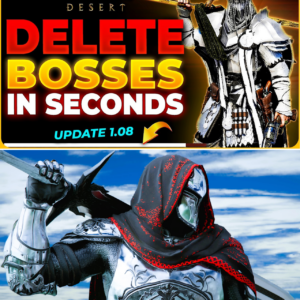
The Gold Rush – Maximizing Wealth in the Current Crimson Desert Meta
21 Gold Bars in ONE run? Stop wasting your time with outdated gold farms. 💰🔥 If you’re still grinding low-yield trade routes, you are falling behind. We’ve discovered a “golden” method that turns your inventory into a gold mine in…
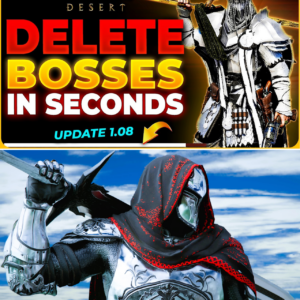
The New Meta – Analyzing the Post-1.08 “Boss-Melter” Build
The game-breaking build that just dropped after Update 1.08. 🔫🗡️ Pearl Abyss just enabled guns for Cliff, and the meta has officially been broken. We’re talking about a Two-Handed Sword + Bleed Shotgun hybrid that deletes bosses in seconds. This…
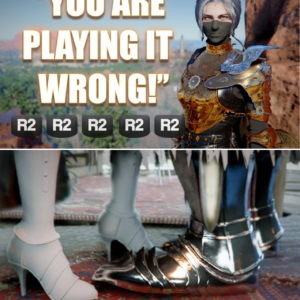
Beyond the Surface – Why Crimson Desert’s Combat Demands Mastery
Stop mashing buttons! You’re playing Damiane like a beginner. 🎮🔥 Think the combat in Crimson Desert is just “hold R2 to win”? You couldn’t be more wrong. While everyone else is stuck on basic attacks, the top-tier players have already…
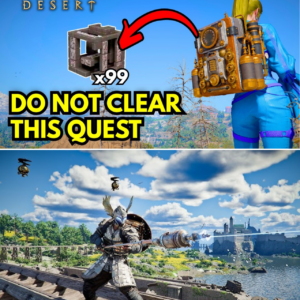
The Efficiency Trap – Optimizing Abyss Artifact Farming in Crimson Desert
Stop grinding combat. This “broken” Disruptor farm nets you 30+ Abyss Artifacts in minutes. ⚡🔥 Everyone is out here fighting bosses for XP, but the real secret to farming Abyss Artifacts is actually… not fighting at all. By utilizing the…
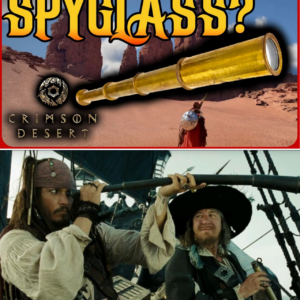
The Horizon Problem – Why a Spyglass is the Missing Link in Crimson Desert’s Exploration
Crimson Desert’s map is massive, but we’re playing half-blind. Pearl Abyss, we need to talk. 🔭🔥 Exploration in Crimson Desert is top-tier, but there’s one glaring omission that’s killing the experience: a functional, portable Spyglass. Sure, we have Photo Mode,…
End of content
No more pages to load