THE 1,200HP PARADOX: INSIDE THE BEHAVIORAL IDENTITY CRISIS OF THE CAR PASS AUDI R8 GT RWD IN FORZA HORIZON 6
Audi’s final V10 swan song just arrived in the Forza Horizon 6 Car Pass, but players pushing it past the 1,200-horsepower mark are running directly into a bizarre mechanical identity crisis! 🤯
Franchise veterans are completely baffled by a twin-turbo telemetry anomaly that makes this exclusive mid-engine weapon handle flawlessly at hyper-speeds, yet the moment you initiate a drift, the car flat-out refuses to turn. Is Playground Games experimenting with a hidden new tire-friction physics model behind the scenes, or is this “weird” German masterpiece secretly broken?
The multi-platform community is actively fighting over this mechanical riddle—get the exact 1,200HP tuning specs, layout breakdown, and free-roam diagnostics below! 👇🔥
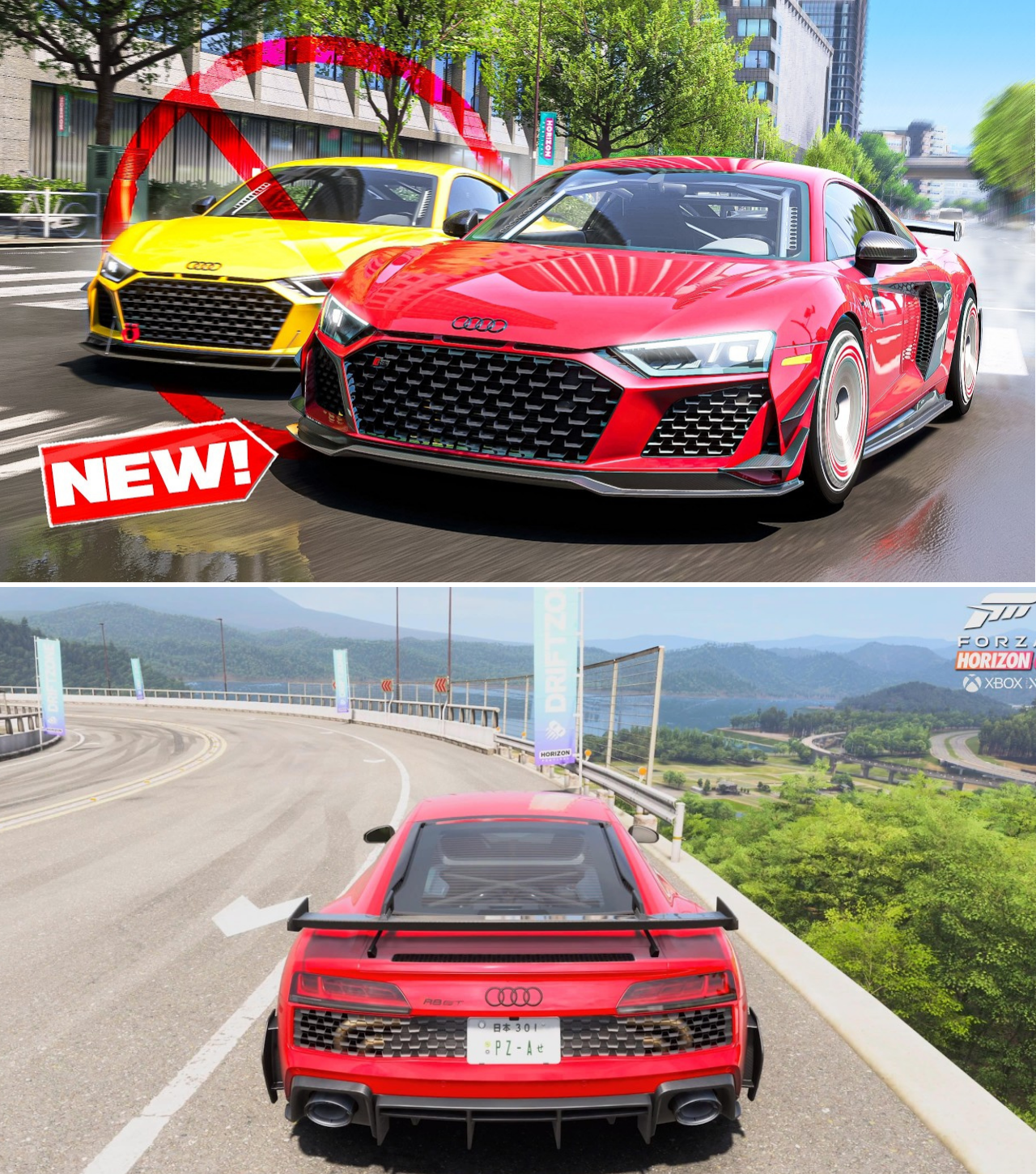
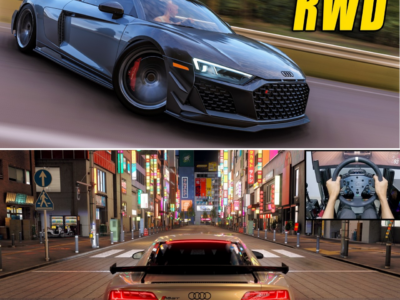
The final hurray for Audi’s internal combustion masterpiece has officially landed on the virtual tarmac of Japan, and it is making things incredibly complicated for elite tuners. Deployed as a centerpiece of the ongoing Car Pass expansion for Forza Horizon 6, the 2023 Audi R8 Coupé V10 GT RWD represents the absolute pinnacle of the brand’s naturally aspirated engineering before its permanent retirement. However, when subjected to the franchise’s extreme garage modification limits, this rare rear-wheel-drive exotic has exposed a deeply confusing behavioral paradox that has divided community physics analysts.
A comprehensive technical and track-testing review published by prominent automotive gaming authority BlackPanthaa has brought the car’s split personality into the spotlight. Titled as an outright “weird” mechanical anomaly, the investigation explores what happens when the mid-engine platform is stripped of its stock constraints and boosted via twin-turbochargers to an unstable 1,200 horsepower. The telemetry feedback presents a baffling riddle: the vehicle showcases pristine, track-dominant cornering grip at high speeds, yet completely locks up and refuses to pivot the moment a driver attempts to transition into a high-angle slide.
The Last V10 Hurrah: First Impressions and Customization Friction
For over a decade, Audi’s identity within racing sandbox titles has been structurally tethered to its legendary Quattro All-Wheel Drive (AWD) drivetrain, providing maximum traction stability at the cost of rotational agility. The arrival of the 2023 GT RWD edition explicitly shatters that mold, delivering a factory-built rear-wheel-drive drift platform that alters weight distribution dynamics across the map’s mountain passes.
Initial telemetry inspections highlight that while the car’s factory sound profile is beautifully captured—retaining the crisp, aggressive scream of the naturally aspirated 5.2-liter V10 engine—Playground Games is drawing mild criticism over a perceived lack of body customization options. Unlike other high-profile Forza Edition platforms that feature radical wide-body changes or exposed carbon-fiber aerodynamics, the R8 GT RWD forces builders to rely heavily on factory carbon inserts and standard wing metrics. Despite the cosmetic limitations, the vehicle’s baseline structure remains an absolute magnet on the Auction House, highly coveted as part of the fifth official Car Pass delivery cycle.
The 1,200HP Trajectory: Telemetry Metrics
To push the vehicle to the absolute ceiling of the performance index, advanced tuners are executing a severe forced-induction transformation. By implementing twin-turbocharger configurations and optimizing internal piston compression ratios, the R8’s output expands from its standard parameters into an aggressive 1,200-horsepower monster.
When launched on high-speed highway straights or flowing circuits, the vehicle behaves with surprising composure. The newly optimized tire telemetry in Forza Horizon 6 manages the immense power load beautifully, keeping the rear axle planted without the violent, uncontrollable fishtailing typically observed in front-engine 1,000+ HP configurations. The mid-engine balance acts as an effective stabilizer, turning the car into an incredibly reliable high-speed cruise weapon capable of effortlessly threading through dense Japanese traffic at speeds exceeding 230 mph.
The Mechanics of a Lockdown: Grip vs. The Turn Refusal
The “weirdness” that has the community baffled occurs when the 1,200HP build is pushed past traditional track-racing lines and forced into technical drift zones or loose-surface hairpins. Under normal Forza physics parameters, a rear-wheel-drive platform backed by 1,200 horsepower should instantly break traction upon heavy throttle input, stepping out the rear end for seamless counter-steering adjustments.
Instead, the R8 GT RWD exhibits a radical mechanical counter-effect. If the vehicle is pushed into an aggressive angle with standard drift configurations, the front steering rack experiences an abrupt understeer stall. “The car handles so well, unless if you drift… it keeps sliding and refuses to turn,” community tracking data notes.
Rather than executing a predictable, smoke-filled arc, the vehicle’s internal stability logic triggers an aggressive front-end lock, causing the car to plow straight ahead into boundary walls. This bizarre friction curve suggests that the tire-adhesion algorithms inside Forza Horizon 6 are calculating mid-engine RWD weight transfer so intensely that the front wheels lack the necessary downforce to alter direction once a slide is initiated, creating a frustrating barrier for casual drift enthusiasts.
The Live-Service Horizon
As the community continues to test various differential adjustments and alignment angles to break the R8’s stubborn front-end understeer, the vehicle stands as a prime example of the franchise’s shifting physics philosophy. Playground Games is moving away from the highly arcade-style drift behaviors of past titles, introducing micro-parameters where weight distribution and drivetrain design carry massive consequences.
For the active multi-platform player base currently tracking the final stages of Update 2’s festival loop, the 1,200HP Audi R8 GT RWD remains a fascinating, deeply paradoxical enigma. It is an unmatched, razor-sharp precision instrument for high-speed grand touring and highway racing—but an absolute structural puzzle for anyone looking to slide sideways into the neon corners of Tokyo.