The most unsettling part – “all who know you shall rejoice in your passing” – has fueled debate
😱 Egg’s DARK prophecy just dropped in A Knight of the Seven Kingdoms… and it sounds EXACTLY like he’s headed to become the NEXT Mad King! 🔥👑
Fans are FREAKING OUT: Is sweet, bald-headed Egg (the boy who hates his Targaryen name) doomed to burn everything down like his grandson Aerys II?
Read more:
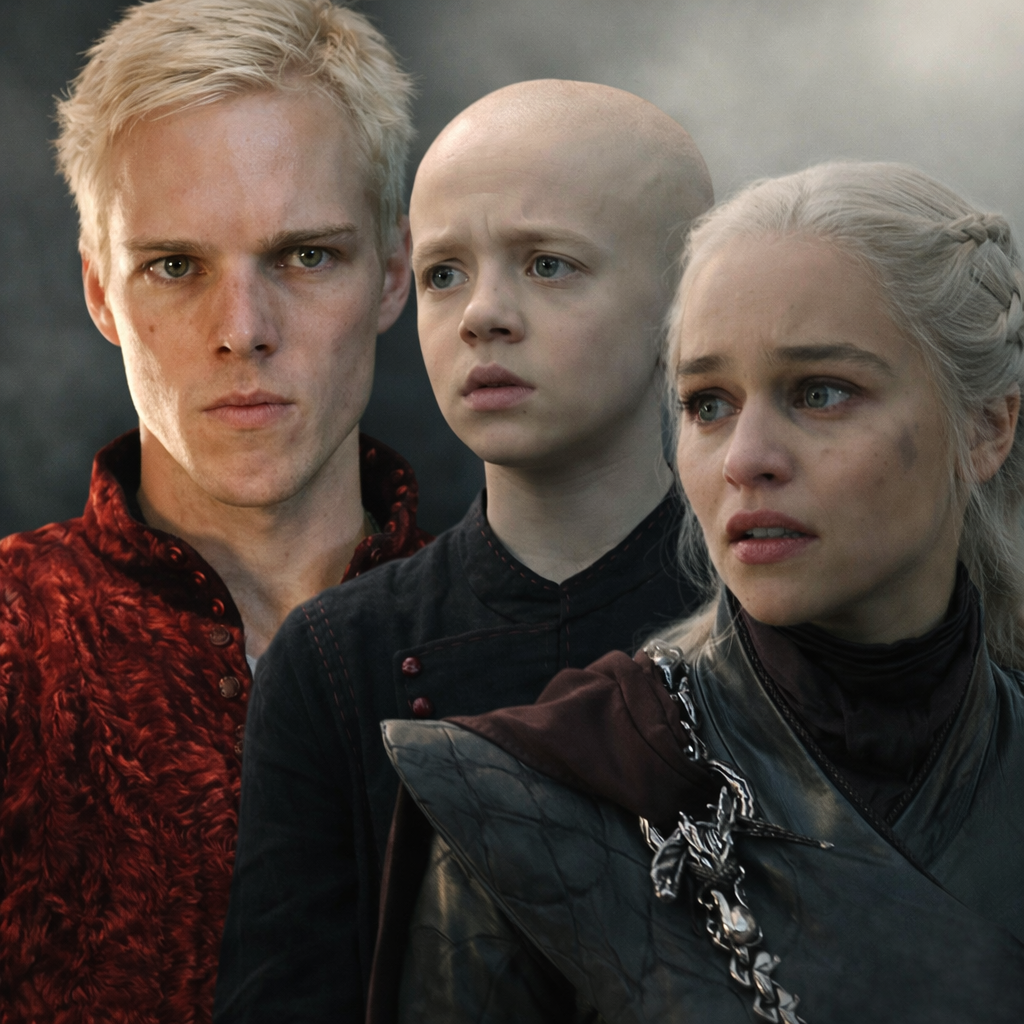
HBO’s A Knight of the Seven Kingdoms delivered one of its most chilling moments yet in Episode 3, “The Squire,” when a fortune teller delivered a grim prophecy to young Egg that has left viewers questioning the boy’s future – and whether he might follow the path of his infamous descendant, the Mad King Aerys II Targaryen.
The scene unfolds as hedge knight Ser Duncan the Tall (Peter Claffey) and his squire Egg (Dexter Sol Ansell) wander the tent village near Ashford Meadow. Dunk pays for a fortune reading, receiving a lighthearted prediction of wealth greater than the Lannisters’. When he insists the woman read Egg’s fortune, her tone shifts dramatically. She declares: “You shall be king… and die in a hot fire, and worms shall feed upon your ashes. And all who know you shall rejoice in your passing.”
Dunk laughs it off as typical carnival exaggeration, but Egg’s reaction is far different – a look of quiet horror crosses his face. For those familiar with George R.R. Martin’s A Song of Ice and Fire universe, the words carry immediate weight. Egg is no ordinary boy; he is Aegon Targaryen, son of Prince Maekar, hiding his identity to escape the burdens of his family. The prophecy aligns eerily with his eventual fate.
Egg does become king. Through a series of untimely deaths among his relatives – including his father Maekar and older brothers – the distant heir ascends as Aegon V Targaryen, often called “Aegon the Unlikely” due to his improbable path to the Iron Throne. His reign, beginning in 233 AC, lasts 26 years and is marked by progressive reforms aimed at improving the lives of common folk, influenced heavily by his travels with Dunk.
Yet the prophecy’s darker elements also prove true. Aegon V dies in a massive fire during the Tragedy at Summerhall, an event shrouded in mystery even in Martin’s books. The incident occurs when Aegon attempts to hatch dragon eggs using wildfire and blood magic, hoping to restore dragons to House Targaryen. The ritual goes catastrophically wrong, engulfing the castle in flames. Aegon perishes in the blaze, along with others including the young Rhaegar Targaryen’s birth (though details remain vague). His body is reduced to ashes, fulfilling the “worms shall feed” line.
The most unsettling part – “all who know you shall rejoice in your passing” – has fueled debate. Many interpret it as evidence of Aegon V’s unpopularity by the end of his rule. His policies, while well-intentioned, alienated powerful lords through attempts to curb their privileges and enforce peasant rights. Some accounts suggest growing discontent, with rumors of tyranny or obsession. However, the rejoicing may stem more from relief at escaping the disaster’s aftermath than hatred of the king himself. The prophecy, like many in Martin’s world, is deliberately ambiguous and misleading on the surface.
Crucially, Egg does not become the Mad King. That title belongs to his grandson, Aerys II Targaryen, who rules decades later and descends into paranoia, cruelty, and obsession with fire – famously burning enemies alive with wildfire. Aerys is the ruler overthrown in Robert’s Rebellion, the event that sets Game of Thrones in motion. Egg is Aerys’ grandfather: Aegon V fathers Jaehaerys II, who fathers Aerys II.
The prophecy’s fire imagery has led some casual viewers to mistakenly assume Egg turns mad like Aerys. Online forums buzzed with confusion after Episode 3, with non-book readers speculating Egg might become the infamous pyromaniac king. But canon firmly separates the two. Aegon V is remembered more as a reformer than a tyrant, though his later years saw increasing frustration and radical measures, including the Summerhall experiment.
The Tragedy at Summerhall remains one of Martin’s most enigmatic events. It has never been fully detailed in the published books – Fire & Blood ends before it, and the Dunk and Egg novellas stop earlier. Theories abound: Was it purely an accident? Did Aegon deliberately court disaster in pursuit of dragons? Some fans speculate the “rejoicing” ties to survivors or lords glad to see the end of his dragon-obsessed phase, which could have destabilized the realm further.
In the show, the prophecy serves as potent foreshadowing. It underscores the Targaryen curse of fire and blood, even for well-meaning members like Egg. His bond with Dunk, rooted in humility and justice, contrasts sharply with the family’s history of madness. Dunk himself rises to become Lord Commander of the Kingsguard under Aegon V, dying (presumably) at Summerhall alongside his former squire.
The inclusion of this moment highlights A Knight of the Seven Kingdoms‘ approach: staying faithful to Martin’s text while planting seeds for larger lore. The series’ grounded, character-focused storytelling has won praise, with high ratings reflecting audience appreciation for its departure from the spectacle-heavy predecessors. Yet prophecies like this remind viewers that even in a smaller-scale tale, the shadows of Targaryen destiny loom large.
For book readers, the prophecy is no surprise – it’s drawn directly from The Hedge Knight, where the fortune teller’s words haunt Egg subtly. The show amplifies its impact through strong performances: Ansell’s wide-eyed fear sells the moment, making Egg’s vulnerability palpable.
As the first season builds toward the Trial of Seven and beyond, questions linger. Will future episodes delve into Summerhall’s details? How will the show handle Aegon V’s legacy without spoiling too much? Parker’s team has shown restraint, but teases like this keep fans hooked.
Ultimately, the prophecy does not paint Egg as mad – it reveals a tragic irony. A king who sought to break the cycle of Targaryen excess dies pursuing the very power (dragons) that corrupted so many before him. His passing brings relief not from hatred, but from the chaos his ambition unleashed. In Martin’s world, prophecies rarely lie outright; they twist the truth in ways that sting the most.
Whether A Knight of the Seven Kingdoms will explore these depths remains to be seen. For now, the fortune teller’s words stand as a stark warning: even the most unlikely king cannot escape the fire that defines his bloodline.