STOP PLAYING FAIR! 🃏 You’re losing thousands of Silver by actually trying to win!
The devs have tricked us all! In Crimson Desert, the poker mini-game isn’t about the cards—it’s about the ELBOWS. 😱 While you’re stressing over card combos, the pros are intentionally LOSING just to bait the NPCs into cheating. Why? Because accusing a cheater splits their entire purse among the remaining players, and if you’re the only one left… you take it ALL! 💰
I found the ultimate “Cheater Hunting” spot in Tashulp (Northeast desert) where the buy-in is a massive 300 silver. Forget the cards: if the dealer’s elbow is low, or if they put cards down with their right hand, they’re dead meat. I’m sharing the secret “Elbow Tell” and the “Nexus Refresh” strategy that lets you farm infinite silver without ever needing a good hand. This is officially the fastest way to get rich in Pywel before they patch the NPC tells! 🔥
Ready to earn more by losing? The full breakdown of the “Tashulp Hustle” is below! 👇
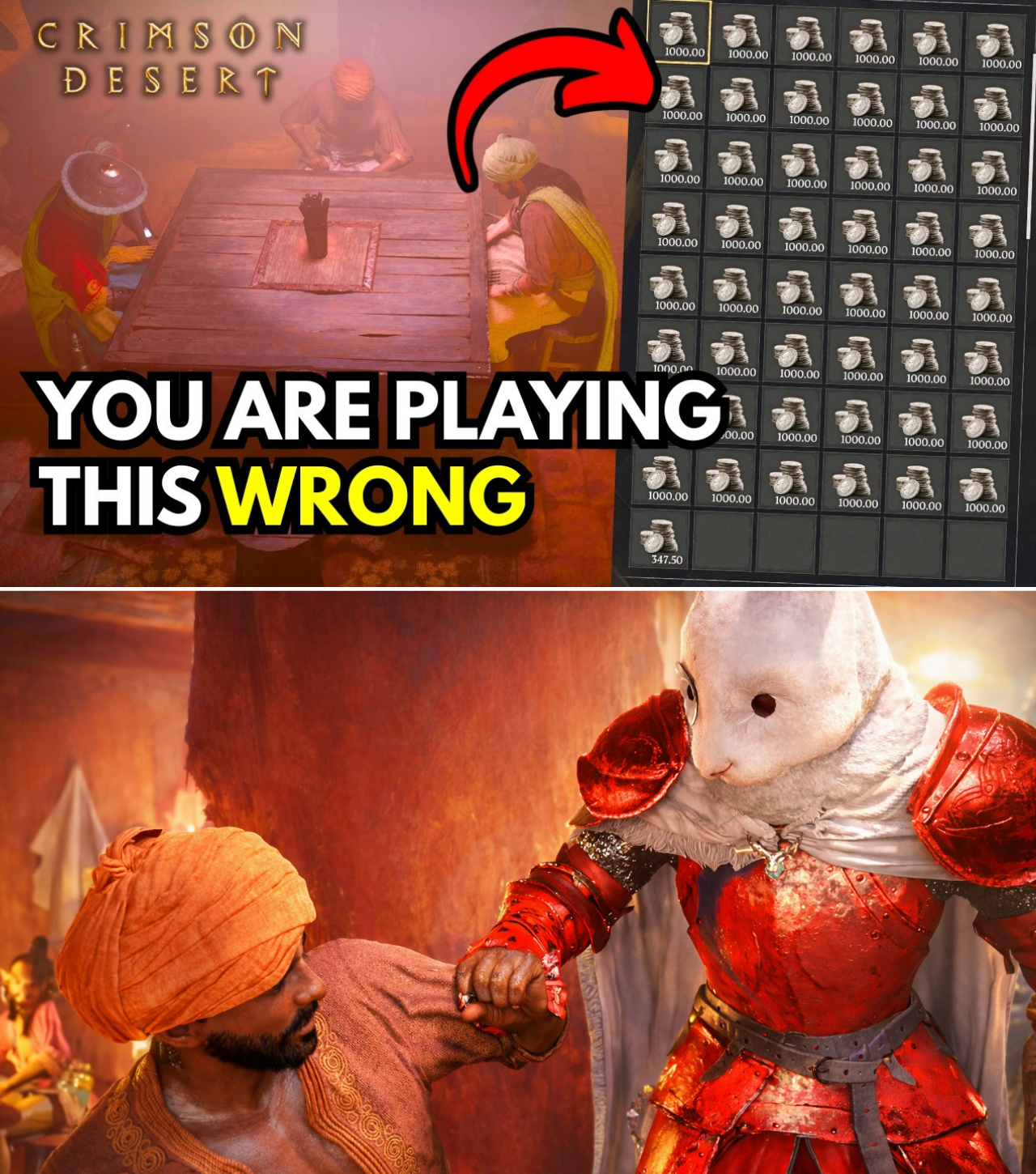
In the high-stakes markets of the northeast Crimson Desert region, the town of Tashulp has become the center of a radical new economic movement. While Pearl Abyss intended for their card mini-game to be a test of luck and skill, the player base has discovered that “playing by the rules” is the least efficient way to earn silver. Instead, a new meta-strategy centered on intentional losing and aggressive accusations is generating thousands of silver for those willing to ignore the cards and watch the elbows.
The ‘Cheater’s Bounty’ Mechanic
The core of the strategy relies on a specific game mechanic: when a player is successfully accused of cheating, they are removed from the table, and their remaining silver is split among the survivors. By systematically eliminating every other player through accusations, Kliff can walk away with the entire table’s bankroll.
“The cards are a total distraction,” says one veteran player on the game’s Discord. “The real game is judging NPC skeletal animations.”
The Two Tells: How to Spot a Cheater
Community experts have identified two unmistakable visual cues that signify an NPC is cheating. These “tells” occur only during two specific windows:
The Dealer’s Elbow (The Start): When cards are being dealt, watch the dealer’s arm. If their elbow is held high (parallel to the shoulders), they are playing fair. If the elbow is tucked down while grabbing cards, they are cheating. Players have only one second to trigger the accusation.
The Right-Hand Rule (The End): During the showdown, if an NPC places their cards down with their left hand, they are honest. If they use their right hand and move with “cautious” deliberate speed, they have swapped cards.
The ‘Infinite Silver’ Loop at Tashulp
While these mini-games are available in multiple towns, Tashulp is the premier destination due to its high 300 silver buy-in. To maximize efficiency, players are utilizing a “Loser’s Loop”:
The Reset: If Kliff is the first dealer, players immediately stand up and sit back down to reshuffle the turn order. This costs nothing and ensures an NPC deals first, giving them the chance to cheat.
The Bait: Players are encouraged to “fold” immediately or match every bet (calling) to keep as many NPCs at the table as possible. This increases the mathematical probability of someone attempting to cheat by the end of the round.
The Reload: Once the table is cleared of all NPCs, players save their game, reload the file, or teleport to a nearby Abyss Nexus to refresh the NPC spawns and start the cycle over.
Why Banking is a Trap
This method has emerged as a direct response to the game’s restrictive banking system. While players can invest in gold bars, the conversion rate is notoriously poor. A gold bar grows in value but is only “worth” 500 silver within the bank. Withdrawing it to sell to merchants results in a massive loss, netting only 190 silver.
“The card table is the only place where silver flows freely,” notes a Tashulp regular. “Compared to the high-risk bank investments that can take hours to yield a return, the ‘Cheater Hunt’ is consistent and instant.”
The Risk of the ‘Counter-Accusation’
The community warns against trying to cheat as Kliff. While it may seem tempting, the risk of an NPC counter-accusing is high. A failed cheat results in a total loss of the buy-in and a one-day ban (in-game time) from the table. The “Honest Accuser” strategy, conversely, has almost no drawbacks and far higher consistency.
The Verdict
The Tashulp Hustle represents a fascinating evolution in how players interact with Crimson Desert’s secondary systems. By turning a game of chance into a game of observation, the community has effectively broken the local economy. Whether Pearl Abyss will respond by “fixing” the NPC animations or adjusting the split-pot mechanics in Patch 1.03.02 remains to be seen. Until then, the smartest players in Pywel will continue to win by losing.
News
The Boss-Delete Meta: Mastering the Abyss Gear Trio for Crimson Desert’s Endgame
WANT TO DELETE BOSSES IN SECONDS? 🚨 This is the new Meta Build you need! Forget everything you know about standard builds. I’ve discovered the “Abyss Gear Trio” that essentially breaks the game’s combat system. When combined with the right…
The Wind Element Meta: Unlocking Pywel’s Most Overpowered and Underused Power
IS WIND ELEMENT THE MOST BROKEN BUILD IN CRIMSON DESERT?! 🌪️ Everyone is obsessed with Fire or Lightning builds, but Wind is secretly the most OP element in the game—and almost NO ONE is using it. I’m talking about infinite…

The Camp Resource Loop: How to Fast-Track Your Crimson Desert Base Progression
STRUGGLING TO UPGRADE YOUR CAMP? 🚨 Stop wasting hours and use THIS method instead! If you’re stuck waiting for resources to build your ranch, stables, or workshops, you’re doing it the hard way. Most players are manually farming one item…

The “Right Way” to Play: Are You Making These 5 Fatal Mistakes in Crimson Desert?
ARE YOU PLAYING CRIMSON DESERT WRONG? 🚨 Most players are grinding for hours, failing boss fights, and missing out on the best gear—all because they’re ignoring the game’s core mechanics. We aren’t just talking about “getting good” at combat; we’re…

The Golden Apple Goldmine: Faster Farming Post-Patch 1.09
GOLDEN APPLE FARM IS OFFICIALLY BROKEN IN PATCH 1.09! 🚨 Stop wasting your time running in circles—the devs just stealth-buffed Golden Apple farming, and it is glorious. After testing the new spawns, I’m seeing multiple Golden Apple Hedgehogs popping up…

Crimson Desert Major DLC Confirmed: Everything We Know About the Summer 2026 Roadmap
CRIMSON DESERT MAJOR DLC CONFIRMED! 🚨 The future of Pywel just leaked, and it’s MASSIVE. Pearl Abyss has officially dropped the roadmap from June to September 2026, and it’s not just small tweaks—it’s a total game evolution. We’re talking a…
End of content
No more pages to load