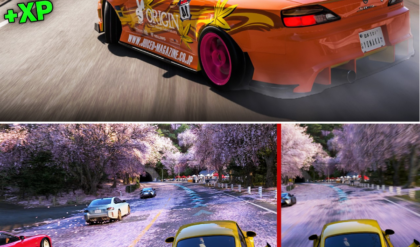
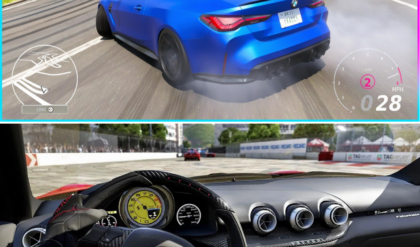
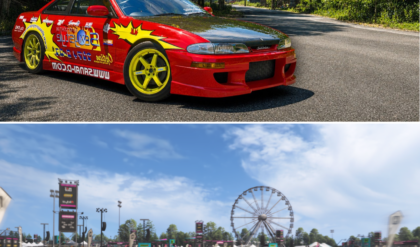
Stop sliding, start SAVAGING! 🏎️💨 The perfect drift build is NOT what you think.
Most players are wasting their credits on massive horsepower builds that just spin out. Real drift legends in Forza Horizon 6 know it’s all about the balance between your weight, tire pressure, and differential lock.
We’ve cracked the code for the ultimate “Entry-Level Beast” build that turns any RWD car into a touge-slaying machine. Don’t touch that throttle until you’ve seen these essential tuning tweaks! 😱🔥
Stop guessing and start shredding with these pro-tier settings: 👇
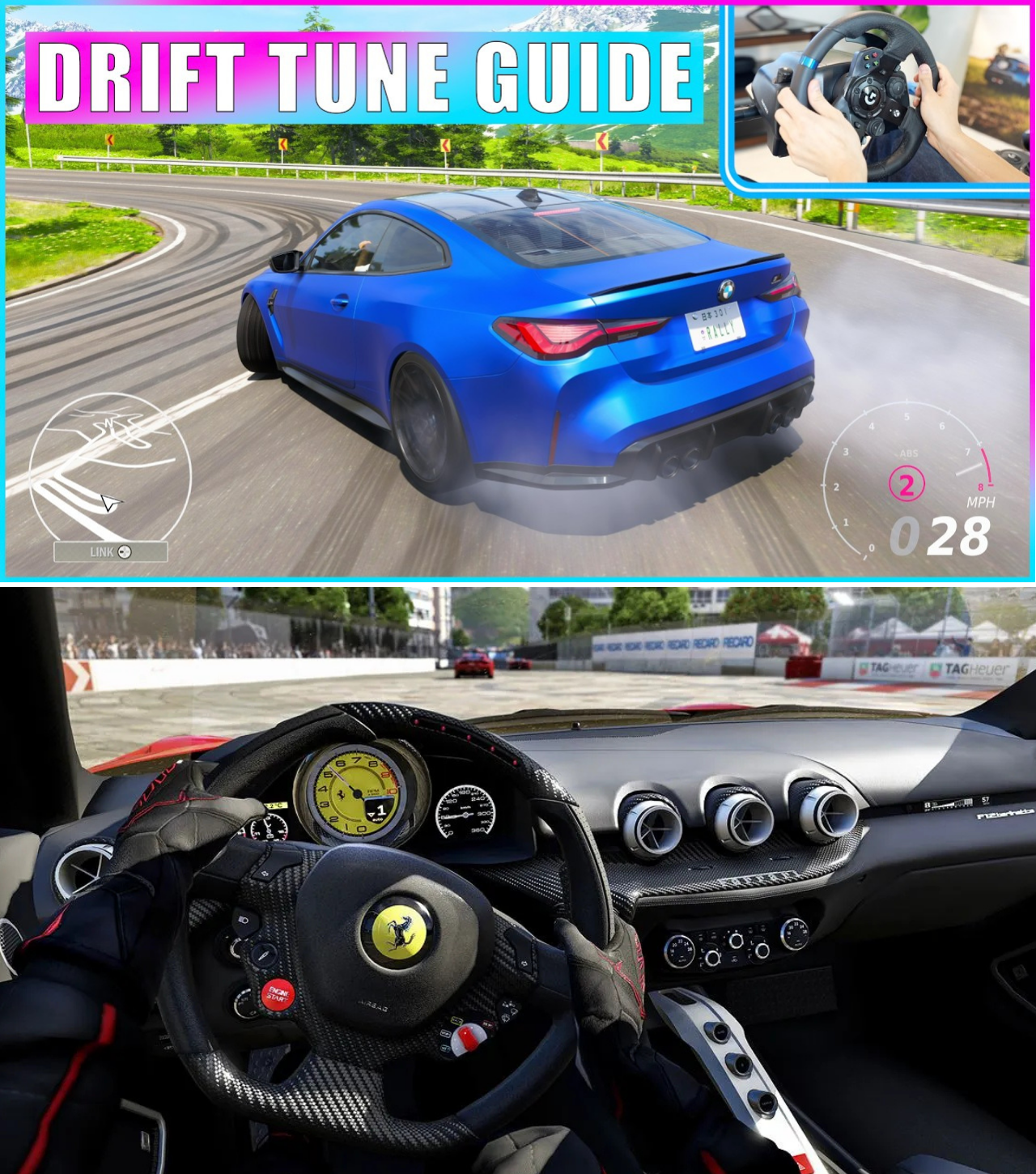
Drifting in Forza Horizon 6 has evolved from a simple “powerslide” mechanic into a sophisticated display of physics and technical precision. Whether you are aiming to top the leaderboard in a mountain pass “touge” battle or simply looking to master tandem entries with friends, building a competitive drift machine requires more than just high horsepower—it requires a surgical approach to tuning.
Choosing Your Foundation
While almost any vehicle can be forced sideways with enough momentum, the most successful drift builds share a common DNA: Front-Engine, Rear-Wheel Drive (RWD). This layout provides the most predictable weight transfer when initiating a slide. Beginners are highly encouraged to start with platforms like the 1989 Nissan Silvia K’s, Toyota Sprinter Trueno GT Apex, or the Mazda RX-8 R3. These vehicles offer a balanced chassis that rewards smooth throttle control rather than brute-force aggression.
The “Essential” Upgrade Path
Before hitting the track, your car needs the right hardware. A common mistake is over-upgrading the engine. Instead, focus on these critical components:
Drift Suspension: Essential for achieving the extreme steering angles required for deep drift entries.
Drivetrain: A Race Differential is mandatory. You want a “locked” differential where both rear wheels spin at the same speed, ensuring consistent traction breaking.
Tires: Stick to Sport tires for a blend of grip and slide, or Drift tires if you are focused strictly on high-angle competition. Avoid heavy drag tires, which often introduce too much “snap-back” grip.
Transmission: A 4-speed or 6-speed drift transmission allows you to keep the car in the “power band”—the specific RPM range where the car has enough torque to keep the tires spinning.
Tuning for Control: The Pro Setup
The difference between a “spinning” car and a “drifting” car lies in the fine-tuning menu. For a baseline that feels professional, experts suggest the following adjustments:
Differential: Set your Acceleration and Deceleration to 100%. This forces both rear wheels to spin in unison, providing the predictable rotation needed for sustained drifts.
Tire Pressure: Lower the front pressure (around 21–31 PSI) for turn-in grip, and raise the rear (up to 55 PSI) to reduce rolling resistance and encourage the back end to kick out.
Camber: Set front camber to roughly -5.0 degrees for better contact during extreme steering angles, and keep the rear near -1.5 degrees.
Braking: Shift the bias toward the front (ideally 100% to the front) to allow for “left-foot braking,” which helps pull the nose of the car into a corner mid-drift without killing the rear-wheel spin.
Mastering the Initiation
Hardware is only half the battle; technique dictates the rest. For entry, use the “Standard Handbrake Drift” to initiate the weight shift, but rely on “Clutch Kicks” (pressing the clutch while blipping the throttle) to maintain momentum in tighter, low-speed sections.
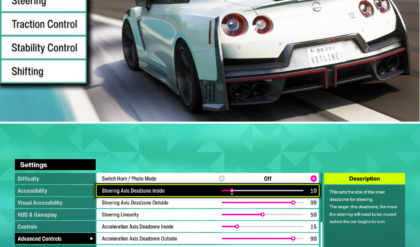
Most importantly, you must disable all assists. Traction Control (TCS) and Stability Control (STM) are designed to kill tire slip; keeping them on will effectively negate every modification you’ve made to your car.
Building a drift car in Forza Horizon 6 is a journey of refinement. By changing one variable at a time—testing your pressure, then your diff, then your gear ratios—you will eventually find the “sweet spot” that makes the car feel like an extension of your own hands. As the community continues to share new tunes for Japan’s legendary mountain roads, remember: the best drift builds aren’t the ones with the most power, but the ones that allow you to hold the most angle with the least amount of correction.
News
The Drift Meta: 5 Essential Builds for Your Forza Horizon 6 Garage
Ditch the stock rides—these 5 drift builds are breaking the Forza Horizon 6 leaderboards! 🏎️💨 Stop struggling with “twitchy” handling and endless spins. We’ve found the 5 essential RWD drift builds that every player needs in their garage to dominate…
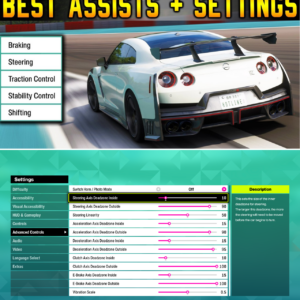
The Precision Edge: Optimizing Your Controller and Difficulty in Forza Horizon 6
Is your controller holding you back in Forza Horizon 6? 🏎️🎮 If your steering feels “floaty” or your throttle response is lagging, you’re likely fighting default settings that weren’t built for competitive racing. From deadzone “sweet spots” that eliminate stick…
10 Common Mistakes That Are Slowing Your Progression in Forza Horizon 6
STOP wasting your credits in Forza Horizon 6! 🛑🏎️ Are you still making these 10 rookie mistakes? From blowing your early cash at the Auto Show to ignoring the most overpowered farming trick in the game, most beginners are doing…
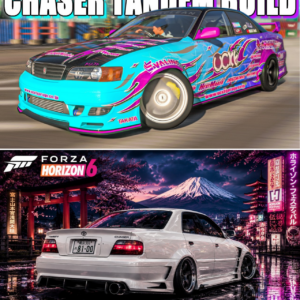
The JZX100 Renaissance: Building the Ultimate Tandem Drift Machine in Forza Horizon 6
The “Street King” of Forza Horizon 6 has arrived! 👑🔥 The Toyota Chaser JZX100 is finally here, and it’s not just a legend—it’s the definitive tandem drift weapon for the mountain passes of Japan. Whether you’re chasing doors in tight…
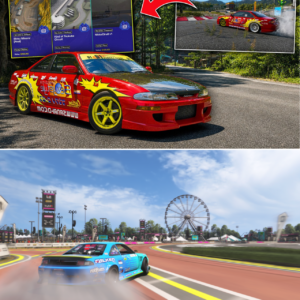
Custom Estates: How Players Are Bringing Japan’s Drift Culture Home in Forza Horizon 6
Tired of boring street races? Transform your backyard into a JDM drift paradise! 🏎️💨 The custom “Estate” drift tracks in Forza Horizon 6 have reached a whole new level of realism. Players are now recreating legendary Japanese courses—like Ebisu Manami,…
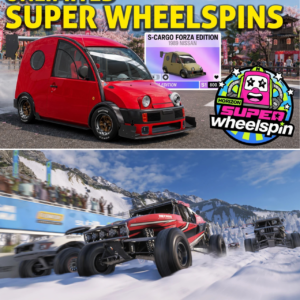
The “One-Button” Meta: Optimizing Skill Points and Wheelspins in Forza Horizon 6
The Forza Horizon 6 “Skill Point” exploit is getting out of hand! 🏎️💨 Forget the long grinds—players have found the absolute fastest way to chain Super Wheelspins, and it involves nothing more than a Subaru 22B STI and a simple…
End of content
No more pages to load