Welcome to Derry: What Stories Await in Potential Seasons 2 and 3? Creators Detail Backward-Timeline Plans
🚨 WELCOME TO DERRY BOMBSHELL: Seasons 2 & 3 Just Got Teased – And Pennywise’s NON-LINEAR Time Secret Means the Horror Is Going BACKWARDS… With Massacres, Depressions, and Origins That Could Rewrite Everything 😱
You thought Season 1’s finale was mind-bending? Wait until you hear what’s coming…
Andy Muschietti just spilled: The entire story is designed as a three-season arc told BACKWARDS in time, diving into Pennywise’s earlier cycles – 1935 for Season 2 (Bradley Gang massacre during the Great Depression) and 1908 for Season 3 (the explosive Kitchener Ironworks disaster and the REAL origins of “Pennywise the Dancing Clown”).
But here’s the terrifying twist: Pennywise experiences time NON-LINEARLY. Past, present, future – it’s all the same to him. That means these “prequels” could show him manipulating events to prevent his defeat in the movies… or unleashing something even worse.
Younger versions of characters we know, new blood-soaked tragedies, Bob Gray’s dark secrets, and Ingrid’s twisted legacy – nobody is safe, and the clown’s plan spans centuries.
With HBO silent on renewal but ratings smashing records, fans are demanding more NOW. Is this the setup for the ultimate IT universe expansion?
Read more:
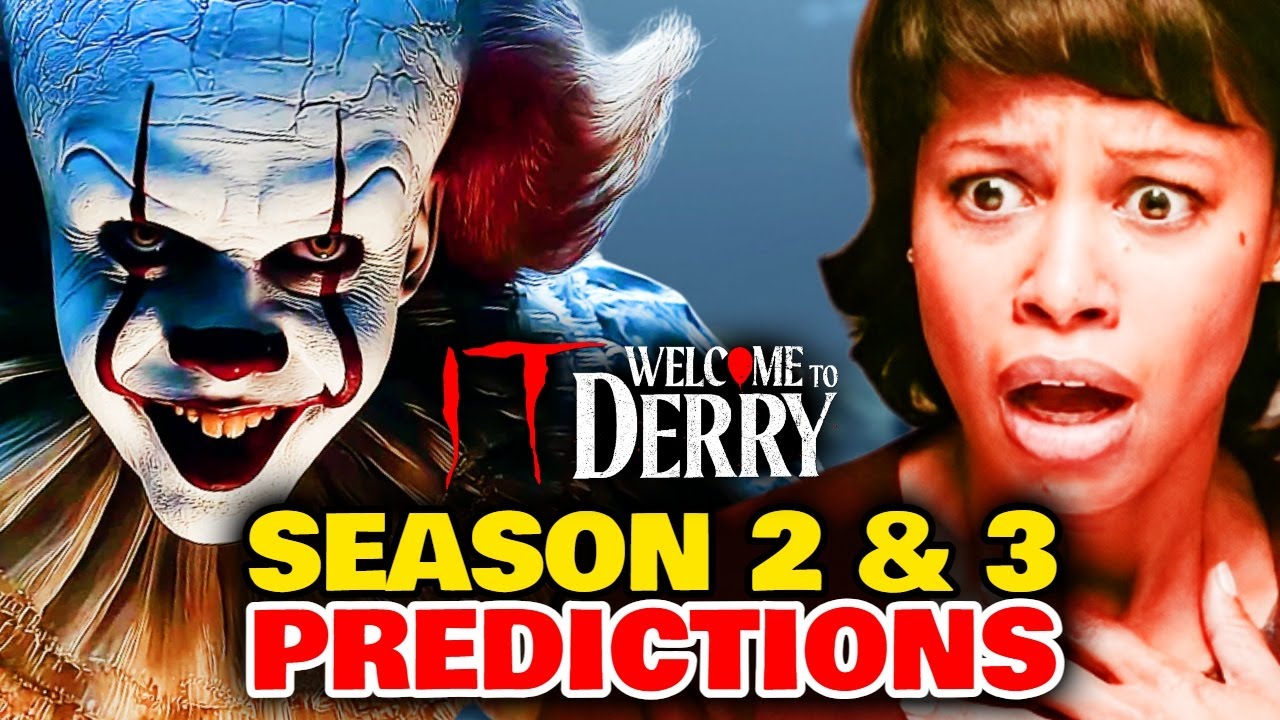
Following the gripping Season 1 finale of HBO’s It: Welcome to Derry on December 14, 2025, attention has swiftly turned to the future of the series. While HBO has yet to officially renew the show for additional seasons—despite strong viewership numbers averaging over 10 million per episode—co-creators Andy and Barbara Muschietti have been vocal about their ambitious vision: a three-season arc structured around Pennywise’s 27-year feeding cycles, told in reverse chronological order.
Season 1, set in 1962, explored a new group of young protagonists confronting the entity during one of its awakenings, culminating in a temporary defeat that directly ties into the events of the 2017 and 2019 It films. The finale introduced a major mythological twist: Pennywise (Bill Skarsgård) experiences time non-linearly, perceiving past, present, and future simultaneously. This revelation, teased throughout the season, sets the stage for the series to move backward in time, unpacking the “hidden story” Andy Muschietti identified in Stephen King’s 1986 novel’s interludes.
“Our big story arc involves three seasons, mainly based on the three critical cycles of Pennywise, which are 1962, 1935, and 1908,” Andy Muschietti told Variety prior to the premiere. He elaborated that the narrative is “a story told backwards,” inspired by clues King scattered about Derry’s recurring catastrophes—violent events that mark the beginning and end of each cycle.
If renewed, Season 2 would shift to 1935, amid the Great Depression. This era aligns with one of King’s interludes: the infamous Bradley Gang massacre, where outlaws were gunned down by Derry residents in a public shootout, with sightings of a clown amid the chaos. Muschietti has confirmed this event as a centerpiece, describing it as taking place “during the Depression in Derry.” The season would introduce new characters alongside younger versions of figures glimpsed in Season 1, such as Ingrid Kersh (the daughter of Bob Gray, Pennywise’s human inspiration). Flashbacks in Season 1 already hinted at Ingrid’s tragic involvement in the 1930s, working at Juniper Hill Asylum and mistakenly believing the entity to be her returned father.
This cycle promises to delve deeper into how economic hardship and societal despair fuel Pennywise’s power, mirroring themes of collective trauma that define Derry. Muschietti has noted explorations of “Bob Gray things” and Ingrid’s role, suggesting a focus on the entity’s growing mastery over human fears during a time of widespread suffering.
Season 3 would venture further back to 1908 (adjusted from the novel’s 1906 to fit the films’ timeline), centering on the catastrophic Kitchener Ironworks explosion. In King’s book, this disaster killed over 100 people, including 88 children on an Easter egg hunt—marking a massive “feeding” that solidified the cycle. The explosion is portrayed as the entity’s dramatic arrival or awakening point in Derry’s modern history.
This season could reveal Pennywise’s true origins in greater detail: the encounter between the ancient cosmic horror and Bob Gray, a circus performer whose clown persona the entity adopts. Season 1 flashbacks already depicted Gray’s family life and a traveling sideshow, hinting at the moment the creature claimed his identity. Muschietti has teased learning “a lot of things” about the entity here, including why it remains tethered to Derry despite its power.
The backward structure ties into the finale’s non-linear time concept. Pennywise’s omnipresence across eras raises stakes: events in earlier cycles could influence—or attempt to alter—outcomes in later ones, including the Losers’ Club victories in 1989 and 2016. Muschietti has described this as adding “another layer of threat,” questioning whether the entity is “omnipresent” and how that impacts known stories.
Production realities support optimism for continuation. Writers’ rooms for Season 2 reportedly convened earlier in 2025, and the Muschiettis have emphasized the project was pitched as a trilogy. Strong critical reception and record-breaking debuts (third-highest for HBO behind House of the Dragon and The Last of Us) bolster chances, though HBO’s decision may factor in budget and broader corporate shifts.
Skarsgård’s return as Pennywise remains central, with the actor expressing enthusiasm for expanding the lore. Supporting elements—like connections to King’s broader universe (e.g., Dick Hallorann’s “shining” abilities)—could deepen in future installments.
For now, fans await official word. But the Muschiettis’ roadmap paints Welcome to Derry as more than a prequel: a reverse-engineered mythology redefining one of horror’s enduring monsters. As Andy put it, “Nobody is safe in Derry”—and with time itself as Pennywise’s playground, the terror shows no signs of ending.