12 YEARS OF WAITING VS. 4 DAYS OF TOTAL DOMINATION. 🤯
Is Dragon’s Dogma 2 officially a “relic of the past” before it even got its first major DLC? While Capcom was busy hiding microtransactions for fast travel behind a $70 price tag, Pearl Abyss just dropped a nuclear bomb on the open-world genre that’s making 12-year-long cult fanbases question everything they ever believed in.
What is the “Unmored World” secret that 85% of players missed, and why did Crimson Desert’s Cliff just execute the mechanics that Hideaki Itsuno “was too afraid” to implement? The gap between a “flawless skeleton” and a “living masterpiece” has never been this terrifyingly wide… and the answer lies in a single mechanic that changes Pywel forever. 🔥
Stop settling for “minimum viable sequels” and see why the bar for RPGs just moved permanently. 👇
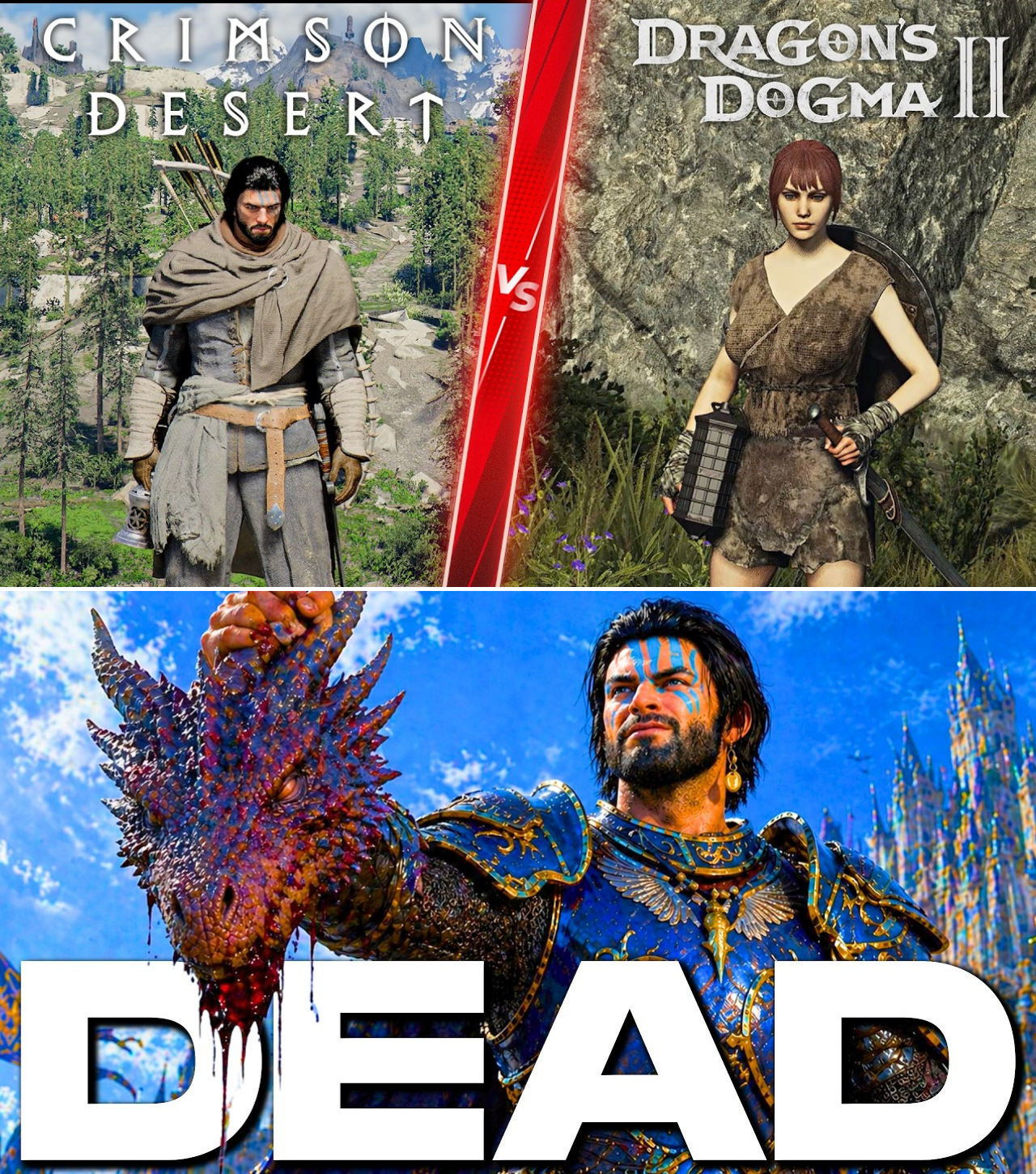
In the high-stakes world of AAA gaming, 12 years is an eternity. That is how long fans waited for Dragon’s Dogma 2 (DD2), believing it would be the “complete vision” that the 2012 original failed to achieve. But as of April 2026, the narrative has shifted violently. With the meteoric rise of Pearl Abyss’s Crimson Desert, the gaming community is witnessing a rare and brutal phenomenon: a newcomer studio from Korea hasn’t just competed with a Japanese giant—it has effectively “indicted” it.
The 3-Million Copy Slap in the Face
The numbers, as reported across X and financial outlets, tell a story of total displacement. While Dragon’s Dogma 2 took two months to move 3 million units, Crimson Desert achieved that same milestone in a staggering four days. But this isn’t just about sales; it’s about the “Soul Gap.”
Reddit’s r/CrimsonDesert and r/DragonsDogma are currently battlegrounds of discourse. The consensus? Crimson Desert did what Capcom was “afraid” to do: it respected the player’s time while expanding the genre’s boundaries.
Traversal: Adventure vs. Commute
One of the most heated “dramas” surrounding DD2 was its hostile stance on fast travel, famously defended by director Hideaki Itsuno as a way to encourage organic encounters. However, players in 2026 are calling foul.
“After the 50th time managing a stamina bar just to jog between Vernworth and Bakbattahl, it stops being an adventure and starts feeling like a commute,” says one prominent Discord analyst.
In contrast, Crimson Desert introduced a revolutionary traversal suite. From the Crow Wings gliding ability to the high-speed Physics-based Grappling Hooks, and the late-game Missile-firing Mech, Pearl Abyss provided options. They maintained the “exploration tax” by requiring players to physically discover hundreds of fast travel points first, but once earned, the game respects the player’s agency. It’s a synthesis of Zelda’s freedom and Skyrim’s efficiency that makes DD2’s “stamina management” look archaic.
Combat: Systemic Chaos vs. Cinematic Spectacle
The technical precision of Crimson Desert’s terminology has become a benchmark for the community. Fans are raving about the Axiom Force and Nature’s Snare skills, noting that while DD2’s combat is “physics-driven and unpredictable,” it suffered from a tragic lack of variety.
DD2 launched with roughly 21 core enemy types—leading to the “color-swapped lizard” fatigue in the late game. Crimson Desert countered with 76 distinct boss types and over 400 creatures. Whether it’s a cinematic duel with a Stag Lord or storming a pirate ship in a seamless world event, the sheer density of content has left Capcom’s “flawless skeleton” looking skeletal indeed.
The Ethics of Post-Launch: A Tale of Two Studios
Perhaps the most damaging blow to Capcom’s reputation was the “Deception Drama.” DD2 launched with 21 undisclosed microtransactions and a broken one-save system that risked locking players out via Denuvo. The studio’s response—essentially telling players these items “could be found in-game”—was met with cold silence.
Pearl Abyss, despite its own rocky launch involving heavy controls and a messy narrative (a remnant of its transition from an MMO prequel to a single-player epic), took the opposite route. The studio has been patching the game almost daily. Within 30 days, they added requested features like boss rematches, improved teleportation, and revamped the Crime and Bounty systems based directly on Discord feedback.
“One studio shipped a broken product and defended it; the other shipped an imperfect product and fixed it with obvious care,” noted a viral post on X.
The 85% Tragedy
The ultimate irony lies in the “Unmored World.” Only 13-15% of Dragon’s Dogma 2 players ever reached the game’s true post-apocalyptic ending because the game’s cryptic design was so alienating that the majority of the player base “burned out” before the 40-hour mark.
Crimson Desert’s world of Pywell, four times the size of DD2’s map, sustains interest through variety—from the Clockwork City to the floating sky islands of the Abyss. It doesn’t just hide its best content; it invites the player to find it.
Looking Ahead: The New Benchmark
As we move further into 2026, the “Bar” has officially moved. Crimson Desert isn’t perfect—its story is often a jumbled mess of spectacle over substance—but it is ambitious in a way that makes “safe” sequels look like failures of imagination.
If Dragon’s Dogma 3 ever surfaces, Capcom will have to answer a hard question: Will they continue to ship skeletons, or will they finally listen to the community that waited 12 years for a vision that a Korean studio realized in four days?
For now, Pywell is the new home for the Arisen who grew tired of walking.
News

THE SCHOLAR EXPLOIT: How ‘Gift-Looping’ in Scholar Stone is Crashing the Rare Material Market
STOP HARVESTING. THE SCHOLARS ARE HOLDING THE REAL LOOT. 🧪💎 Tired of grinding for Brimstone, Mercury, and Rubber like a peasant? While most players are out breaking their backs in the fields, the pros have discovered a “Social Engineering” loophole…
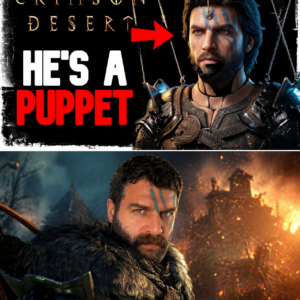
THE PUPPET OF PYWEL: Players Uncover the 108-Cycle Multidimensional Nightmare of Crimson Desert
CLIFF IS NOT A HERO. HE IS A FAILED PUPPET IN A 108-CYCLE NIGHTMARE. 👁️🌑 Think the story of Crimson Desert is just another shallow RPG plot? You couldn’t be more wrong. The bone-chilling truth behind Cliff’s lifeless stare and…
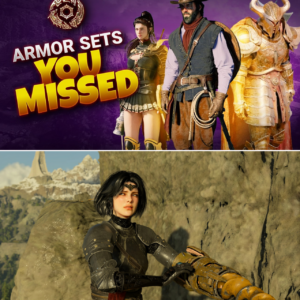
THE PYWEL ARMORY EXPOSED: Secret Vaults and ‘Trust Exploits’ are Redefining Crimson Desert’s Meta
YOUR ARMOR IS TRASH. HERE IS THE UPGRADE YOU NEVER KNEW EXISTED. 🛡️💀 Still running around in basic leather while the bosses in Pywel are laughing at you? Most players are missing the absolute best sets in Crimson Desert because…
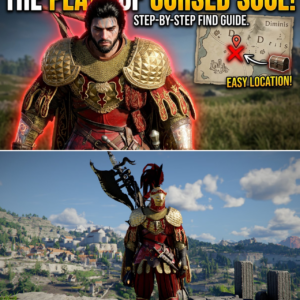
THE HAUNTING OF DEINIS: Players Uncover the ‘Cursed Soul’ Armor Hidden in Secret Underworld Vaults
THERE IS A SECRET BURIED BENEATH THE DEAD. AND IT’S PURE GOLD. ⚰️✨ Think the ruins of Demeniss are just empty stone and dust? Think again. The most elusive defensive set for Cliff isn’t sold by any merchant or dropped…
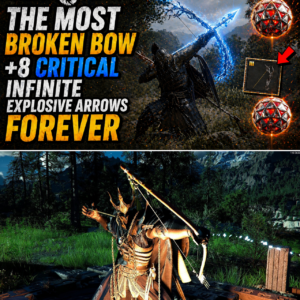
THE ‘EPHEMERAL’ REVOLUTION: How Infinite Explosive Builds are Breaking Crimson Desert’s Boss Encounters
ONE BOW TO RULE PYWEL. ZERO ARROWS REQUIRED. 🏹💥 Forget the standard meta. While everyone is chasing swords, the true elite are unlocking the Ephemeral Bow—the only ranged weapon in the game that scales directly with Critical Damage. But that’s…
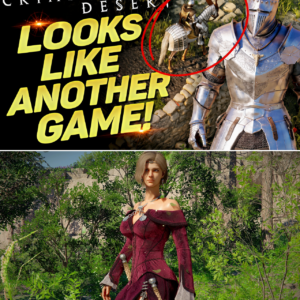
THE ‘DIABLO DESERT’ PHENOMENON: How a Simple Camera Hack is Redefining Crimson Desert’s Identity
CRIMSON DESERT OR DIABLO 4? YOU WON’T BELIEVE WHAT JUST HAPPENED. 🤯🕹️ Think you’ve seen everything Pywel has to offer? Think again. Players just discovered a “Secret View” that completely transforms the game into a top-down Diablo-style ARPG, and the…
End of content
No more pages to load