TERMINATOR FANS, THIS IS YOUR NEXT OBSESSION! 🤖💥 HBO Max just revived a hidden gem: a haunting 10-part sci-fi masterpiece starring the badass from Terminator: Dark Fate that’s surging back to the top of streaming charts in February 2026—perfect timing for anyone craving that post-apocalyptic edge!
Read more:

In February 2026, HBO Max viewers are rediscovering Station Eleven, the 2021 limited series that has climbed back into the platform’s Top 10 U.S. rankings nearly four years after its original run. The 10-episode miniseries, based on Emily St. John Mandel’s acclaimed 2014 novel, has earned renewed attention as a thoughtful post-apocalyptic drama, particularly appealing to fans of the Terminator franchise thanks to its star, Mackenzie Davis.
Davis, who portrayed the augmented soldier Grace Harper in 2019’s Terminator: Dark Fate, leads Station Eleven as Kirsten Raymonde, a young actress who survives a global pandemic that decimates humanity. The series spans two decades, weaving timelines before, during, and after the collapse of civilization caused by a deadly flu virus. It follows survivors—including Kirsten, Jeevan Chaudhary (Himesh Patel), and others—who form a traveling theater troupe dedicated to performing Shakespeare and preserving art in a world stripped of modern technology.
Unlike the high-octane action of Terminator films, which focus on relentless machines hunting humans across time, Station Eleven explores the quieter aftermath: rebuilding society through culture, memory, and human connection. Yet the shared post-apocalyptic DNA—devastated landscapes, fractured communities, and the struggle against threats both external and internal—makes it a natural companion for Terminator enthusiasts seeking deeper emotional stakes. Screen Rant highlighted this connection in a February 2026 article, noting Davis’s role as a bridge between the action-heavy Dark Fate and the more introspective Station Eleven.
The series premiered on HBO Max in December 2021 and concluded in January 2022, earning widespread critical acclaim with a 98% Rotten Tomatoes score from critics and strong audience approval. It received seven Emmy nominations, including Outstanding Lead Actor in a Limited Series for Patel’s portrayal of Jeevan, a man who protects a young Kirsten during the early days of the outbreak. Reviews praised its non-linear storytelling, stunning cinematography, and optimistic tone amid bleak circumstances.
Directed by talents like Hiro Murai (Atlanta), Helen Shaver, and others, Station Eleven stands out for avoiding typical dystopian grimness. Instead of focusing solely on survival horror or violence, it emphasizes art’s role in healing. The Traveling Symphony’s motto—”Because survival is insufficient”—drawn from Star Trek—captures the show’s core message: humanity endures through creativity and empathy. This contrasts sharply with Terminator‘s themes of inevitable doom from technological overreach, offering a hopeful counterpoint.
The resurgence in 2026 comes amid a boom in post-apocalyptic content, including The Last of Us, Fallout, and Silo. Outlets like Collider and Screen Rant have positioned Station Eleven as a superior alternative to some contemporaries, citing its emotional depth and visual poetry. One analysis called it a “Silo replacement” for viewers seeking thoughtful sci-fi without endless mysteries or cynicism. Its timing feels prescient, with themes of pandemic fallout, isolation, and rebuilding resonating even more post-2020s.
The cast elevates the material. Davis delivers a layered performance as adult Kirsten, haunted by childhood trauma yet resilient through performance. Patel’s Jeevan provides warmth and moral grounding, while supporting players like Danielle Deadwyler, Gael García Bernal, Lori Petty, and Matilda Lawler (young Kirsten) add richness. The ensemble’s chemistry drives the interconnected stories, jumping between pre-collapse celebrity Clark (García Bernal) and post-collapse threats like the Prophet’s cult.
Production values remain a highlight. Cinematography captures haunting beauty in abandoned airports, snow-covered towns, and makeshift stages. The score and sound design create an immersive atmosphere, blending melancholy with moments of joy. At roughly 50 minutes per episode, the 10-part structure allows tight, focused storytelling without filler.
For Terminator fans, the appeal lies in the shared genre roots. Both explore worlds upended by catastrophe—Terminator by Skynet’s judgment day, Station Eleven by a flu pandemic—and the fight to preserve humanity. Grace Harper’s enhanced strength and determination echo Kirsten’s survival instincts, though Station Eleven trades gunfights for Shakespearean monologues. Davis’s physicality in both roles underscores her versatility, from cyborg-enhanced warrior to artist-warrior.
The series’ message of hope through art offers a refreshing twist on apocalypse narratives. While Terminator warns of technology’s dangers, Station Eleven suggests culture can redeem even the darkest futures. This optimism has fueled its enduring popularity, with fans on social media praising its rewatchability and emotional impact.
As HBO Max (now Max) continues prioritizing prestige sci-fi, Station Eleven‘s revival demonstrates the staying power of limited series. Unlike ongoing shows that risk overstaying, its concise format delivers complete satisfaction. In a landscape of reboots and franchises, it remains a standout original.
Critics and audiences agree: Station Eleven is more than a pandemic story—it’s a meditation on what makes life worth living after everything falls apart. For Terminator devotees burned by recent franchise entries, this HBO gem provides a compelling, character-driven alternative in the post-apocalyptic space.
Whether drawn by Davis’s star power, the high critical scores, or the timely resurgence, viewers in February 2026 are finding Station Eleven worth the revisit. In a genre often defined by despair, it stands as a beacon of resilience and beauty.
News

The Hunt for Excellence: How to Secure the BMW M2 Forza Edition in Forza Horizon 6
THE BMW M2 FORZA EDITION IS HERE—BUT HOW DO YOU ACTUALLY GET IT? 🏎️🔥 Everyone wants the BMW M2 Forza Edition. It’s the ultimate grip machine, and for a good reason—it’s currently one of the most exclusive cars in Forza…
The Gold Standard: How to Rapidly Progress Through the “Discover Japan” Series
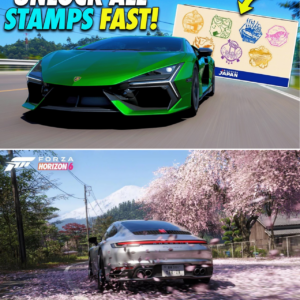
WANT THE GOLD STAMP? STOP GRINDING RACES AND DO THIS INSTEAD! 🏆🇯🇵 Are you still stuck on the “Pink” or “Orange” Stamp tier in Forza Horizon 6? You’re playing it wrong. The road to the Gold Stamp isn’t just about…
The Wheel Revolution: Why Forza Horizon 6 is Finally a Sim-Racer’s Playground
IS THE “WHEEL CURSE” FINALLY BROKEN IN FORZA HORIZON 6? 🏎️🎮 For years, Forza was a “controller-only” game. Using a wheel felt like fighting a losing battle against the physics engine—but everything changed with the launch of Forza Horizon 6….

Speed Demon or System Cheat? The Forza Horizon 6 Leaderboard Controversy
IS THIS THE END OF FAIR PLAY? THE 100,000 KM/H SPEED GLITCH! 🛑🏎️ If you’ve checked the Forza Horizon 6 leaderboards recently, you’ve probably seen the impossible: players hitting speeds of over 100,000 km/h on simple speed traps. No, it’s…

Beyond the Limit: Mastering Top Speed and Drag Tunes in Forza Horizon 6
IS YOUR CAR HITTING THE “SPEED WALL”? 🚀💨 Stop guessing your gear ratios and tire pressure! If you’re still losing drag races by a bumper or struggling to break 300 MPH on the highway, it’s not just your car—it’s your…

The Secret Garage: Unlocking Forza Horizon 6’s Hidden Mastery Exclusives
STOP SLEEPING ON YOUR CAR MASTERY TREES! 😱🚗 Did you know there are “secret” cars hidden inside Forza Horizon 6 that you can’t buy at the Auto Show? Most players are burning through Skill Points on boring credit boosts, completely…
End of content
No more pages to load