Welcome to Derry Season 1 Finale: What Happened to Lilly Bainbridge? Ending Breakdown and Ties to the IT Films
🚨 WELCOME TO DERRY FINALE BOMBSHELL: What REALLY Happened to Lilly Bainbridge After the Epic Showdown? The Heartbreaking Truth That Ties Straight Into the IT Movies… And It’s Not What Fans Expected 😱
You survived the bloodbath finale, but now everyone’s asking: Did Lilly make it out alive? Or did Pennywise claim one last victim in the shadows?
The episode “Winter Fire” delivered non-stop terror – kids trapped on frozen ice, ghosts helping stab that meteorite dagger, Pennywise raging like never before – but Lilly Bainbridge, the brave “Loony” girl who led the charge against the clown, walked away… only for the post-credits scene to drop a massive connection to Beverly Marsh that has fans screaming.
Was that suicide victim Beverly’s mom really who we think? Did Lilly escape Derry’s curse forever, or is she doomed to a tragic end like so many before her? Theories are exploding: some say she leaves town and forgets everything, others fear the trauma pulls her back into the nightmare 27 years later.
With Andy Muschietti teasing more seasons jumping to even darker cycles, Lilly’s story feels far from over – and the clues hidden in that chilling Juniper Hill moment suggest her fate could break your heart all over again.
Read more:
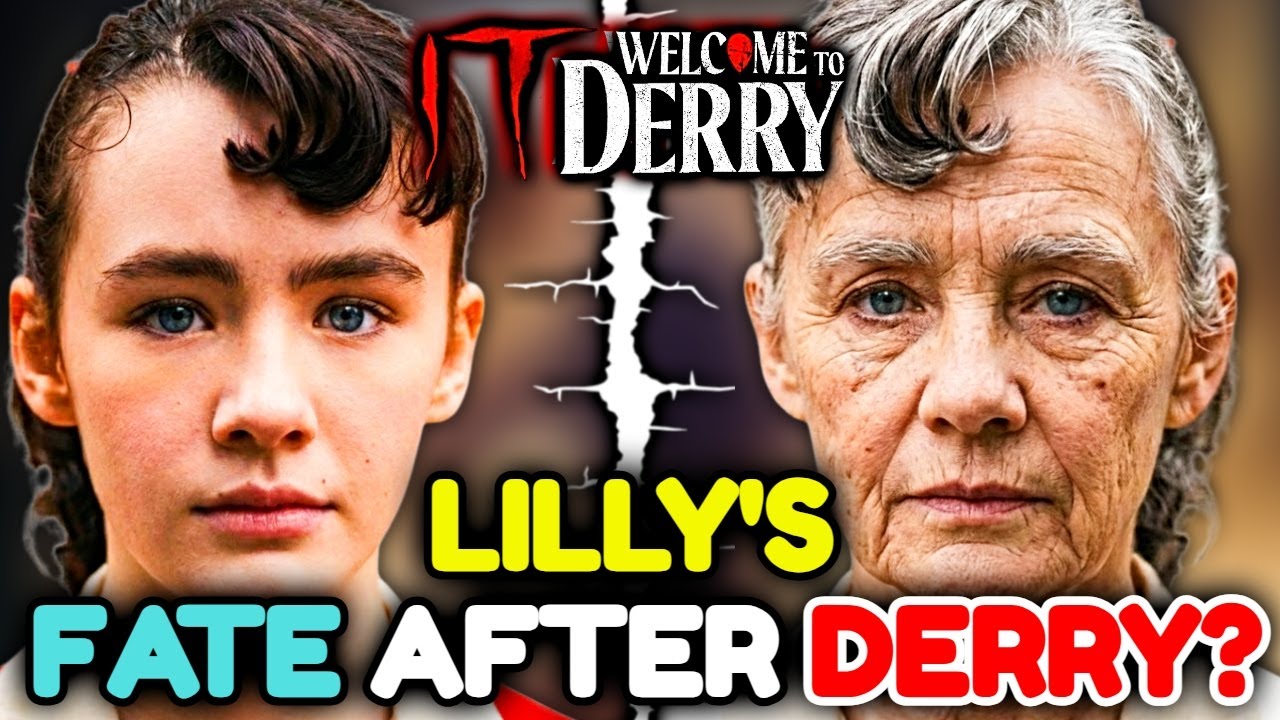
The season finale of HBO’s It: Welcome to Derry, titled “Winter Fire” and released December 14, 2025, capped off a gruesome and emotionally charged first season with an intense confrontation that temporarily halted Pennywise’s reign of terror in 1962 Derry, Maine. Central to the episode—and the season—is young Lilly Bainbridge (Clara Stack), the troubled protagonist whose journey from grief-stricken outcast to reluctant hero drove much of the narrative.
Lilly, nicknamed “Loony” by cruel classmates, enters the story haunted by her father’s horrific death in a 1961 factory accident at Derry’s pickle plant. The tragedy, exacerbated by Pennywise exploiting her guilt and hallucinations, lands her briefly in Juniper Hill Asylum early on. Throughout the season, she forms a new “Losers’ Club” with friends like Ronnie Grogan (Amanda Christine), Will Hanlon (Blake Cameron James), Marge Truman (Matilda Lawler), and the doomed Rich Santos (Arian S. Cartaya), investigating disappearances and uncovering the entity’s ancient origins.
In the finale, Pennywise (Bill Skarsgård) breaks free after a military plot destroys one of the 13 mystical pillars containing him, plunging Derry into fog and chaos. The clown massacres adults, hypnotizes children with his Deadlights, and lures them to a frozen river at the town’s border—his attempted escape point.
Lilly, alongside Marge, Ronnie, and Will, leads the counterattack. Aided by adults like Dick Hallorann (Chris Chalk, reprising his Shining ties with “shine” abilities), Rose (Kimberly Guerrero), and Major Leroy Hanlon (Jovan Adepo), plus the spectral assistance of Rich (who died earlier), the kids plunge a meteorite shard dagger into the ice, restoring the barrier. Pennywise is forced back into hibernation, his 1962 cycle ended in defeat—for now.
Lilly survives unscathed physically, emerging stronger. She visits her father’s grave, finding closure, and shares a poignant moment with Marge, acknowledging the clown’s return will be “someone else’s fight.” The group disperses with tentative hope: Will’s family stays in Derry (foreshadowing grandson Mike Hanlon’s role in the 1989 events), while others grapple with trauma.
The episode’s most discussed element is its post-credits epilogue, flashing forward to October 1988 at Juniper Hill Asylum. Elderly Ingrid Kersh (Joan Gregson, reprising from It Chapter Two) witnesses young Beverly Marsh (Sophia Lillis, also reprising) discovering her mother Elfrida’s suicide by hanging. Ingrid delivers the eerie line, “No one who dies in Derry ever really dies,” with Pennywise’s signature grin—hinting at the entity’s lingering influence.
This scene directly bridges to the 2017-2019 films, where adult Beverly revisits her childhood home and encounters a tea-serving “Mrs. Kersh” (revealed as Pennywise in disguise), hearing a similar record and phrase. Showrunners Andy and Barbara Muschietti confirmed the connection expands lore, explaining why Pennywise chose that form to torment Beverly.
Fan theories exploded post-finale, many speculating Lilly grows up to become Elfrida Marsh—marrying abusive Al Marsh, suffering trauma that leads to institutionalization and suicide. However, multiple sources, including executive producer interviews and breakdowns, note this as unlikely: Elfrida’s name differs, timelines strain credibility (Lilly would be about 39 in 1988, while Beverly is a teen), and the scene appears designed to debunk rather than confirm the theory.
Instead, Lilly’s long-term fate remains deliberately ambiguous, setting up potential returns in planned future seasons (covering 1935 and 1908 cycles). Speculation ranges from her leaving Derry and forgetting the horror (like many residents under the town’s curse), to staying and becoming another indifferent adult, or facing delayed consequences from unresolved trauma.
Critics praised Stack’s performance for grounding the horror in raw emotion, with the finale’s scale—gore-soaked set pieces, time-bending teases (Pennywise claims non-linear existence)—earning acclaim for balancing spectacle and character arcs. Viewership spiked, cementing the series as a worthy expansion of Stephen King’s universe.
As Pennywise slumbers until the next 27-year awakening, Lilly Bainbridge’s survival offers rare optimism amid Derry’s cycle of despair. Yet the epilogue reminds viewers: in this town, closure is fleeting, and the clown’s shadow endures.