“SKILL ISSUE” OR A BROKEN GAME? 🎮🔥
“Go back to Fortnite.” Hardcore RPG fans are BLITZING the critics of Crimson Desert, claiming the 0/10 reviews are coming from “coddled kids” who can’t play without yellow paint showing them the way. Is the game a masterpiece of realism, or is the community just toxic?
The “Crimson Disaster” has turned into a total CLASS WAR. While thousands of players quit in the first 20 minutes, veteran gamers are fighting back with a brutal message: “Get good or get out.” They’re calling the negative reviews a “skill issue” from a generation of gamers who need icons and GPS markers just to find a door. Are you a “hand-held casual” or are you actually enjoying the brutal, guide-less world of Crimson Desert?
The insults are flying and the “Yellow Paint” memes are breaking the internet—see the most savage clapbacks here: 👇
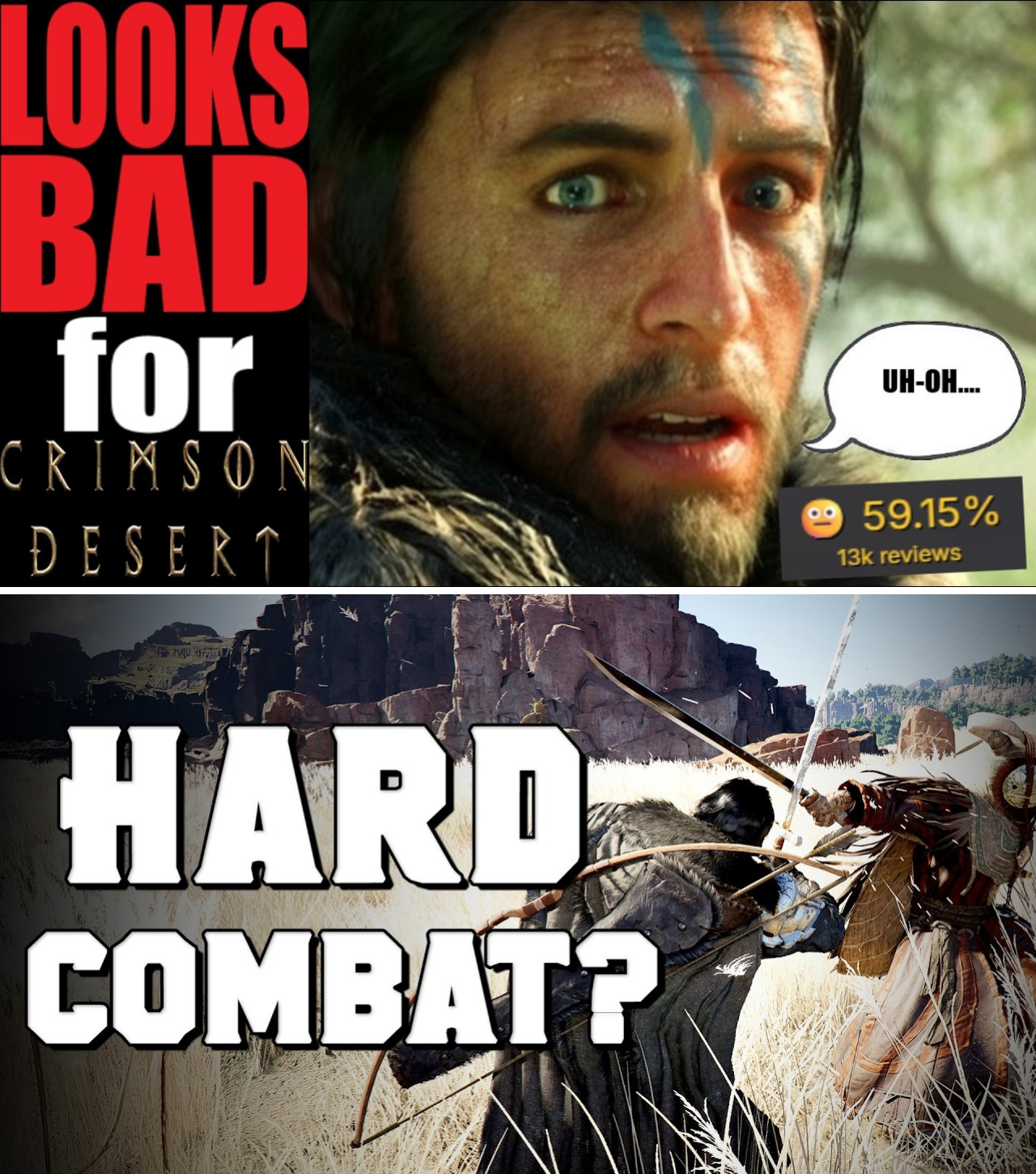
The “Crimson Desert” launch has officially evolved from a technical controversy into a full-scale cultural war within the gaming community.
As the “Assassin’s Ring Wild Redemption” nickname continues to trend, a new, more aggressive narrative has emerged from the game’s defenders. Hardcore RPG enthusiasts are now launching a coordinated counter-offensive against those who gave the game poor reviews, labeling the detractors as “skill-less casuals” and “Fortnite kids” who are incapable of playing a game that doesn’t “hold their hand.”
The ‘Yellow Paint’ Manifesto
The flashpoint of this conflict centers on Crimson Desert’s minimalist UI and lack of environmental “guidance” cues—features common in modern titles like Resident Evil or Final Fantasy.
“The bad reviews are coming from Fortnite kids who are dog sh*t at any other type of game,” read one viral post on the X platform with over 100,000 likes. “They need their hands held by yellow paint and giant glowing icons just to show them where to go. If there isn’t a waypoint every five feet, they cry ‘bad design.’ This isn’t a bad game; it’s a filter for the weak.”
The “Yellow Paint” comment refers to a long-standing debate in game design where developers use brightly colored markers to show players which ledges are climbable. Crimson Desert, which opts for a more “organic” (and often frustrating) exploration system, has become the new hill for elitist gamers to die on.
A Community Divided: Elitism vs. Accessibility
The backlash against the “20-minute quitters” has become personal. On Reddit’s r/CrimsonDesert, threads are no longer about gameplay tips but are instead filled with “gatekeeping” memes.
“We finally get a game with the complexity of Elden Ring and the physics of Red Dead 2, and the ‘Zoomer’ crowd tries to review-bomb it into oblivion because they can’t find the pause menu,” wrote one veteran user. “Go back to your battle passes and colorful skins. This world belongs to the grinders.”
However, the “casuals” are firing back, arguing that “tedious” does not equal “hard.” Critics point out that the game’s lack of clarity isn’t a design choice, but a failure of communication. “Spent 30 minutes trying to find a quest NPC that was glitched through a wall,” countered one reviewer. “It’s not a ‘skill issue’ to expect a game I paid $70 for to actually function. Elitists are just coping with a mid-tier product.”
The ‘Sabotage’ Narrative Meets Toxic Elitism
This wave of fan defense has complicated the ongoing “Sabotage Scheme” theory. While Pearl Abyss investors are still reeling from the 30% stock drop, the “Hardcore” faction is spinning the negative press as a badge of honor. To them, the “Mixed” rating on Steam is proof that the game is “too real” for the mainstream market.
“If the NPCs don’t have giant green exclamation points over their heads, the average modern gamer loses their mind,” said industry commentator ‘TheQuartering’ in a recent stream. “What we’re seeing is a rejection of challenge. They want a movie, not a world.”
The Industry Fallout
Sociologists of gaming culture suggest this is the most significant “Elitist vs. Casual” rift since the launch of Dark Souls. However, unlike Dark Souls, which eventually gained mainstream appeal, Crimson Desert’s “clunky” movement and “soulless” story (as described by detractors) make it a harder sell for the masses.
As the weekend progresses, “Skill Issue” has become the de facto response to any technical complaint or critique of the game’s sprawling, often confusing systems. For Pearl Abyss, this fanatical defense is a double-edged sword: it keeps a core player base engaged, but the toxic “gatekeeping” may scare off the very millions of “casual” players needed to recoup the game’s massive budget.
In the world of Crimson Desert, the monsters in the wasteland might be less dangerous than the fans on the forums.
News
The ‘Nemesis’ Effect: Why Netflix’s Latest Thriller Is Keeping the World Awake at Night
🚨 WARNING: Do not start this if you have plans for the rest of your day. Netflix just dropped Nemesis, and the internet is officially spiraling. It’s climbing the global charts at lightning speed, and for good reason—this thriller is…
The ‘Stressfully Addictive’ Hit: Why Netflix’s ‘Treason’ Has Viewers Pulling All-Nighters
🚨 3 AM AND STILL WATCHING: The spy thriller everyone is calling a “hidden gem” you’ve been sleeping on! If you think you know spy dramas, think again. Treason is currently blowing up on social media, with fans admitting they…

The Phantom at the Window: Why the ‘Outlander’ Ghost Mystery Continues to Haunt Fans
🚨 THE SCENE THAT NEVER WAS: The ‘Outlander’ secret that’s driving fans into a total meltdown! We all remember that haunting moment in the Outlander pilot—Frank Randall staring at a mysterious figure in 18th-century Highland garb, standing outside Claire’s window…

The Spy Thriller That Has the Internet at War: Why Netflix’s ‘Treason’ Is Trending for All the Right (and Wrong) Reasons
🚨 YOU WERE NEVER SUPPOSED TO TAKE THE JOB. But you did, and now there’s no turning back. If you’re looking for a show that will have you staring at your ceiling at 3 AM questioning every single person in…
The Darkest Corner of Netflix: Why Viewers Are Hooked on This Unsettling Nordic Noir Masterpiece
🚨 STOP EVERYTHING. If you haven’t started this Nordic thriller yet, you’re missing the most disturbing thing on Netflix right now. I thought I knew “dark,” but this show? It’s a whole different level of unsettling. We’re talking about a…

The ‘3 AM Phenomenon’: Netflix’s New 80s-Inspired Mystery Has Viewers Hooked and Demanding Answers
🚨 STOP SCROLLING: You’re about to lose your entire social life for the next 8 hours. Everyone on my feed is whispering about that one Netflix show—the one that makes you forget to eat, sleep, or check your phone until…
End of content
No more pages to load