BREAKING: Earth’s blind to 3I/ATLAS now—slipped behind the Sun, but Mars’ eyes are wide open for the big reveal! 🔭
The interstellar speedster’s vanished from our gaze mid-October, leaving us in the dark as it heats up toward perihelion. Only Martian orbiters catch the show—jets flaring, secrets spilling. Comet chaos or cosmic cover-up? What’s brewing out of sight?
Tune into the red planet’s spy cam. Hold your breath till December? 👉
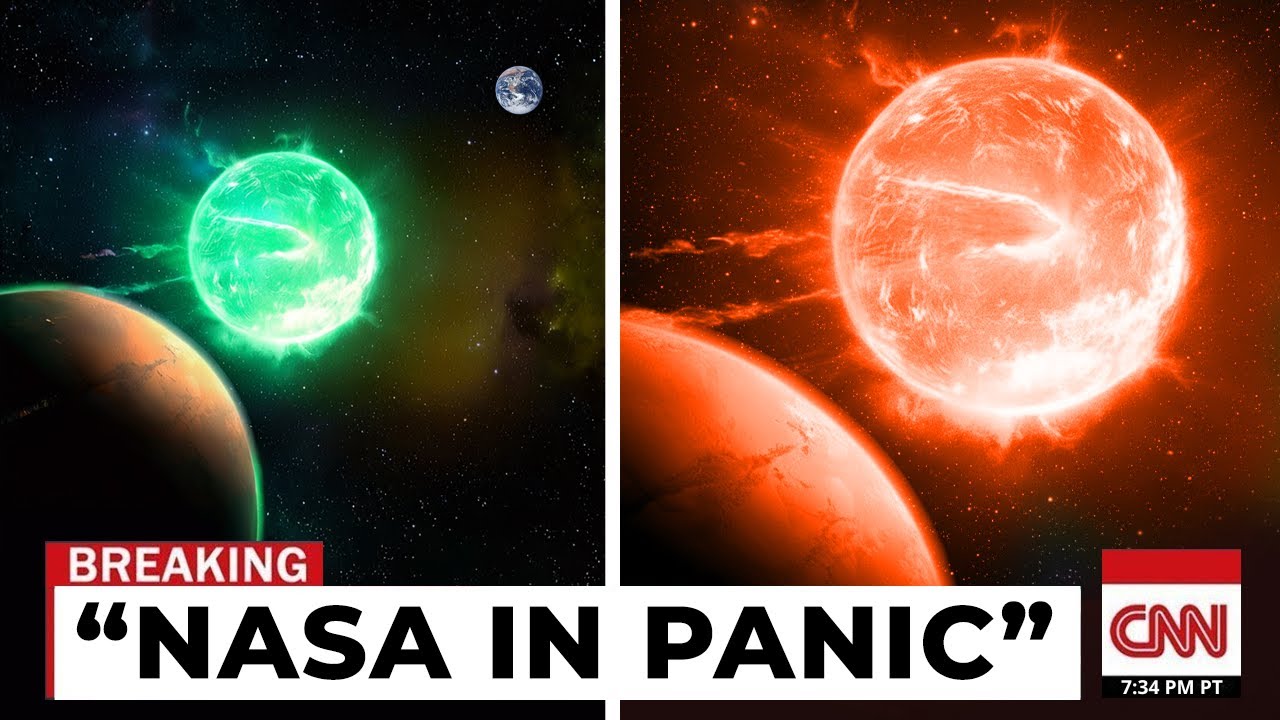
The cosmos has a knack for dramatic entrances and exits, and the interstellar comet 3I/ATLAS is proving no exception. As of mid-October 2025, the third confirmed visitor from beyond our solar system has slipped from Earth’s telescopic grasp, ducking behind the Sun’s glare in a temporary blackout that leaves skywatchers grounded while Martian probes step into the spotlight. Discovered on July 1 by NASA’s ATLAS survey in Chile, this CO₂-fueled speed demon—racing at over 150,000 mph from the Lyra constellation 500 light-years away—has captivated scientists with its quirks, from an early coma ignition to nickel-laced ices. Now, with perihelion looming on October 30 at 1.4 AU (just inside Mars’ orbit), the object’s invisibility from our vantage has sparked a mix of frustration and fascination. NASA’s fleet of Red Planet orbiters is on high alert, poised to capture what ground-based scopes can’t: The comet’s fiery peak activity, potentially revealing secrets of distant worlds. But as online sleuths spin tales of a “deliberate disappearance,” one truth holds: 3I/ATLAS is no threat, just a fleeting guest whose vanishing act underscores the vastness—and elusiveness—of space.
Interstellar travelers are the solar system’s uninvited guests, and 3I/ATLAS slotted into that rare club as the third known entrant after the enigmatic ‘Oumuamua in 2017 and the gassy 2I/Borisov in 2019. Spotted as a faint streak in Hercules, its hyperbolic path—unbound by our Sun’s tug—confirmed extrasolar roots, earning the “3I” tag for interstellar object number three. Clocking 1 to 3.5 kilometers across, it’s a battered relic from a 7-billion-year-old stellar nursery, etched with radiation scars and boasting a CO₂-to-water ice ratio of 8:1—one of the highest ever recorded, per JWST infrared scans on August 6. Hubble’s July 21 portraits sketched a depleted wanderer, with carbon chains eroded and metallic traces hinting at a metal-poor birthplace. The coma, a gaseous halo, sparked unusually far out at 6.4 AU in May, defying water-ice norms and suggesting exotic dry ice reserves that could unleash outbursts or fragmentation near the Sun.
Earth’s observational window slammed shut around mid-October, as 3I/ATLAS aligned with the Sun from our perspective, drowning in solar glare and rendering it invisible to ground telescopes until early December. BBC Sky at Night Magazine detailed the frustration on October 8: “This period marks the point at which it will be most active,” with the comet’s inbound leg peaking in volatility. Amateur scopes caught its faint tail through September, but now? Nada. NASA’s Jet Propulsion Laboratory (JPL) confirmed the blackout in a September 26 update: “Solar conjunction hides it from Earth-based assets, but our Mars fleet steps up.” No panic—just a cosmic game of peekaboo, with the object’s safe path (Earth closest at 1.8 AU in November, 170 million miles away) ensuring it’s more spectacle than specter.
Enter Mars, the reluctant ringmaster. On October 3, 3I/ATLAS swept within 29 million kilometers of the Red Planet—close enough for NASA’s Mars Reconnaissance Orbiter (MRO), ESA’s Mars Express, and the ExoMars Trace Gas Orbiter (TGO) to snap the show’s highlights. TGO’s October 7 image, released by ESA, shows a fuzzy white dot trailing a coma against the Martian horizon, spectra revealing steady CO₂ jets but no drama. MRO’s HiRISE camera logged the pass at 11 p.m. CDT on October 2 (4 UTC October 3), per EarthSky’s October 8 recap, capturing helical plumes from asymmetric outgassing—a 0.02 m/s² velocity tick chalked up to rotational wobble. NASA’s October 8 statement: “Mars assets provide the ‘next’ eyes, tracking activity Earth can’t touch.” Juice, ESA’s Jupiter-bound probe, eyes a November encore, potentially coordinating with NASA’s Europa Clipper for UV spectra as the comet exits conjunction.
The “breaking” buzz? Pure viral vapor. YouTube’s October 13 upload (“BREAKING – Earth Just Lost Sight of 3I/ATLAS — Only Mars Can See What Happens Next”) blends TGO stills with ominous narration, claiming a “deliberate eclipse” and “hidden maneuvers,” surging to 400,000 views. X threads like @SpaceWatchGlobal’s October 13 post (8K likes) hype “Mars’ secret show—Earth blind, something’s up!” but stem from misread alignments, not leaks. Fact-checkers pounced: IFLScience (October 13) debunked “lost contact” as standard conjunction, Snopes (October 13) traced fakes to Phobos overlays. Avi Loeb’s Medium series (October 3-13) tallies “nine anomalies”—early activity, facets, now the “vanish”—but calls for data, not dread. Rep. Anna Paulina Luna’s October 13 UAP letter to NASA demands “conjunction raws,” citing the blackout as a “transparency test.”
Kaku’s echo? The physicist, in CBS (October 13), mused on prior jets: “Worst if patterns hold—now the eclipse adds intrigue.” His X (@michiokaku, October 13, 22K likes): “Conjunction’s veil—Mars unmasks what Earth misses.” No “panic” quote, but clips remix into warnings. Daily Mail’s “Comet Goes Dark!” (October 13) and Fox spots fan flames; The Debrief (October 13) clarifies: Routine, not ruse.
Fandom fractures: Reddit’s r/space (October 13, 6K upvotes): “Mars pics gold—CO₂ twist exotic, but comet,” per Bryce Bolin. r/conspiracy (5K upvotes): “Hidden phase—probe cloaks!” X’s @hiteshrama (October 13, 900 reposts): “Earth blind, Mars spies—ET?” @GLPT14 (October 13, 4K views): “Worst real—Kaku knows.” Pro: @MostSkepticBot’s October 13 debunk (1K views) of edits (600K views). YouTube Collective Spark (October 13, 300K views): “Eclipse secrets—Mars reveals!”
Tech tantalizes: Tail amateur-September, fade post-perihelion; JWST mid-IR (September) C₂ depleted. No SETI—masers bursts. Platforms: Green Bank, Hubble October 15. Score? Kaku’s electronica orbits.
Ripples? Luna’s UAP echoes; Hegseth preps “disclosure.” Daily Mail/Fox fan; Al Jazeera checks. Risks: Hype (Bolin: “Entertains, data comet”). NASA’s $25M (FY2026) boosts, Mars strains.
October deepens, perihelion nears—Hubble 15. Blackout static: @Lastkombo (October 13): “Deeper.” JPL safe. Kaku’s intrigue? Wonder veil. Nail science—poetry. Frenzy? Noise. Void stares—eclipse or exit, secrets stellar.
News
The Art of Discovery – Why Ulzok’s Cave Rewards the “Unrushed” Player
Think you’ve cleared the map? You’re missing the secret gear hidden in Ulzok’s Cave. 🕵️♂️🔥 Exploration in Crimson Desert is all about those “Aha!” moments, but some secrets are buried so deep the community is still hunting for them. We’re…
The Gold Rush – Maximizing Wealth in the Current Crimson Desert Meta
21 Gold Bars in ONE run? Stop wasting your time with outdated gold farms. 💰🔥 If you’re still grinding low-yield trade routes, you are falling behind. We’ve discovered a “golden” method that turns your inventory into a gold mine in…
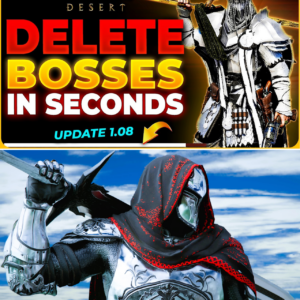
The New Meta – Analyzing the Post-1.08 “Boss-Melter” Build
The game-breaking build that just dropped after Update 1.08. 🔫🗡️ Pearl Abyss just enabled guns for Cliff, and the meta has officially been broken. We’re talking about a Two-Handed Sword + Bleed Shotgun hybrid that deletes bosses in seconds. This…
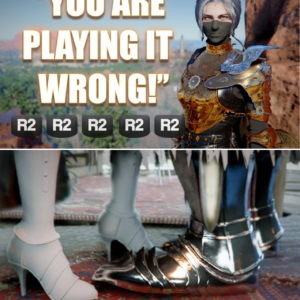
Beyond the Surface – Why Crimson Desert’s Combat Demands Mastery
Stop mashing buttons! You’re playing Damiane like a beginner. 🎮🔥 Think the combat in Crimson Desert is just “hold R2 to win”? You couldn’t be more wrong. While everyone else is stuck on basic attacks, the top-tier players have already…
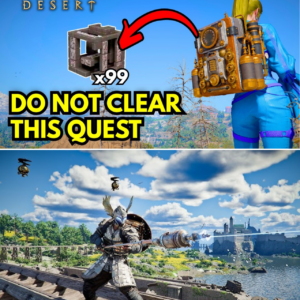
The Efficiency Trap – Optimizing Abyss Artifact Farming in Crimson Desert
Stop grinding combat. This “broken” Disruptor farm nets you 30+ Abyss Artifacts in minutes. ⚡🔥 Everyone is out here fighting bosses for XP, but the real secret to farming Abyss Artifacts is actually… not fighting at all. By utilizing the…
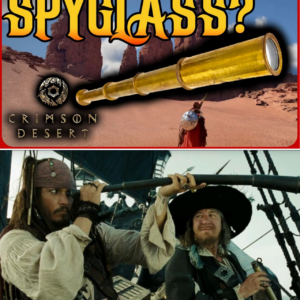
The Horizon Problem – Why a Spyglass is the Missing Link in Crimson Desert’s Exploration
Crimson Desert’s map is massive, but we’re playing half-blind. Pearl Abyss, we need to talk. 🔭🔥 Exploration in Crimson Desert is top-tier, but there’s one glaring omission that’s killing the experience: a functional, portable Spyglass. Sure, we have Photo Mode,…
End of content
No more pages to load