“Do NOT Evacuate!” – The Order That Doomed 301 Lives.
Picture this: a plane lands safely, the runway is clear, but a chilling command echoes through the cabin: “Stay in your seats!” On August 19, 1980, Saudia Flight 163 became a nightmare that no one saw coming. Why were passengers and crew trapped inside a plane that should have been their salvation? The heartbreaking truth behind this decision changed aviation forever.
👉 Discover the shocking story that still haunts the skies:
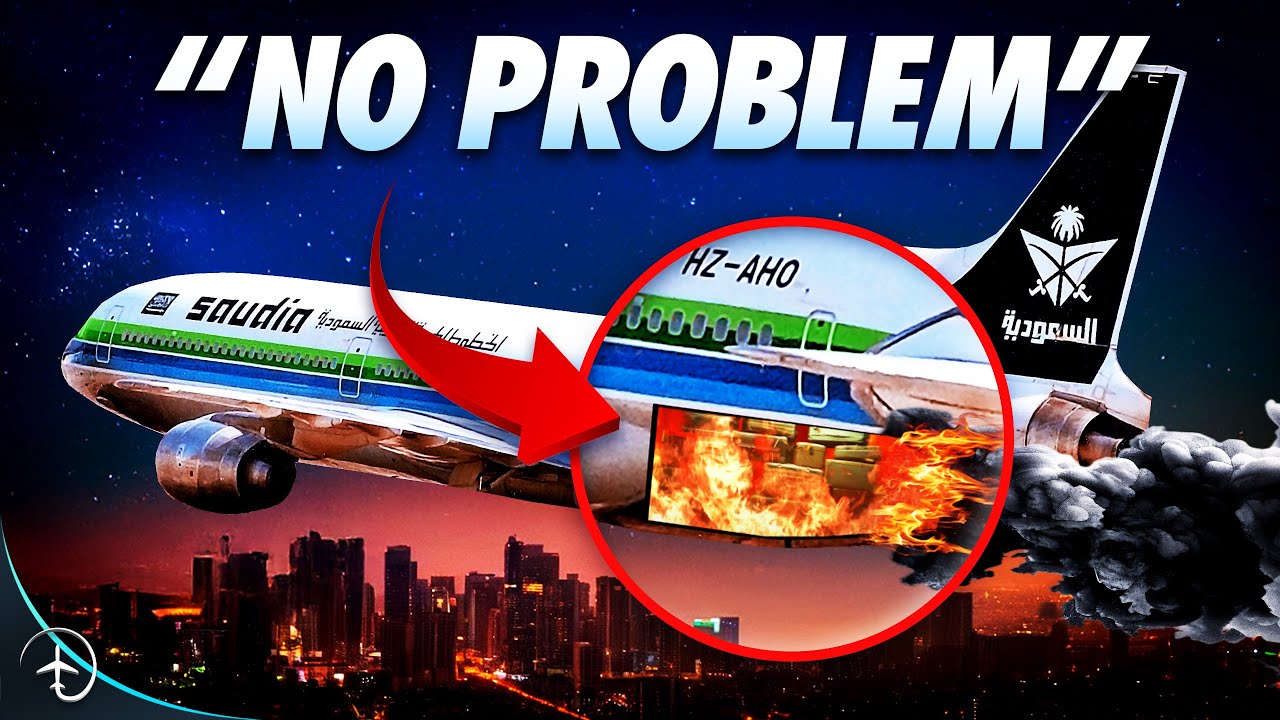
On August 19, 1980, Saudia Airlines Flight 163, a Lockheed L-1011 TriStar, became a symbol of unimaginable loss. Despite landing safely at Riyadh International Airport after a fire broke out on board, all 301 passengers and crew perished in what remains the deadliest aviation disaster involving a safe landing. The captain’s chilling directive to delay evacuation—essentially ordering the crew and passengers to remain inside—turned a survivable situation into a catastrophe. This article delves into the timeline of events, the human errors that sealed the tragedy, and the profound changes to aviation safety that followed, ensuring the nightmare of Flight 163 would never be repeated.
A Routine Flight Turns Deadly
Saudia Flight 163 began its journey in Karachi, Pakistan, with a stopover in Riyadh, Saudi Arabia, before its final destination of Jeddah. The flight carried 287 passengers, including pilgrims bound for Mecca, diplomats, and families from countries like Pakistan, Iran, Canada, and the UK, along with 14 crew members. The aircraft, registered as HZ-AHK, was a modern Lockheed L-1011-200 TriStar, less than two years old with a clean maintenance record.
At 21:08 local time (18:08 UTC), the plane departed Riyadh. Just seven minutes later, at 21:14, smoke alarms in the C-3 cargo compartment signaled trouble. Flight Engineer Bradley Curtis confirmed smoke in the cabin, and Captain Mohammed Ali Khowyter decided to return to Riyadh. By 21:20, the crew declared their intent to land, and air traffic control cleared them for an emergency approach. The fire, however, was spreading faster than anyone realized, filling the cabin with toxic smoke.
The Fatal Decision to Stay
At 21:36, Captain Khowyter executed a textbook landing, bringing the TriStar safely back to Riyadh’s runway. The plane rolled to a taxiway and stopped at 21:39, just 2 minutes and 40 seconds after touchdown. Emergency crews were ready, but what happened next defied logic. Despite smoke billowing inside the cabin, Khowyter reportedly instructed the crew not to evacuate, focusing instead on shutting down systems. The head flight attendant’s urgent requests to open the doors were ignored. The two wing-mounted engines continued running for over three minutes post-landing, preventing ground crews from accessing the doors due to safety protocols.
By 21:42, the engines were finally shut down, but communication with the crew ceased. It took until 22:05—23 minutes after engine shutdown—for ground personnel to force open the R2 door. Three minutes later, the aircraft’s interior erupted in a flashover, consumed by flames. Autopsies later revealed a gut-wrenching truth: all 301 people on board had died of smoke inhalation before the doors were opened. Passengers, found crowded in the forward fuselage, had likely tried to escape the thickening smoke, but the lack of evacuation left them no chance.
Human Error Under Pressure
The investigation, led by the Saudi Arabian General Authority of Civil Aviation, painted a picture of a crew overwhelmed by the crisis. Captain Khowyter, 38, had 7,674 flight hours but only 388 on the TriStar, and his training records noted difficulties adapting to the aircraft’s complexity. First Officer Sami Abdullah M. Hasanain, 26, had just 1,615 hours, with a mere 125 on the TriStar, and had previously failed training evaluations. Flight Engineer Curtis, 42, had 650 hours as a flight engineer but struggled with dyslexia, which may have slowed his response to the crisis.
The crew’s handling of the emergency was marred by critical errors. It took four minutes to confirm the fire after the initial alarm, delaying the decision to return to Riyadh. Khowyter’s insistence on keeping the aircraft pressurized during landing trapped toxic fumes inside, as the pressurization hatches were nearly closed. Most crucially, his failure to order an immediate evacuation—despite clear signs of danger—proved fatal. The crew’s adherence to routine procedures, like completing the landing checklist, took precedence over the urgent need to escape. This breakdown in crew resource management (CRM) highlighted the dangers of poor communication and decision-making under stress.
The Fire’s Mysterious Origin
The investigation traced the fire to the C-3 cargo compartment but couldn’t pinpoint its cause. Speculation centered on two butane stoves and a used fire extinguisher found in the wreckage, with theories suggesting a passenger’s stove might have ignited. However, no conclusive evidence supported this, and the stoves were deemed unlikely culprits. The fire’s rapid spread was exacerbated by the TriStar’s design, particularly flammable insulation above the cargo area, which allowed flames and smoke to infiltrate the cabin quickly. In 1980, in-flight fire suppression systems were rudimentary, leaving the crew with limited tools to combat the blaze.
A Catalyst for Change
The tragedy of Saudia Flight 163 sent shockwaves through the aviation industry, exposing vulnerabilities that demanded immediate action. The incident became a turning point for several key reforms:
Crew Resource Management (CRM): The crew’s poor communication and decision-making led to the global adoption of CRM training. Pilots and crew are now trained to prioritize clear communication, challenge poor decisions, and act decisively in emergencies.
Evacuation Protocols: Airlines revised procedures to ensure immediate evacuation in fire-related incidents. Captains were trained to prioritize passenger safety over routine checklists.
Aircraft Design Improvements: Lockheed redesigned the TriStar, replacing flammable insulation with fire-resistant materials and adding glass laminate to structural components. Fire detection and suppression systems were upgraded industry-wide, with faster sensors and automated extinguishers.
Ground Crew Training: Emergency response protocols were overhauled to ensure ground crews could access aircraft quickly, including training for external door operation in high-pressure scenarios.
Pressurization Systems: Procedures were updated to ensure automatic depressurization during emergency landings, preventing the buildup of toxic fumes.
These changes have saved countless lives in subsequent incidents, making Flight 163’s legacy one of hard-learned progress.
The Human Cost
The loss of 301 lives—125 Saudis, 64 Pakistanis, 32 Iranians, and others from nations like Japan, Thailand, and the UK—was devastating. Most passengers were pilgrims, their spiritual journey to Mecca cut short by a preventable tragedy. The international scope of the passenger list amplified the grief, with families across the globe mourning loved ones. The incident remains Saudi Arabia’s deadliest aviation disaster and the worst involving a Lockheed L-1011. At the time, it was the second-deadliest single-aircraft accident, trailing only Turkish Airlines Flight 981.
The passengers’ final moments were marked by desperation. Autopsies showed many had moved to the front of the plane, likely fleeing the smoke-filled rear. The crew, found strapped in their seats, had followed protocol to a fault, unaware that their inaction would cost everyone their lives.
A Haunting Legacy
Saudia Flight 163 is a stark reminder that even a safe landing can end in catastrophe if critical decisions falter. The captain’s order to delay evacuation, rooted in inexperience and flawed judgment, turned a survivable emergency into a nightmare. Yet, the tragedy spurred reforms that reshaped aviation safety. Today, every pilot’s training, every aircraft’s design, and every airport’s emergency response bears the imprint of Flight 163’s lessons.
The image of a plane standing intact on a taxiway, its occupants already lost, remains one of aviation’s most haunting. For the families of the 301 victims, the pain of August 19, 1980, lingers. But the industry’s response ensured that their loss was not in vain, transforming a heartbreaking nightmare into a catalyst for a safer future in the skies.
News

The Mid-Season Strategic Shift: What’s Next for High Potential Season 3
The High Potential wait is officially painful—but it’s for a genius reason! 🕵️♀️💥 You’ve noticed it: High Potential is nowhere to be found on ABC’s Fall 2026 schedule. Panic? Not yet. The network just dropped a bombshell explanation for the…

The Aftermath of Mid-Wilshire’s Darkest Hour: The Rookie Season 9 Preview
The Mid-Wilshire team is in their biggest crisis yet—and the Rookie Season 8 cliffhanger left us absolutely shattered! 🚔🔥 Lucy and Tim have been abducted, and nobody knows they’re gone. The season finale didn’t just break viewership records; it left…
Grey Sloan in Crisis: What to Expect from Grey’s Anatomy Season 23
The bridge collapsed, and Grey Sloan Memorial will never be the same! 🏥💥 If you thought the Season 22 finale was brutal, Season 23 is coming to pick up the pieces—but not everyone is making it out. With Owen and…

Chronological Collisions: How Blood of My Blood Season 2 Plans to Integrate the Outlander Finale
The Outlander reunion of the century is finally happening—and it’s not where you think! 😱⏳ Fans have been theorizing for years, but the Blood of My Blood Season 2 trailer just dropped the biggest hint yet: Claire is coming to…

Beyond the Books: Why Off Campus Season 2 Is Poised to Shatter Fan Expectations
The Off Campus Season 1 finale was just the beginning—Season 2 is officially rewriting the rules! 🏒🔥 Think you know what happens next because you’ve read the books? Think again. The showrunners just confirmed they are going completely off-script, and…

Unearthing the Curse: Widow’s Bay Episode 6 Prepares for a Narrative Storm
The Widow’s Bay mystery just hit a breaking point—and we finally know what’s buried in Richard Warren’s grave! 😱 If you thought the “True Sight” mushrooms were crazy, wait until you see what’s actually hidden inside the founding father’s resting…
End of content
No more pages to load