STOP WASTING CURRENCY! Why Your Crafting is Failing in PoE 2 🛠️🚫
Are you still gambling with Orbs and praying to RNG gods? Most Path of Exile 2 players go broke because they treat crafting like a casino instead of a system.
The secret to crafting isn’t “luck”—it’s understanding the foundations: Implicit vs. Explicit modifiers, Prefixes vs. Suffixes, and the Mod Pool. If you don’t know why an item rolls certain stats, you’re just throwing your Divines into the void.
Stop burning your currency and start crafting like the pros. We’re breaking down the “Noob-friendly” rules of item tiers and how to use the Craft of Exile emulator to practice without risking your actual gear.
Ready to stop guessing and start crafting? 👇🔥
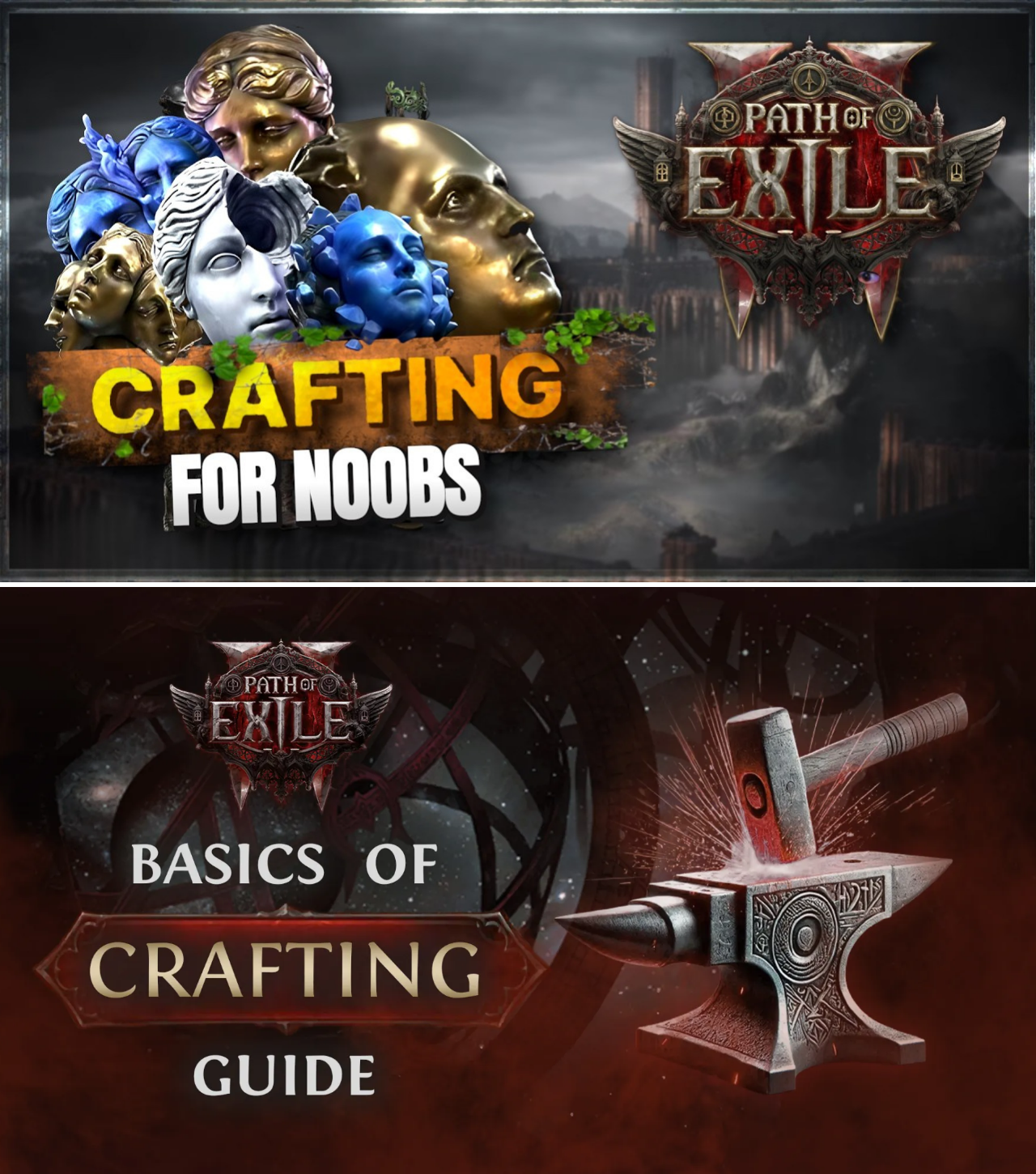
In Path of Exile 2, true power is not found in the loot drops of a lucky kill, but on the workbench of a master crafter. For many, however, the crafting system remains an impenetrable wall of jargon—prefixes, suffixes, mod pools, and implicits. But as expert theory-crafter Lolcohol argues in his latest guide, crafting is not an act of blind luck; it is a systematic engineering of items.
The Foundation: Understanding the Mod
To craft effectively, players must first understand the anatomy of an item. An item’s statistics are governed by three primary categories:
Implicit Modifiers: These are baked into the item’s base type. They exist regardless of rarity or crafting and are fundamental to the item’s identity (e.g., increased flammability magnitude on a talisman).
Explicit Modifiers: These are the stats you can alter. Crucially, these are split into Prefixes and Suffixes.
Enchantments: Special modifiers granted by corruption or specific augmentation sockets.
“Prefixes and suffixes are the primary levers of item balancing,” says Lolcohol. By restricting how many prefixes and suffixes an item can have—typically capped at three each for rare items—the game prevents “over-rolling,” ensuring that no single item can hold every powerful stat in the game.
Decoding the Mod Pool
The term “mod pool” is one of the most vital concepts in Path of Exile 2 crafting. It refers to the specific list of modifiers that can potentially roll on a given item base. For example, a body armor cannot roll “percent increased physical damage,” while a weapon cannot roll “percent increased armor.”
Learning these pools is not about memorization, but experience. Expert crafters utilize tools like Craft of Exile—a browser-based emulator—to practice their strategies. By using an emulator, players can simulate thousands of rolls, learning which modifiers are possible on which bases without spending a single unit of in-game currency.
Why Rarity Matters
Crafting is inherently tied to item rarity:
Normal (White): Zero explicit modifiers. The blank canvas for endgame crafting.
Magic (Blue): Limited to one prefix and one suffix.
Rare (Yellow): The sweet spot for power, capable of holding up to three prefixes and three suffixes.
Understanding rarity is the first step in managing your currency. Beginners often waste high-tier currency on items that do not have the potential to become “best-in-slot,” simply because they fail to account for the constraints of item rarity and mod pools.
The Crafting Loop: Iteration and Mistakes
Crafting in Path of Exile 2 is rarely a one-step process. It is a loop of application, evaluation, and refinement. Whether using Essences to lock in specific modifiers or Recombinators to merge the traits of two items, the goal is always to maximize the power of the prefixes and suffixes while maintaining the item’s viability.
“One good way to learn is to make mistakes,” notes Lolcohol. “If you do start crafting yourself and you make mistakes, don’t get angry. Everyone makes mistakes when crafting. All you can do is learn from it.”
Advanced Techniques and Resource Management
Once the foundations are understood, players can move toward more advanced systems such as Abyss Crafting, the use of Omens, and Rune Forging. The recent introduction of the Rune Forging Bench in Act 3 is particularly critical, allowing players to upgrade the base type of unique weapons, thereby scaling their damage modifiers to match endgame requirements.
However, the golden rule remains: Never jump into the deep end without understanding the shallows. Many players quit because they attempt “ambitious” crafts—such as high-end weapon meta-crafting—without understanding how to protect their core modifiers.
Final Advice: The Observer’s Path
If you are new to the system, the best advice is to watch and emulate. By observing how experienced players use various currencies—from Transmutations to Essences—to achieve expected outcomes, you start to learn the logic behind the system.
Crafting in Path of Exile 2 is a journey, not a destination. It is a system designed to reward those who take the time to understand its rules. Whether you are a casual player looking to upgrade your leveling gear or an endgame hopeful aiming for mirror-tier items, the principles remain the same: learn your mod pools, understand your prefix/suffix constraints, and always, always practice in an emulator before you gamble.
News
The Invisible Mechanics: Mastering the 14 Ailments of Path of Exile 2
STOP DYING! Why You’re Failing to Shock/Freeze Bosses in PoE 2 🛑❄️ Are you landing your hits but noticing the boss isn’t freezing? Or worse, are you getting stunned and ignited constantly and have no idea why? If you think…
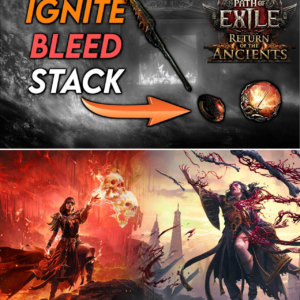
The Return of the Ancients: How Scyther’s Spear Is Redefining Ailment Scaling in PoE 2
IS THIS UNIQUE SPEAR BROKEN? The New 0.5 “Ignite-Bleed” Secret Revealed! 🩸🔥 Forget everything you know about standard ailment builds. There’s a hidden gem in Path of Exile 2 that is about to become a absolute nightmare for bosses in…
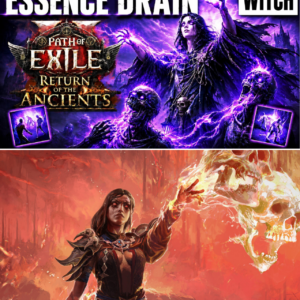
The Chaos Turret: Why the Essence Drain Witch Is the Definitive Meta-Starter of PoE 2 League 0.5
STOP REROLLING! This Essence Drain Witch is the “Chaos Turret” That Breaks PoE 2 🟣✨ Think you’ve mastered the 0.5 meta? Think again. While everyone is running standard builds, this Essence Drain Witch setup is turning the entire screen into…

The Frozen Predator: Why the Ice Werewolf Druid is Dominating PoE 2’s Latest League
IS THIS THE MOST BROKEN LEAGUE STARTER IN POE 2? 🐺❄️ You’ve seen Wolf builds, but you haven’t seen this level of screen-clearing insanity. While everyone is debating meta shifts for the 0.5 league, one Druid build is quietly melting…
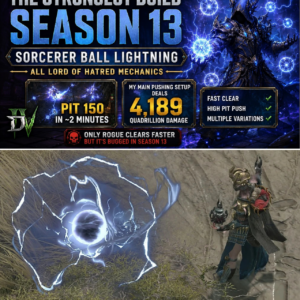
The “Ballkuna” Phenomenon: Why Ball Lightning Is Ruling Season 13
IS THIS THE MOST BROKEN BUILD EVER? ⚡️ The “Ballkuna” Sorc Meta! Think you’ve seen high DPS? The Ball Lightning Sorceress is officially dominating Season 13, vaporizing everything in sight with a literal wall of lightning! This isn’t just “good”—it’s…
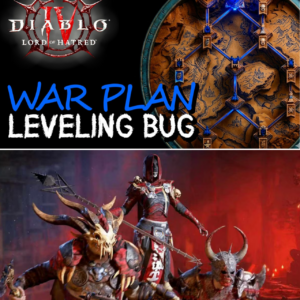
The Efficiency Meta: Mastering War Plans and the 6-Wave Infernal Horde Shortcut
STOP DOING 10-WAVE HORDES! 🛑 This “6-Wave” Shortcut Is Breaking the Game! Are you still running 10-wave Infernal Hordes? You’re wasting your time! Thousands of top players are using a “War Plan Teleport” trick to force the game into a…
End of content
No more pages to load